Home
›
Cats Care Guides › Page 5
Learn why concentrated essential oils can be dangerous to cats, how licking, skin contact, or inhalation may cause problems, and when veterinary or...
Learn why common human medications can be highly toxic to cats, what information to gather after an accidental ingestion, and why owners should not...
Learn why ethylene glycol antifreeze is extremely dangerous to cats, why early symptoms can be misleading, and why immediate veterinary treatment i...
Learn why kittens and adult cats may eat litter, when curiosity can be harmless, and when repeated litter eating may point to pica, anemia, nutriti...
Learn why cats chew electrical cords, how to reduce access safely, and what burns, drooling, breathing changes, or electrical injury signs require...
Learn why one cat may hiss at or attack a housemate after a veterinary visit and how scent changes, stress, and non-recognition aggression can be m...
Understand why rectal prolapse happens in cats, how veterinarians treat exposed tissue, what affects recovery, and why controlling diarrhea, parasi...
Learn why a cat may leak urine while sleeping, how incontinence differs from inappropriate urination, and which bladder, spinal, or neurologic sign...
Learn how dental disease, oral inflammation, jaw problems and tongue swelling can make a cat keep its tongue out, and which mouth and breathing sig...
Learn why a cat may suddenly stop responding to sound and how ear disease, medication effects, trauma, age-related hearing loss, or neurologic prob...
Learn why a cat may suddenly stop jumping and how orthopedic pain, arthritis, weakness, spinal disease, or neurologic problems can change the urgency.
Learn why a cat’s iris or eye may appear to change color and how inflammation, bleeding, glaucoma, trauma, or other eye disease can require prompt...
Learn why cat paw pads can crack or peel and how dryness, burns, chemicals, trauma, infection, or immune-mediated disease can change the treatment...
Learn why a cat may suddenly be unable to close its mouth and how jaw dislocation, fracture, oral foreign material, swelling, or neurologic disease...
Learn why a cat’s claws may stay extended and how age, arthritis, overgrown nails, injury, tendon problems, or neurologic disease can affect normal...
Learn why one or more mammary glands can swell in cats and how nursing, mastitis, hormonal changes, trauma, or mammary tumors can look different.
Repeated swallowing without food can come from nausea, mouth or throat irritation, excess saliva, or swallowing difficulty. Learn what to watch and...
A cat that cries when its lower back is touched may have skin pain, muscle or joint soreness, spinal discomfort, or an injury near the tail base. L...
A sudden slowdown at meals can reflect dental pain, nausea, swallowing difficulty, weakness, or a food-related issue. Learn which clues matter and...
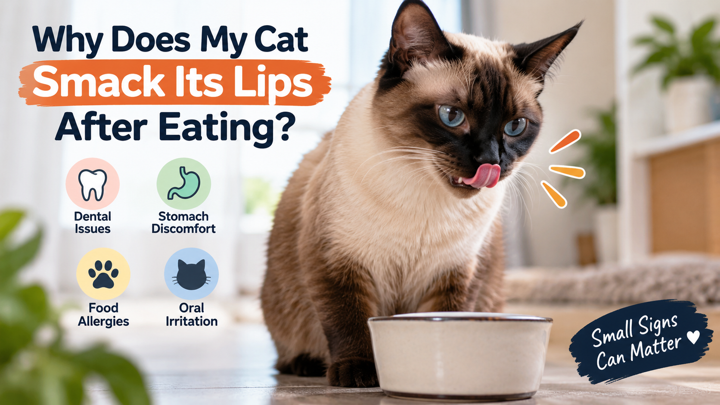
Brief lip smacking after a meal can be normal cleanup, but persistent smacking may signal dental pain, nausea, mouth irritation, or swallowing trou...
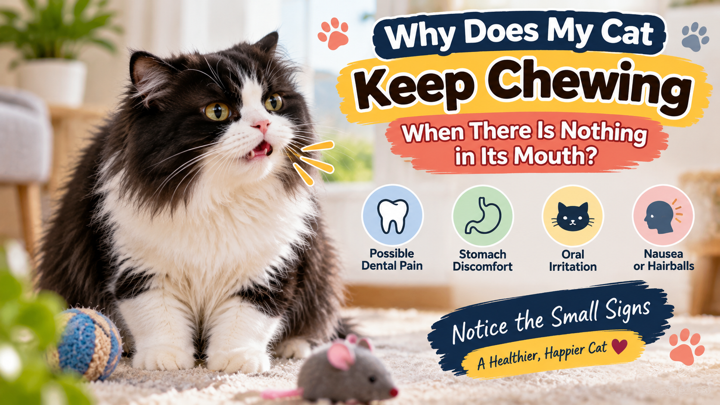
Repeated chewing motions without food can come from dental pain, oral irritation, nausea, jaw problems, or less commonly neurologic disease. Learn...
One-sided grooming loss can reveal pain, arthritis, skin disease, injury, weakness, or neurologic problems. Learn what the coat pattern can tell yo...
Crying on landing can point to paw, joint, shoulder, elbow, spine, or soft-tissue pain even when jumping up still looks normal. Learn what to watch...
A stretched-neck sleeping posture can be comfortable, but a new position may also appear when breathing is harder. Learn how to tell relaxed sleep...
Head shaking after meals can come from ear irritation, pain triggered by jaw movement, dental disease, or food around the face. Learn how timing an...
Dropping kibble from one side of the mouth strongly suggests an oral-mechanical problem such as dental pain, tooth resorption, a broken tooth, or j...
Side-to-side jaw movement in a cat can reflect dental pain, tooth resorption, oral irritation, jaw discomfort, nausea, or less commonly neurologic...
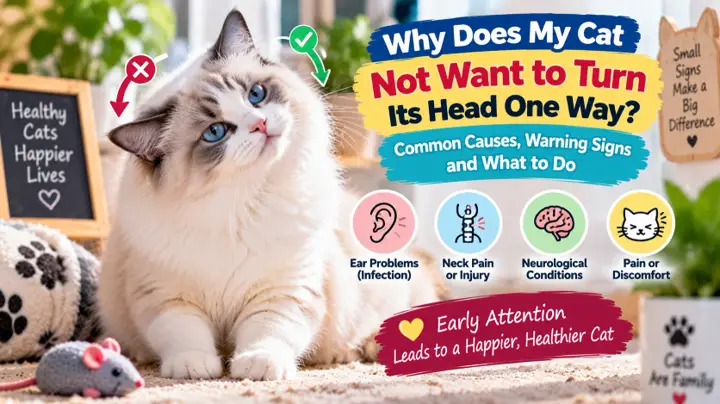
A cat that avoids turning its head in one direction may have neck pain, ear disease, muscle strain, trauma, or neurologic problems. Learn how to ob...
Persistent one-sided licking can reflect itching, fleas, skin infection, pain, injury, or discomfort under the skin. Learn how the pattern helps na...
A new preference for sleeping on the floor can be harmless, but it can also signal pain, weakness, heat, reduced jumping ability, or illness. Learn...
No matching guides found on this page. Use site search to search the full Virixoo library.
How to use these guides
Start with the guide that best matches your question. Virixoo helps you
understand common causes, safe next steps and warning signs. For urgent,
severe or persistent symptoms, seek veterinary care.