People often interpret a turned back as rude or dismissive, but feline body language does not map neatly onto human social rules. A relaxed cat may face away because it is comfortable enough not to monitor you continuously and wants to watch the rest of the room instead.
A cat sitting with its back to you is often relaxed, comfortable, or focused on something else. Read ears, tail, muscle tension, and willingness to remain nearby before assigning meaning to the direction it faces.
Why Cats Face Away
Environmental Monitoring
Facing the room lets the cat watch doors, windows, people, or other pets while staying close to you.
Comfort
A cat that remains nearby with a loose posture may simply feel secure.
Preferred Position
Sunlight, airflow, furniture shape, or sound can determine which direction feels best.
Requesting Less Interaction
Sometimes turning away can also indicate that the cat wants to rest without direct contact.
Read the Whole Body
| Relaxed | Needs Space |
|---|---|
| Loose muscles | Body tense |
| Neutral ears | Ears flattened |
| Tail resting | Tail lashing |
| Remains nearby | Moves away when approached |
Direction Alone Tells You Very Little
A cat can face away while still choosing social proximity. In fact, sitting close enough to touch while monitoring the rest of the room may be a comfortable compromise between companionship and environmental awareness.
Use the Rest of the Body to Read the Moment
Loose muscles, neutral ears, a resting tail, slow blinking, grooming, and remaining nearby support a relaxed interpretation. A rigid posture, flattened ears, hard tail movement, repeated looking back, or moving away when you approach suggests the cat wants more space.
Do not test “trust” by touching a cat that is trying to disengage. Let the cat decide whether to turn, approach, or remain where it is. Voluntary proximity is more informative than the direction the face happens to point.
Related Virixoo Guides
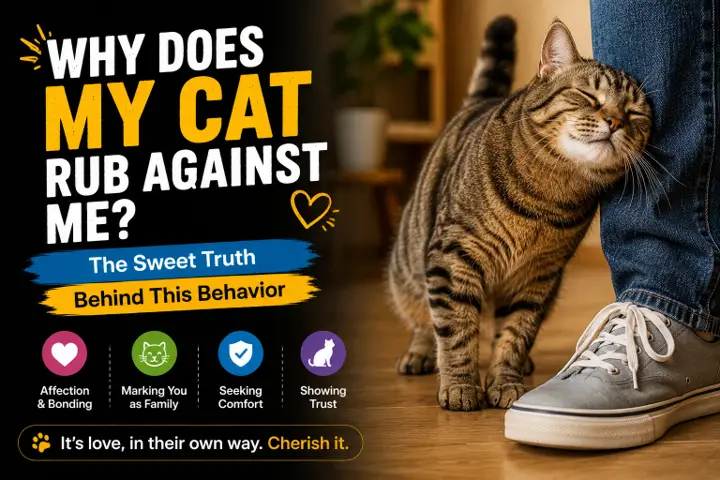
Read why cats stare at their owners. Read why cats rub against their owner’s legs. Read why cats touch their owner’s face with a paw.