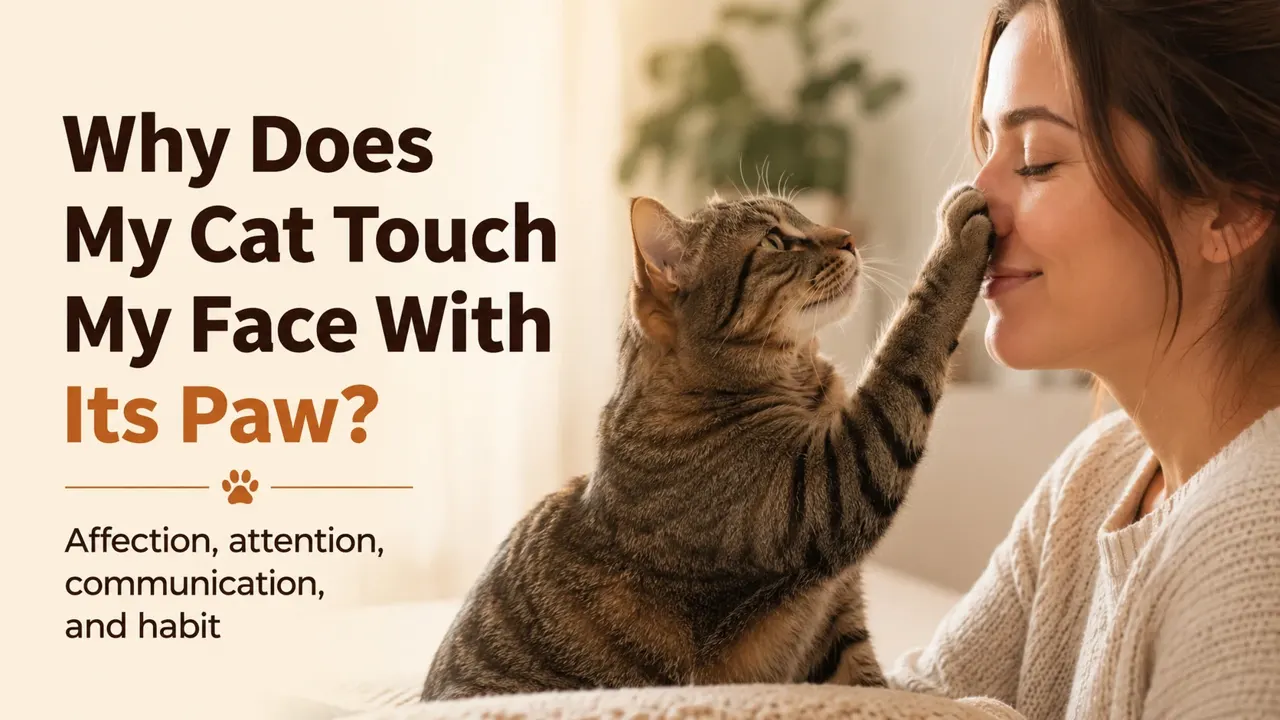
A soft paw placed on your cheek can be a request for attention, part of a familiar interaction, or simply an attempt to investigate something close by. The meaning depends on what happens before and after the touch.
Read the Paw Together With the Rest of the Cat
Gentle face touching is usually normal social or attention-seeking behavior. Watch the claws and body language, and redirect the paw if contact becomes rough or interferes with sleep.
Why Cats Touch Faces
Attention
A paw to the face almost guarantees a response, making it an effective way to wake or engage a person.
Investigation
The paw can be used to explore hair, movement, glasses, or bedding.
Learned Routine
If touching your face leads to breakfast every morning, the behavior can become highly reliable.
Social Contact
Some cats use gentle paw contact during relaxed interactions with familiar people.
How to Respond
- Keep nails appropriately maintained.
- Do not encourage rough pawing near eyes.
- Reward calmer ways of requesting attention.
- If the cat wakes you for food, consider a predictable feeding routine rather than immediately rewarding pawing.
If the Pawing Wakes You or Scratches
Why does my cat touch my face while I sleep?
The cat may have learned that touching wakes you and leads to attention or breakfast.
Why does my cat touch me without claws?
A relaxed cat may use controlled paw contact without intending to scratch.
Why does my cat paw my face then meow?
The combination can function as a strong request. Check the context before responding.
When to Investigate
The behavior itself is usually harmless. Sudden intense nighttime attention combined with restlessness, confusion, appetite changes, or other new signs may warrant veterinary advice.
The same paw can ask for attention or ask for distance
A relaxed cat may rest a soft paw on your face while settling, waking you, or trying to restart petting. A tense cat may lift a paw as an early warning before a swat. Look at claws, ear position, tail movement, body tension, and whether the cat is leaning toward you or trying to create space.
Protect your face without punishing the cat
If claws touch your skin, turn your face away and end the interaction calmly. Avoid grabbing the paw, tapping the cat, or pushing the face closer. Keep nails appropriately maintained and encourage contact with your hand, a blanket, or a nearby perch instead of your eyes and mouth.
Frequent face-pawing at the same time each day may be learned communication: breakfast, play, a door opening, or bedtime attention. If you do not want the behavior, reward a quieter alternative before the usual trigger rather than waiting for the paw to land.
Related Virixoo Guides
Read why cats sniff their owner’s face. Read why cats lick their owners. Read why cats stare at their owners.
A Small Gesture Can Have Several Meanings
A paw on the face is an efficient way for a cat to make itself impossible to ignore. Keep the interaction safe and avoid accidentally reinforcing behavior you do not want repeated every morning.