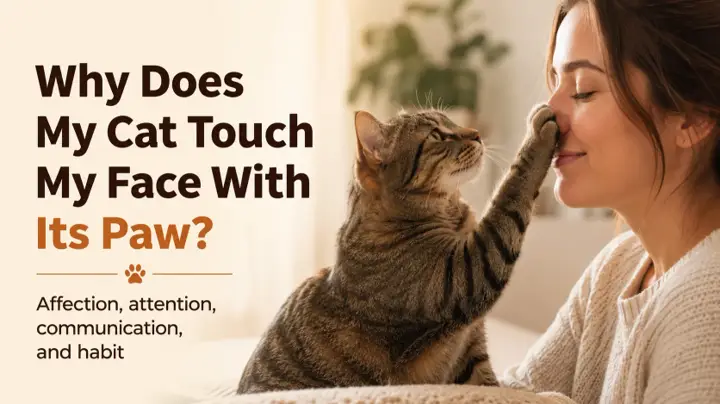

A cat that approaches your face and sniffs your nose, hair, or breath is gathering scent information at very close range. Faces also receive a lot of social attention from humans, so the interaction can become part of a familiar greeting routine.
Face sniffing is usually normal investigation and social contact. Let your cat approach voluntarily, avoid forcing nose-to-nose contact, and gently create distance if you do not enjoy the behavior.
Why Cats Investigate Faces
Scent Information
Your skin, hair, and breath carry many changing smells.
Greeting
Some cats approach the head when their owner wakes or returns home.
Food Smells
After eating, your breath may be especially interesting.
Attention
Close facial contact almost always gets a human response.
Keep Close Contact Comfortable
- Let the cat initiate.
- Avoid blowing directly into the cat's face.
- Do not force kisses or restraint.
- Keep the cat away from topical products that may be unsafe to lick.
When to Investigate
Face sniffing itself is rarely concerning. Sudden changes in smell-seeking combined with confusion, appetite changes, or neurological signs should be discussed with a veterinarian.
Face Sniffing Is Information-Rich
Your face carries scent from skin, hair, food, toothpaste, cosmetics, and the outside environment. A close sniff may be part of greeting, investigation, or a morning routine. It does not require a single emotional explanation.
Let the Cat Control the Distance
Allow the cat to approach rather than holding it nose-to-nose. If you do not like close facial contact, turn slightly away and reward a calmer greeting beside you. Avoid allowing licking or rubbing against freshly applied topical products unless you know they are pet-safe.
When Sniffing Belongs to a Bigger Health Change
Normal investigation should be easy to interrupt. Repetitive sniffing accompanied by nasal discharge, sneezing, open-mouth breathing, disorientation, seizures, or another sudden neurologic or respiratory change deserves veterinary attention.
Related Virixoo Guides
Read why cats sniff everything. Read why cats lick their owners. Read why cats touch their owner’s face with a paw.