
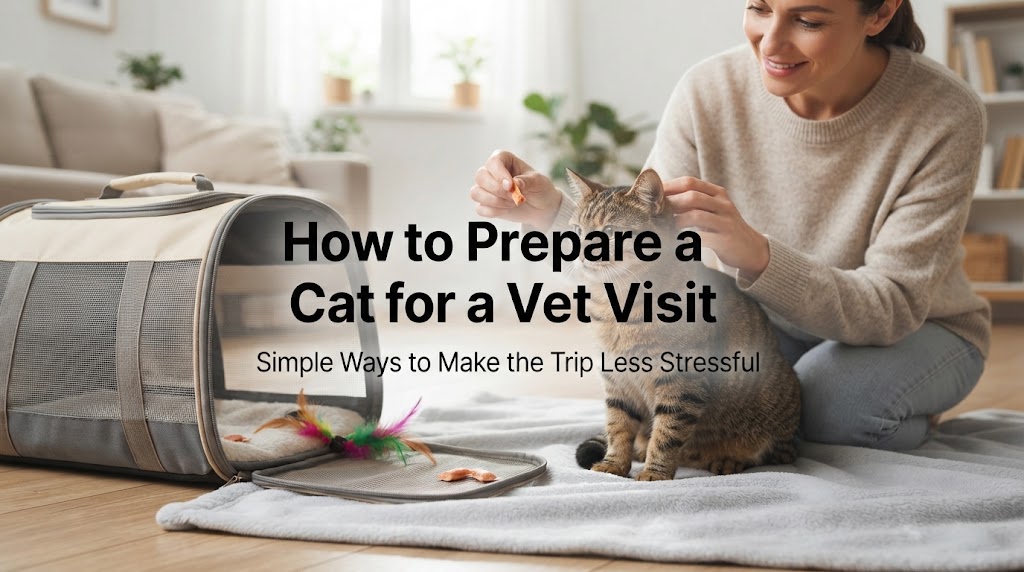
For many cats, the stressful part of veterinary care starts before the examination: the carrier appears, the cat is chased, the car moves unpredictably and the clinic smells unfamiliar. Preparation can reduce several of those stressors. The best plan starts days or weeks before an appointment, but even on the day itself you can improve safety by handling the carrier steadily, minimizing noise and telling the veterinary team about your cat's fear history.
Quick Answer
Keep the carrier familiar between visits and line it with absorbent, familiar-smelling bedding. On appointment day, calmly place or lure the cat inside rather than chasing if possible. Support the carrier from underneath and secure it in the car. Covering part of the carrier with a light towel can help some cats while preserving ventilation. If previous visits caused severe fear, ask your veterinarian in advance whether a prescribed pre-visit medication plan is appropriate.
Where Vet-Visit Stress Builds
Carrier capture
A cat chased around the home arrives already aroused. Long-term carrier training is the most useful way to change this first step.
Vehicle movement
Sliding, swinging and loud car noise can make a confined cat feel unstable. Keeping the carrier level and secure reduces unnecessary motion.
Unfamiliar smells and animals
Clinics contain scent and sound from other pets. A towel over the carrier and waiting away from dogs when possible can reduce exposure.
Handling without enough control
Some cats cope better when examined in the lower half of a removable-top carrier or when handling is paced. Share your cat's preferences and past reactions with the veterinary team.
Before, During and After the Trip
Preparation works best as a sequence, not one trick.
- Several days ahead, confirm the appointment requirements, including whether food should be withheld for any planned procedure. Do not fast unless instructed.
- Keep the carrier open at home with familiar bedding and rewards.
- Prepare medication only if it was prescribed for this cat and visit; follow timing instructions exactly.
- Load the cat in a closed room so an open exterior door cannot become an escape route.
- Carry the carrier with two hands underneath, keep it level and secure it in the vehicle.
- At the clinic, keep the cat inside the carrier until staff directs otherwise and minimize exposure to unfamiliar animals.
- After returning home, give the cat quiet space. In a multi-cat home, watch for temporary tension caused by unfamiliar clinic scents.
Pack a Small Cat Visit Kit
A few familiar items can make the trip more predictable.
- Absorbent familiar bedding or a towel.
- A spare clean towel in case of an accident.
- Favorite treats if the clinic says food is allowed.
- A list of medications, doses and recent health changes.
- Photos or videos of symptoms that may not appear in the clinic.
- A written list of questions so stress does not make you forget them.
Signs the Current Plan Is Too Stressful
Tell the clinic before the next visit if transport repeatedly produces severe distress.
| Sign | Meaning | Next Step |
|---|---|---|
| Quiet but alert in carrier | May be coping | Continue low-stress handling |
| Persistent yowling, drooling | High travel stress or nausea possible | Discuss travel plan |
| Panting/open-mouth breathing | Can be serious | Contact clinic promptly |
| Thrashing/self-injury | Severe distress | Veterinary pre-visit plan needed |
| Aggression at clinic | Fear/pain possible | Tell team before handling |
Common Mistakes to Avoid
Do not transport a loose cat in the car, swing the carrier by one handle, sedate with human medication or wait until capture becomes a fight. Do not use food withholding unless the clinic specifically instructs it; requirements vary by appointment and medical condition.
When to Get Professional Help
If your cat is impossible to transport without panic, ask your veterinarian about carrier training, travel sickness and prescribed pre-visit medication well before the next appointment. Severe breathing distress during transport requires urgent veterinary guidance.
Related Virixoo Guides
Build the foundation with How to Train a Cat to Use a Carrier. If returning home creates conflict with another cat, read How to Reduce Stress in a Multi-Cat Home.
Tell the Clinic What Happened Last Time
“My cat hates the vet” is less useful than specific details. Tell the team whether the cat vomited in the car, urinated in the carrier, panted, hid in the carrier, froze during handling, tried to escape or became defensive when a particular body area was touched. Ask whether you can wait in the car or a quiet area if the waiting room is stressful. This information lets staff plan handling and timing before the cat is already overwhelmed.
Practice Handling Between Visits
When your cat is relaxed at home, pair one-second touches of paws, ears, lips or body areas with rewards, but do not imitate painful procedures. The purpose is to make ordinary examination-style contact familiar. Stop at the first sign of discomfort and keep sessions short. A cat that suddenly resists a type of handling it previously accepted may be painful and should be assessed rather than “trained through” the reaction.
Make the Return Home Quiet Too
The trip is not over when the carrier reaches the front door. Put the carrier down in a quiet indoor room, close exterior doors and let the cat exit at its own pace. Offer familiar resources and avoid immediate grooming or social demands. In multi-cat homes, watch the resident cats before allowing close contact because clinic odors can cause temporary hissing or avoidance. A calm recovery protects the positive work you did before the appointment.
Bottom Line
A calmer vet visit is usually built at home. Familiarize the carrier, transport it steadily, plan ahead with the clinic and treat severe fear as something worth managing—not as misbehavior.