Cats can live peacefully together without being close friends. Problems often begin when several cats are expected to share one narrow route, one favored litter box, one feeding station or one high resting place. Tension may be subtle: staring, blocking hallways, chasing away from resources, waiting until another cat leaves, overgrooming or hiding. Reducing conflict starts by giving each cat choice and access rather than forcing more interaction.
Quick Answer
Provide multiple, separated sets of food, water, litter boxes, scratching areas, resting places and elevated spaces. Avoid placing all resources side by side, because that still creates one contested location. Give each cat individual play and human attention. Interrupt escalating conflict with distance, not punishment. Sudden fighting or behavior change should also trigger a veterinary check because pain or illness can alter social tolerance.
Where Multi-Cat Tension Comes From
Resource competition
Cats may not openly fight over food or litter. One cat can control access simply by sitting in a doorway or staring. Multiple separated resources reduce the need to pass another cat to meet basic needs.
Too few escape routes
A hallway, stair landing or room with one exit can become a trap during tense encounters. Elevated routes and more than one way around a space reduce forced face-to-face contact.
Different social preferences
One cat may want frequent play while another prefers distance. Expecting both cats to share beds or interact constantly can create avoidable pressure.
Changes in household scent or routine
A veterinary visit, new furniture, outdoor cat at a window, guest or schedule change can alter familiar scent and trigger temporary distrust between housemates.
A Home Reset for Intercat Tension
The goal is not to make cats socialize; it is to make peaceful coexistence easy.
- Map the current locations of food, water, litter, beds, scratching posts and high perches.
- Add enough resources that one cat cannot control all access, and spread them through different parts of the home.
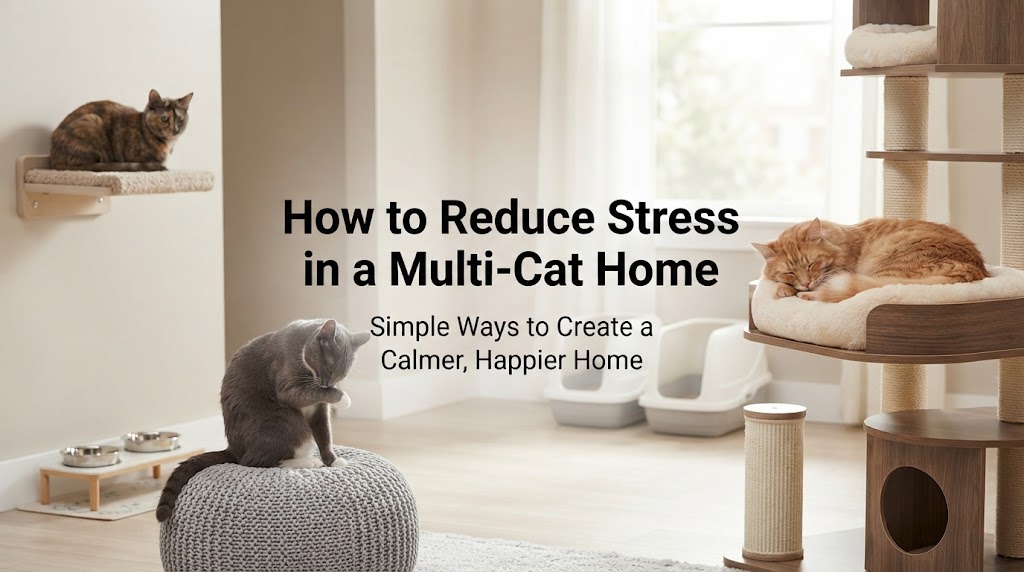
- Create vertical routes with cat trees, shelves or furniture that allow passing without close contact.
- Feed cats separately if one rushes, steals food or guards bowls.
- Schedule individual interactive play so high-energy cats can expend hunting energy without targeting a housemate.
- Block or manage views of outdoor cats if window encounters repeatedly trigger redirected tension.
- Reward calm coexistence at a comfortable distance; do not carry cats toward each other to force friendship.
Resource Placement Matters More Than Resource Count
Ten bowls in one corner still function like one feeding area if a cat can guard the corner.
- Distribute litter boxes across locations rather than lining them up together.
- Separate food from water and both from toileting areas.
- Provide several elevated resting locations with more than one approach.
- Include hiding spaces that do not become dead ends.
- Give each cat access to quiet human-free resting time when desired.
Subtle Signs of Tension
Early recognition is easier to address than repeated fights.
| Behavior | Possible Meaning | Useful Change |
|---|---|---|
| One cat stares in doorway | Blocking access | Add alternate route/resources |
| One waits to eat | Social pressure | Feed separately |
| Chasing after litter use | Ambush pattern | Move/add litter boxes |
| Hiding increases | Avoidance | Increase safe spaces and assess health |
| Growling, swatting, fights | Conflict escalated | Separate safely and seek plan |
Common Mistakes to Avoid
Do not punish growling or hissing, force cats to share bowls, hold them nose-to-nose, or assume they will “work it out.” Avoid using one desirable resource as the only option. After a serious fight, immediate forced reunion can intensify conflict; a gradual reintroduction may be needed.
When to Get Professional Help
Seek veterinary advice for sudden aggression, changes in appetite or litter use, injuries, or a cat that becomes chronically withdrawn. A veterinary behaviorist or qualified feline behavior professional can help when tension persists despite environmental changes.
Related Virixoo Guides
If you are introducing cats for the first time, read How to Introduce Two Cats. For a cat that hisses, see Why Does My Cat Hiss at Me?.
Create a Social Map of the House
For several days, note where each cat sleeps, eats, drinks and passes through doorways. Watch who leaves when another arrives and who hesitates before using a resource. This map often reveals tension that never becomes a fight. A cat that waits on the stairs until another moves, for example, may need a second route or a resource on another floor. Place improvements where conflict actually occurs rather than adding everything to one “cat corner.”
Separate After a Serious Fight
If cats have had an intense fight, give them physically separate safe areas until both return to normal behavior. Reintroduction may begin with scent exchange and positive experiences on opposite sides of a closed door before visual access resumes. Moving too quickly can create another frightening encounter and strengthen the conflict. Injuries, sudden aggression or repeated attacks require veterinary and behavior guidance.
Do Not Confuse Tolerance With Friendship
Two cats can live successfully together while rarely sleeping in contact or grooming each other. A good outcome may be that both can eat, rest, play and use litter boxes without monitoring one another. Watch for relaxed parallel use of space rather than trying to create cuddling. Respecting social distance often reduces the pressure that creates conflict in the first place.
Bottom Line
A peaceful multi-cat home depends on choice, distance and access. Separate resources, add escape routes and respect individual social preferences rather than measuring success by how often the cats sleep together.