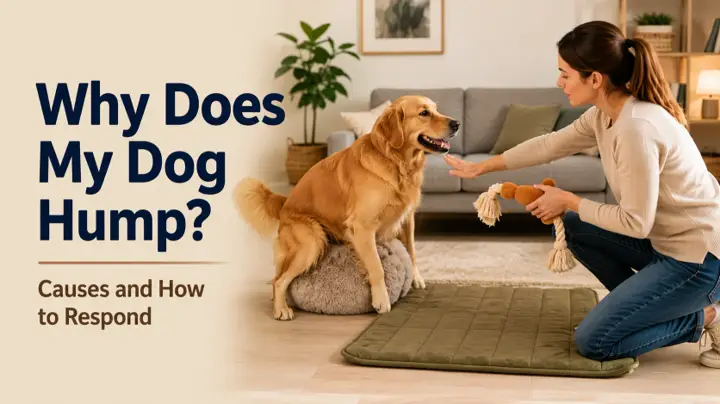
Why Does My Dog Hump People, Dogs or Objects? Causes and How to Respond
Understand why dogs hump people, other dogs or objects, how excitement, stress, play and habit contribute, and how to redirect the behavior without...
Browse 66 Virixoo dog behavior guides, organized to help you move between closely related questions.
Understand why dogs hump people, other dogs or objects, how excitement, stress, play and habit contribute, and how to redirect the behavior without...
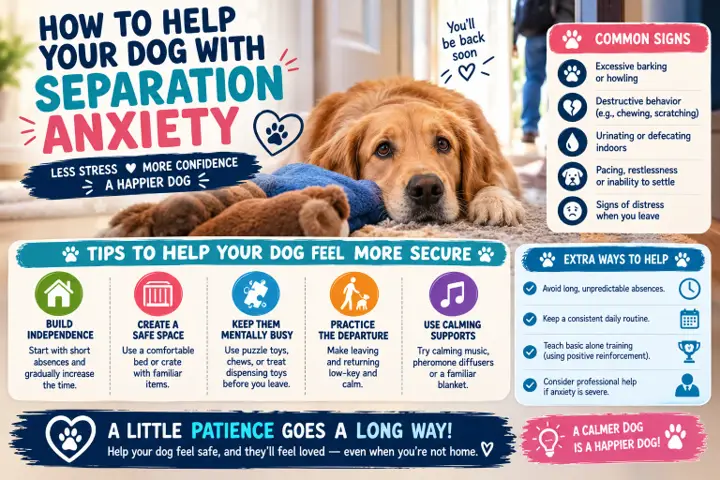
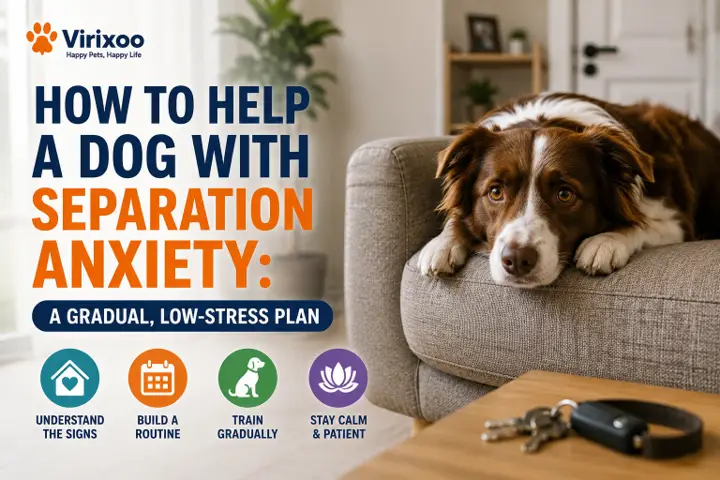
Learn the signs of separation-related distress and a humane, gradual plan that avoids punishment and overwhelming absences.
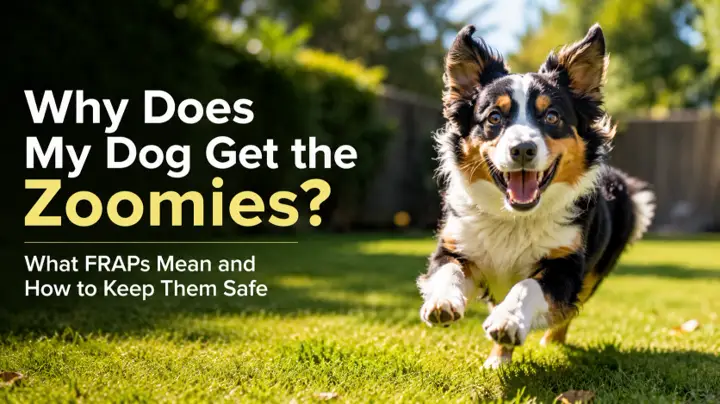
Dog zoomies are usually normal bursts of energy. Learn common triggers, why puppies get them, how to prevent injuries, and when frantic behavior ma...
Excessive barking has different causes. Learn how to identify the trigger, reduce rehearsal, reward quiet alternatives, and know when professional...
Brief nighttime check-ins can occur when a dog wakes between sleep cycles, responds to household sounds, or follows a learned social routine. Repea...
Sleeping near the front door can be a practical resting choice related to floor temperature, household traffic, outdoor sounds, arrivals and depart...
A dog turning its back during petting is not automatically rejection or trust. The meaning depends on whether the dog leans in, stays relaxed, move...
A window can function like a constantly changing observation point. Calm watching may be harmless enrichment, while repeated barking, charging, ina...
Barking during a hug does not prove jealousy or protectiveness. The same behavior can come from excitement, uncertainty, fear, learned attention se...
Standing between your legs can be a comfortable social position or a place a dog seeks when uncertain. Loose body language suggests a different emo...
Under-chair resting can provide social proximity plus a partially enclosed space. It is usually harmless when the dog is relaxed and moves freely...
Yawning is not a single-purpose signal. During petting it can occur in relaxed, sleepy dogs as well as dogs experiencing uncertainty or stress, so...
Sleeping with the back facing you does not automatically mean rejection, protection, dominance or trust. A dog that voluntarily rests nearby with l...
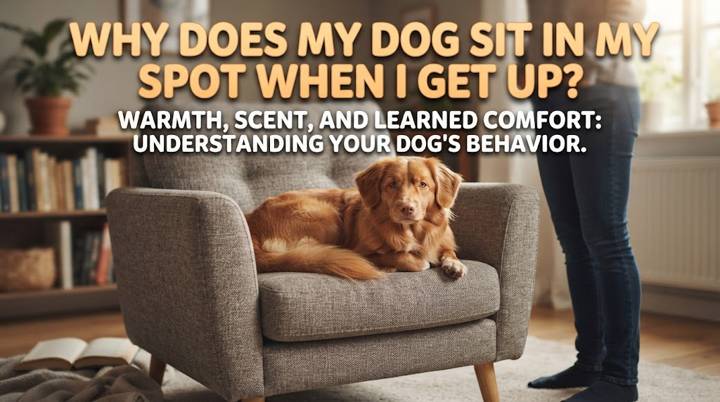
Taking your seat is usually a comfort and availability issue rather than a status challenge. The important exception is a dog that stiffens, growls...
Create a safer fireworks plan with secure indoor management, noise reduction, low-stress conditioning, and veterinary support for severe fear.
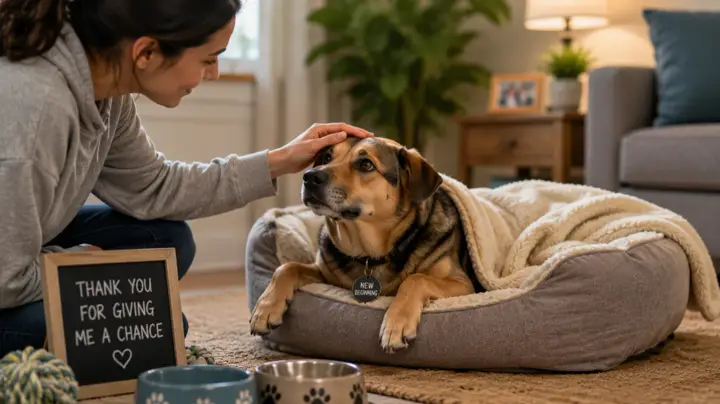
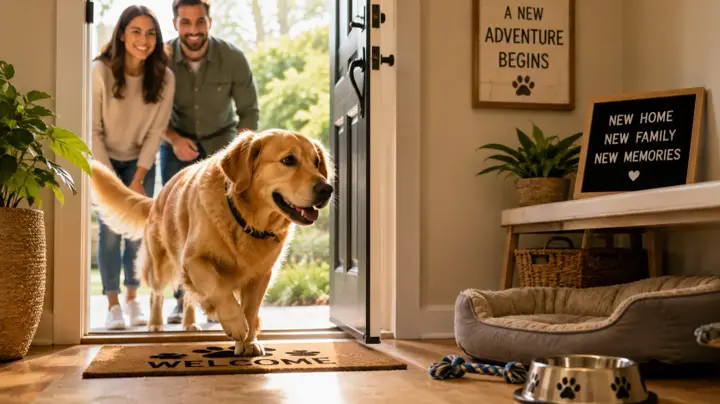
A practical guide to how to help a rescue dog settle in, with low-stress management, reward-based training, common mistakes, body-language clues, a...
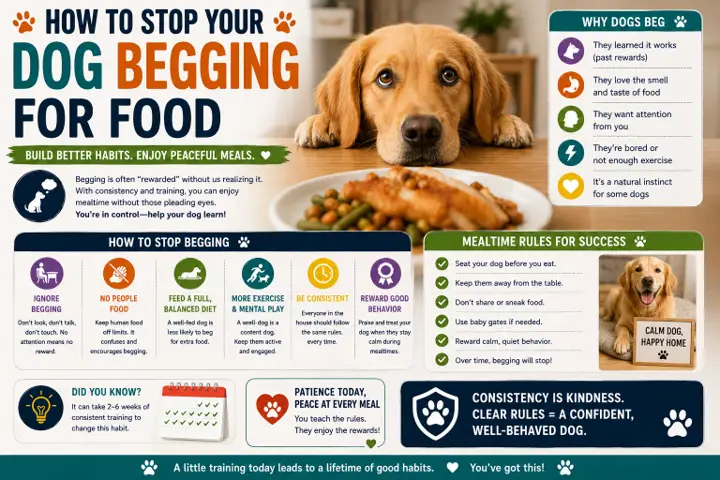
A practical guide to how to introduce a dog to a cat, with low-stress management, reward-based training, common mistakes, body-language clues, and...
A practical guide to how to stop a dog from chewing furniture, with low-stress management, reward-based training, common mistakes, body-language cl...
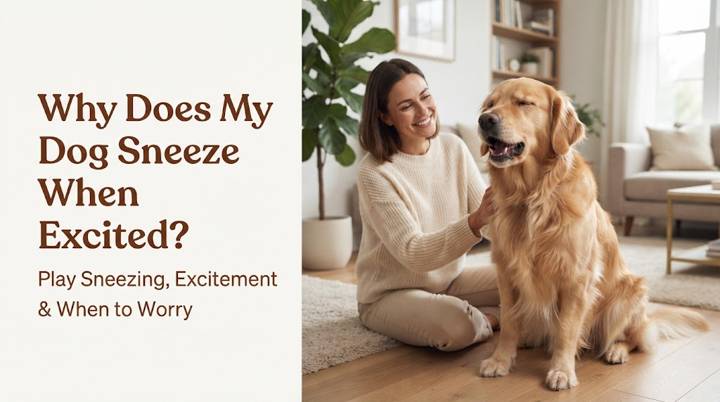
Brief sneezing during play or greetings can be normal social behavior, but sneezing outside those moments deserves a closer look.
Choose safer chew toys by matching size, strength, material, and supervision to your dog’s chewing style while recognizing dental and swallowing ha...
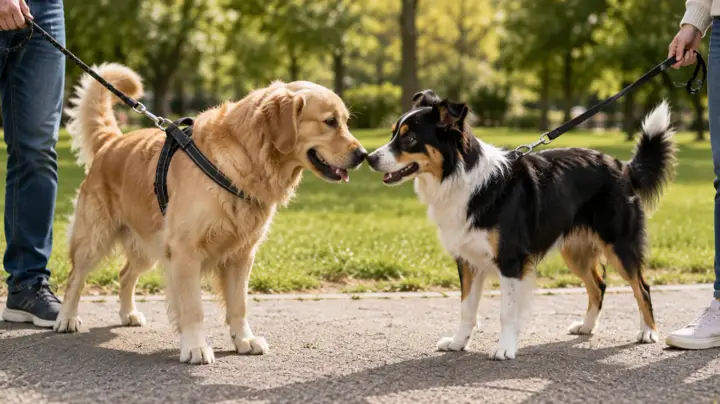
A practical guide to how to introduce two dogs safely, with low-stress management, reward-based training, common mistakes, body-language clues, and...
A practical guide to how to introduce a new dog to your home, with low-stress management, reward-based training, common mistakes, body-language clu...
Reduce veterinary-visit stress with carrier or car practice, cooperative handling, low-pressure waiting, useful rewards, and early professional sup...
A full-body shake when dry can occur after stretching, waking, excitement, or a mildly stressful interaction and is often normal.