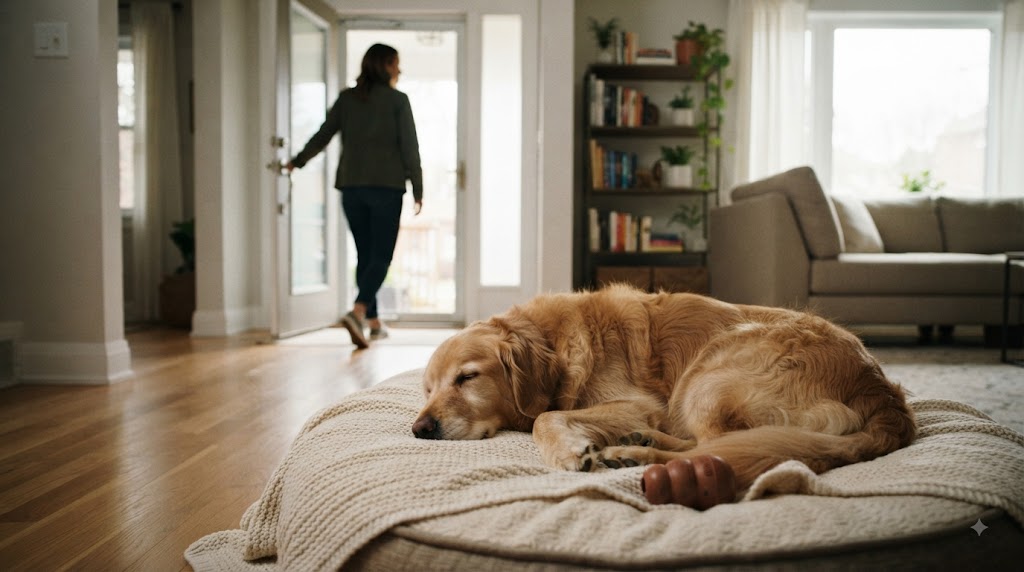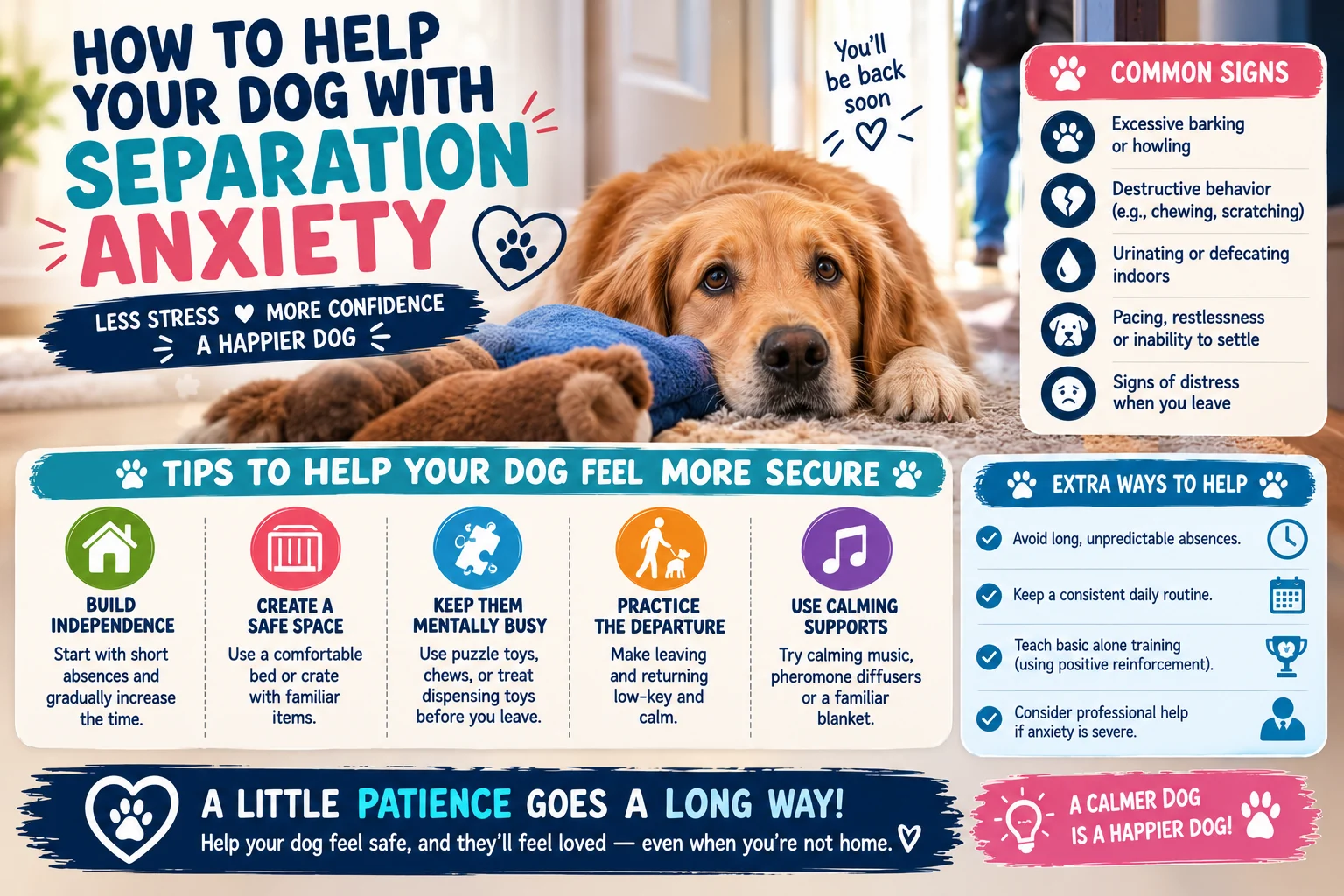
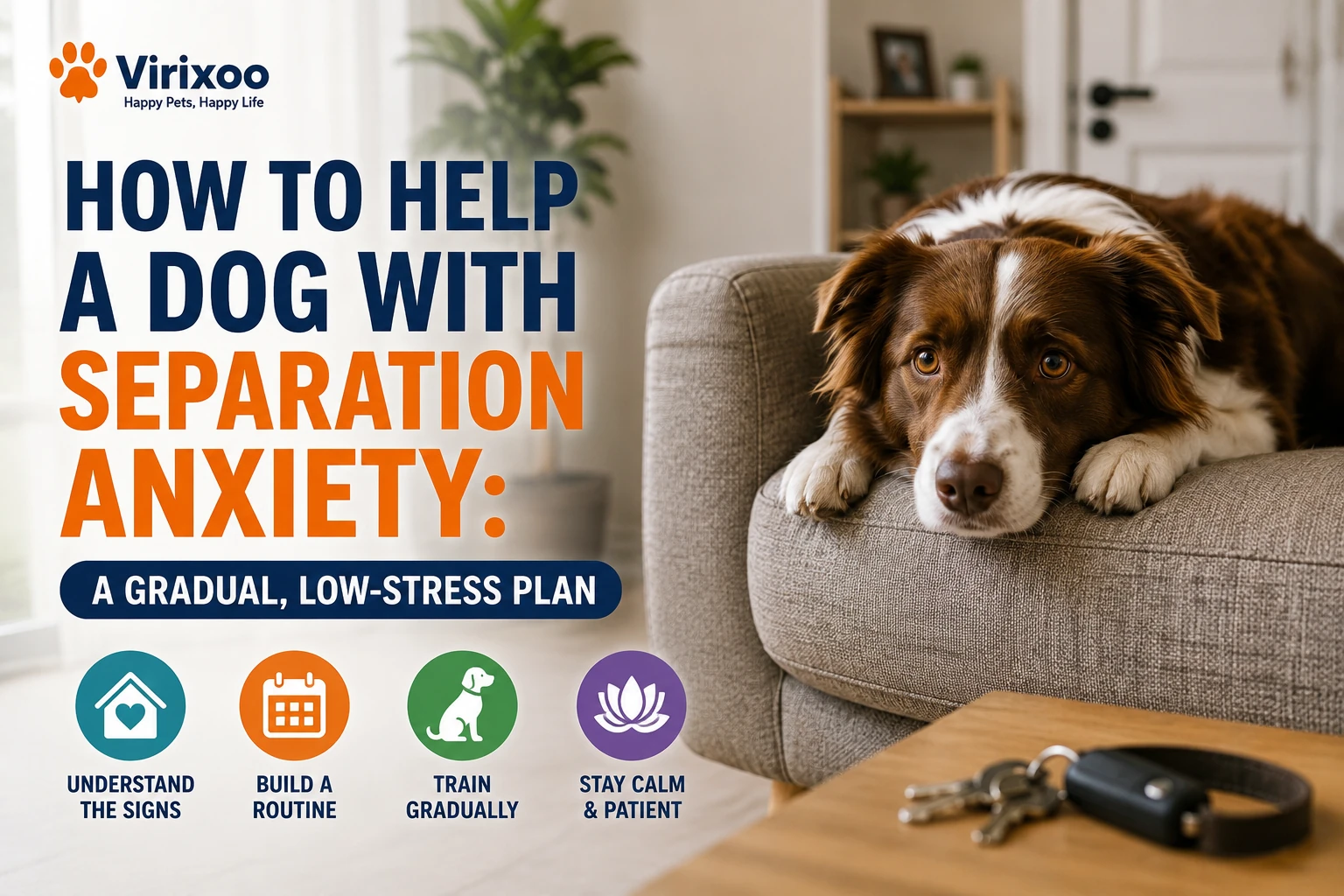
A dog who panics when left alone is not being spiteful. Separation-related distress can involve barking, howling, pacing, drooling, house soiling, destruction near exits, or escape attempts. The goal is not to punish the behavior; it is to reduce the dog's distress and build tolerance to being alone at a pace the dog can handle.
First, make sure the pattern fits
Use a pet camera if possible. Note what happens before departure, how quickly signs begin after you leave, and whether the same behaviors occur while you are home. Medical problems and other behavior issues can resemble separation anxiety, so a veterinarian is an important starting point for severe or sudden cases.
Step 1: identify your dog's threshold
The threshold is roughly how long your dog can remain comfortable before distress begins. For some dogs it may be minutes; for severe cases it may be seconds. Training that repeatedly pushes far beyond that point can make practice less useful.
Step 2: practice very short absences
Start below the threshold. Perform a normal departure, leave briefly, and return while the dog is still calm. Over many sessions, duration can be increased gradually. Progress is rarely perfectly linear; shorten the next session if the dog shows escalating distress.
Step 3: reduce the power of departure cues
Keys, shoes, bags, and coats can predict a long absence. At calm times, occasionally pick up keys or put on shoes without leaving so these cues become less reliable predictors. Do not deliberately tease or repeatedly agitate the dog.
Step 4: build a comfortable routine
Appropriate exercise, sniffing walks, food puzzles, chewing opportunities, and predictable rest can support overall wellbeing. Enrichment is useful, but a dog in true panic may ignore food; refusing a normally valuable food toy on departure can itself be useful information.
What not to do
- Do not punish destruction, barking, or accidents after you return.
- Do not use “cry it out” as a default strategy for a dog showing panic.
- Do not assume another dog will automatically solve the problem.
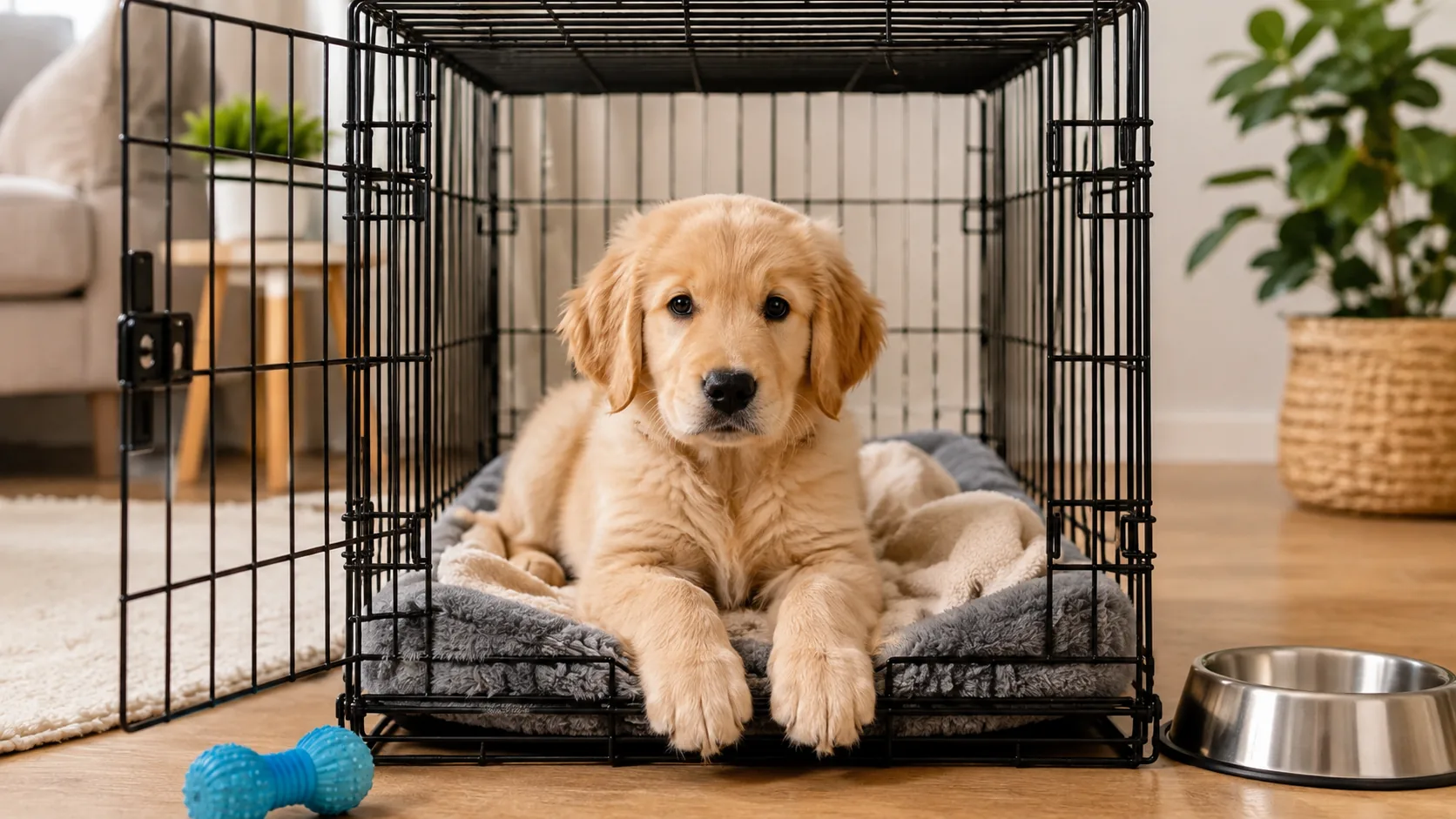
- Do not confine a dog in a crate if confinement triggers frantic escape attempts or self-injury.
When professional help is appropriate
Contact your veterinarian if distress is intense, the dog injures itself, cannot tolerate even brief absences, or the problem appeared suddenly. A veterinarian can assess medical contributors and discuss whether referral to a veterinary behaviorist or other qualified behavior professional is appropriate. Medication can be part of treatment for some dogs and should be prescribed and monitored professionally.
A realistic progress table
| Dog's response | Training decision |
|---|---|
| Relaxed, takes food, settles | Repeat or make the next absence slightly longer |
| Alert but recovers quickly | Keep duration similar until consistently comfortable |
| Pacing, vocalizing, panting, escape behavior | Shorten the next practice and seek help if severe |
Related Virixoo Guides
For general barking, read Why Does My Dog Bark So Much?.
Sources & References
Read the ASPCA separation anxiety guide and the AAHA overview of separation anxiety in pets.
FAQ
Should I ignore my dog before leaving?
Calm, predictable departures are generally preferable to dramatic ones, but treatment should focus on the dog's emotional response and gradual alone-time training rather than rigid rituals.
Will a crate fix separation anxiety?
Not by itself. A crate can be comfortable for some trained dogs, but it can worsen distress in dogs who panic when confined.
How fast should I increase alone time?
There is no universal schedule. Increase only while your dog remains comfortable; severe cases often benefit from professional guidance.
Bottom line: Separation anxiety is a welfare issue, not a discipline problem. Observe the dog, work below the panic threshold, progress gradually, and involve veterinary or behavior professionals when distress is significant.