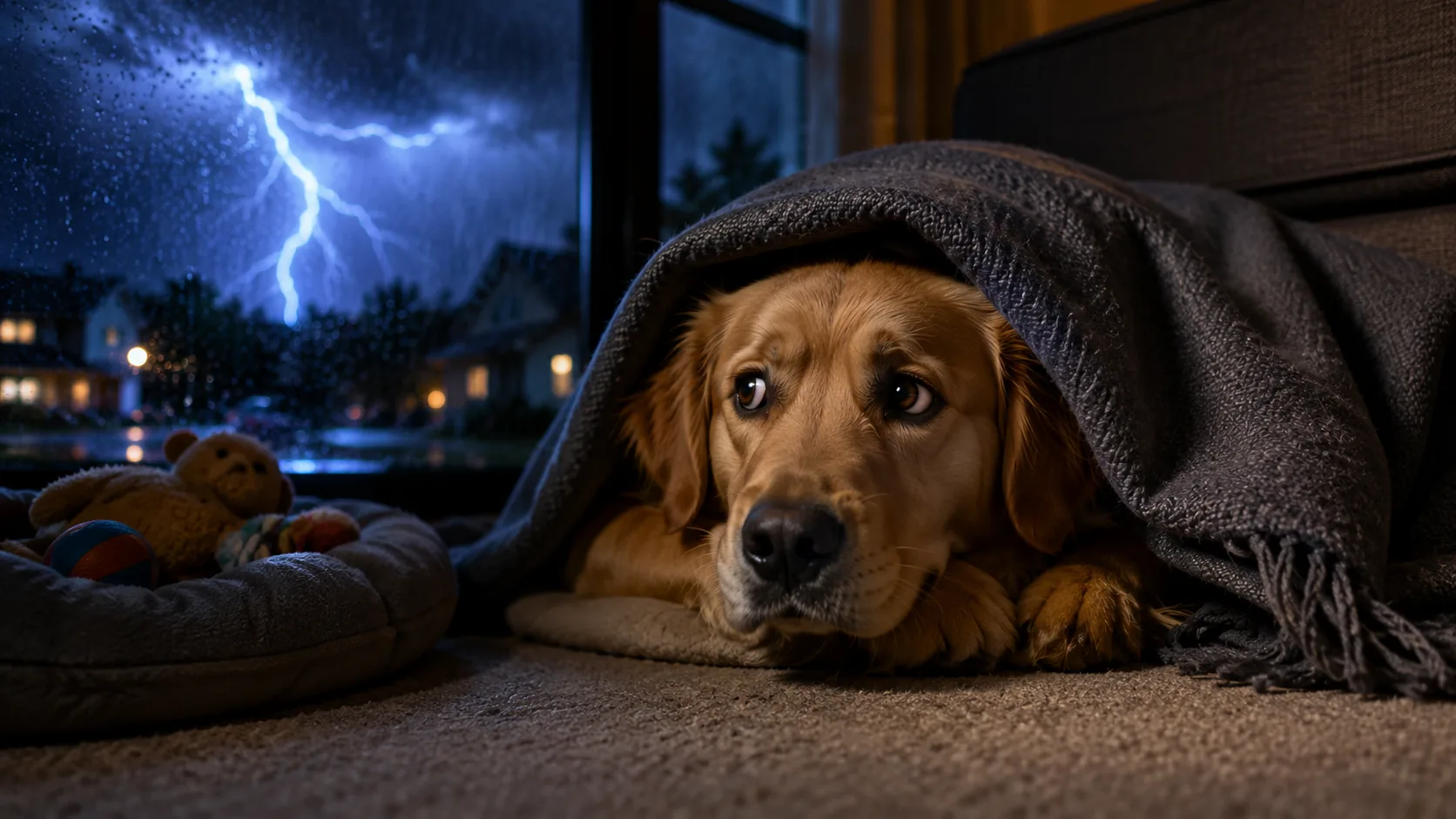
Fireworks fear can trigger hiding, panting, trembling, escape attempts, barking, drooling, or panic. The goal during an event is not to force bravery; it is to reduce risk and help the dog feel as safe as possible. Long-term improvement usually requires training between events and veterinary support for severe cases.
Quick Answer
Keep your dog indoors before fireworks begin, secure doors and identification, close curtains, and prepare a quiet interior room. Use familiar background sound and allow your dog to hide if the chosen spot is safe. Stay calm and offer food or contact if your dog wants them. Severe panic, self-injury, or repeated escape behavior deserves veterinary advice before the next event.
Prepare Before the Noise Starts
- Exercise and toilet your dog earlier in the day when the environment is quiet.
- Bring outdoor dogs inside well before fireworks begin.
- Check gates, doors, windows, microchip details, and identification tags.
- Prepare a familiar bed, water, and safe enrichment in an interior room.
- Keep fireworks and debris completely away from pets.
Reduce Light and Sound
Close curtains or blinds and use ordinary background sound to soften sudden bangs. Move the dog away from windows. Do not take a fearful dog outside to watch fireworks in an attempt to “show them it is safe.”
Let the Dog Choose Safe Distance and Contact
Some dogs seek people; others hide. Calm reassurance does not create fear. Avoid pulling a dog out from under furniture, trapping them in a crate they dislike, or forcing social interaction during panic.
Training Between Firework Events
Low-volume sound recordings can sometimes be paired with treats or play when the dog remains relaxed. Start at an intensity that produces no fear response. Increase volume very gradually over many sessions. Real fireworks include vibration, flashes, smells, and unpredictable timing, so recordings are only one part of a plan.
When Medication Is Appropriate
Dogs with severe noise phobia may benefit from prescription medication as part of a broader behavior plan. Discuss this with your veterinarian well before the event so the plan can be individualized and, when appropriate, trialed safely. Do not give unprescribed human sedatives.
Fireworks vs. Thunderstorm Fear
Some dogs fear both, while others react only to one. Storms include weather-related cues that fireworks do not. For storm-specific management, read Why Is My Dog Afraid of Thunder?.
When Fear Becomes an Emergency
Seek urgent veterinary care for serious injury, collapse, breathing difficulty, ingestion of fireworks material, or severe trauma during escape. A dog that repeatedly injures itself trying to flee also needs a stronger preventive plan before the next event.
Related Virixoo Guides
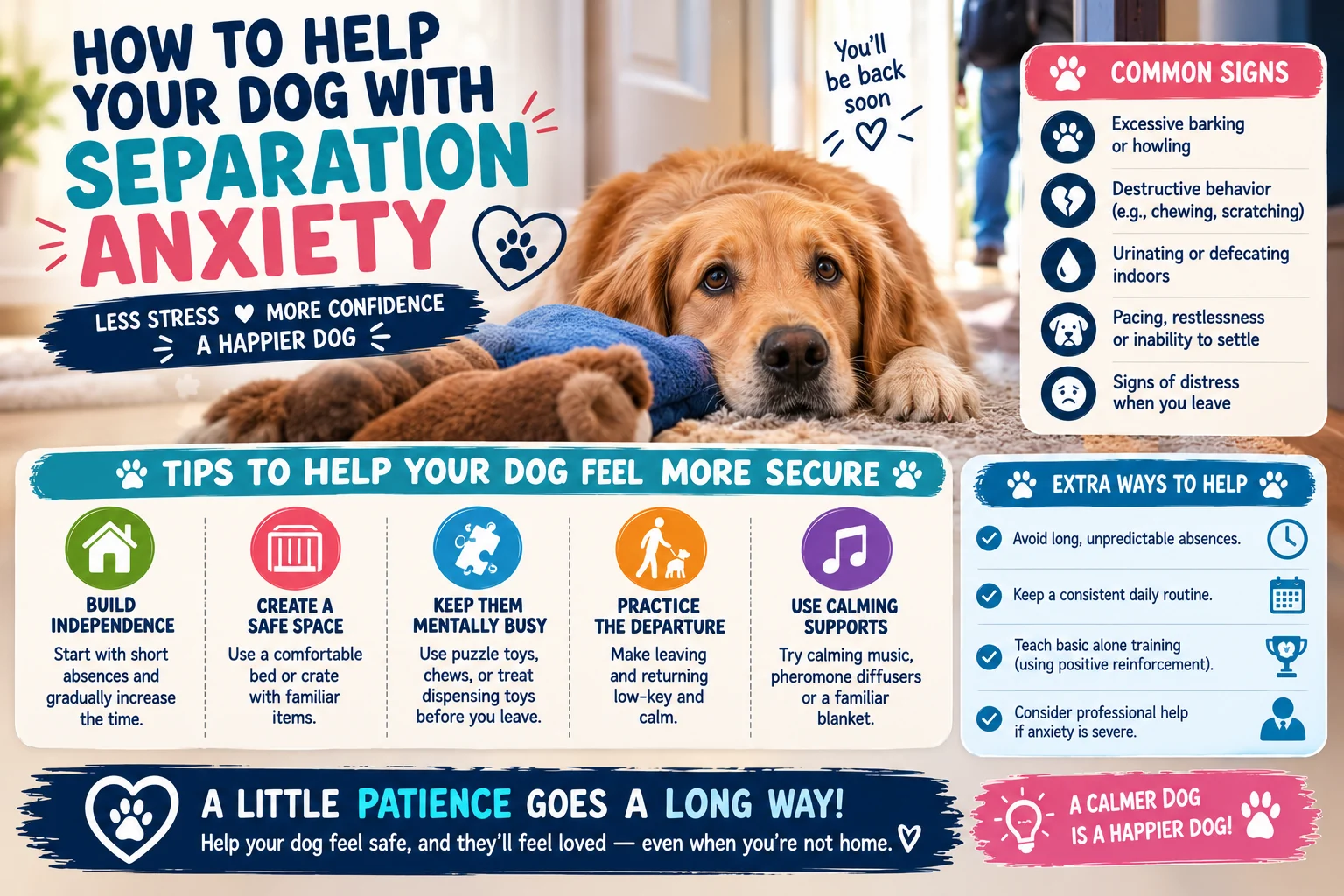
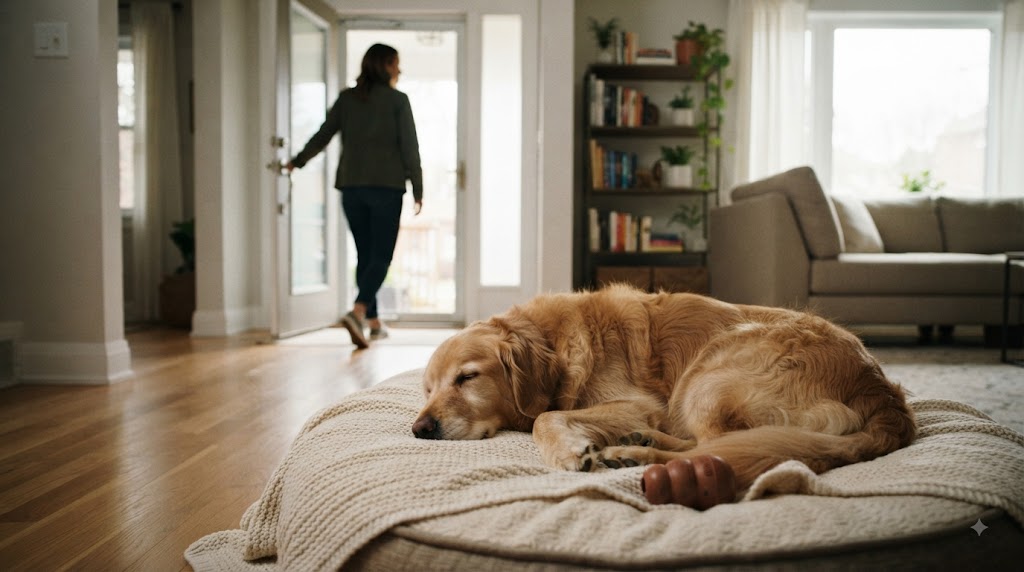
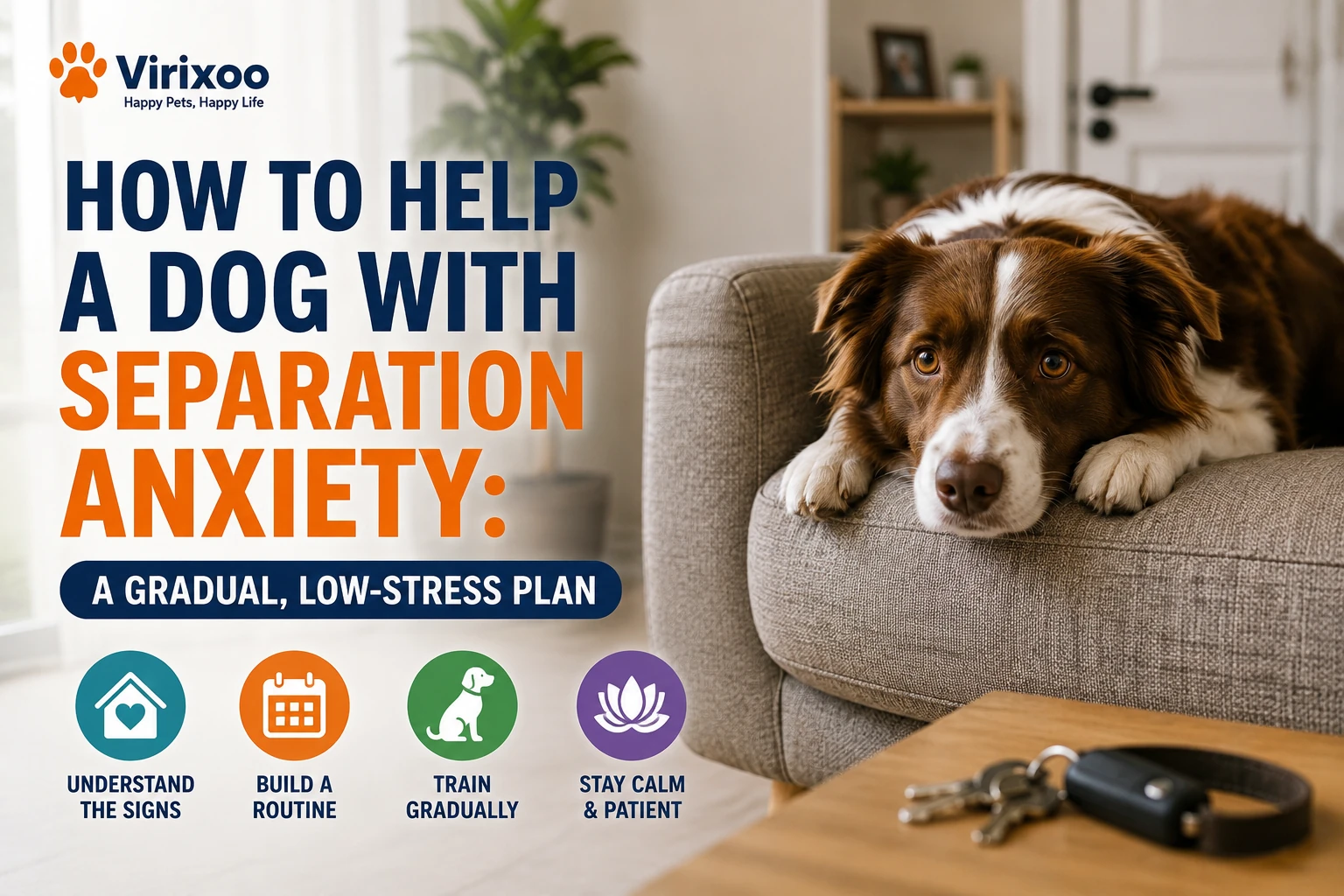
For trembling outside fireworks, read Why Is My Dog Shaking or Trembling?. If panic is linked to owner departures rather than noise, see How to Help a Dog With Separation Anxiety.
Trusted Reference
The ASPCA recommends keeping fearful pets in a secure interior area, reducing exposure to fireworks noise and light, and planning ahead for pets that experience anxiety during celebrations.
FAQ
Should I ignore my dog when it is scared?
No. You can provide calm support if your dog seeks it. The priority is safety and reducing fear, not withholding comfort.
Should I crate my dog during fireworks?
Only if the crate is already a genuinely safe place for that dog. A dog that panics in confinement can injure itself trying to escape.
Do anxiety vests work?
Some dogs appear calmer with snug pressure garments, while others do not. They should be introduced before the event and never replace a complete safety plan.
Bottom line: Fireworks fear is best managed with preparation, secure indoor shelter, gradual training between events, and veterinary support when panic is severe.