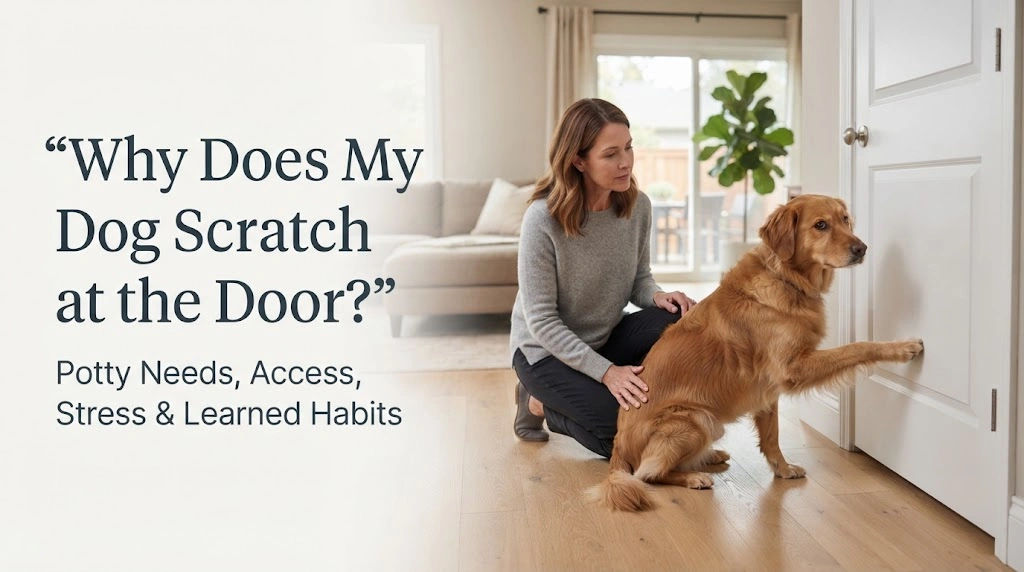
Scratching at a door is a behavior with a consequence: doors sometimes open. Before trying to stop it, determine what the dog is asking for. A dog that needs to toilet requires a different response from one scratching for attention or panicking when separated.
Quick Answer
Track when scratching happens and what occurs immediately afterward. First rule out an urgent toilet need. Then look for patterns involving sounds outside, access to family members, attention, or being left alone. Avoid punishment; it can increase distress without teaching an alternative.
Toilet communication
If scratching occurs after waking, eating, drinking, or a long indoor interval, the dog may be signaling a genuine need to go out. A sudden increase in urgency or accidents can also warrant medical evaluation.
Access and learned reinforcement
If scratching reliably makes someone open the door, the behavior can become efficient communication. Teach an alternative such as waiting on a mat, touching a bell, or sitting near the door, and reward that behavior consistently.
Outside triggers
Dogs may scratch when they hear people, animals, vehicles, or other activity beyond the door. Blocking visual access and reducing trigger exposure can help while you work on calm responses.
Separation-related distress
Frantic scratching focused on a door separating the dog from a person can be part of separation distress, particularly when paired with vocalizing, pacing, drooling, destruction, or inability to settle.
Protect the dog and the door
Use management to prevent nail injury and avoid situations in which the dog repeatedly rehearses frantic scratching. Do not use aversive devices or punishment. Address the reason for the behavior and teach a clear alternative.
When to seek professional help
Veterinary advice is appropriate for sudden toileting urgency or behavior change. A qualified reward-based trainer or veterinary behavior professional can help when fear or separation distress is driving repeated scratching.