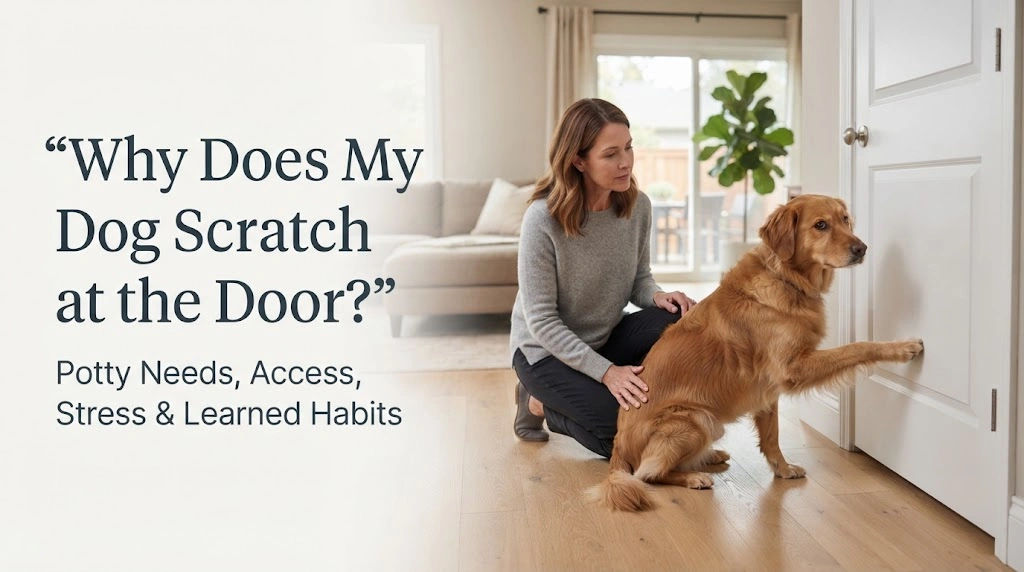
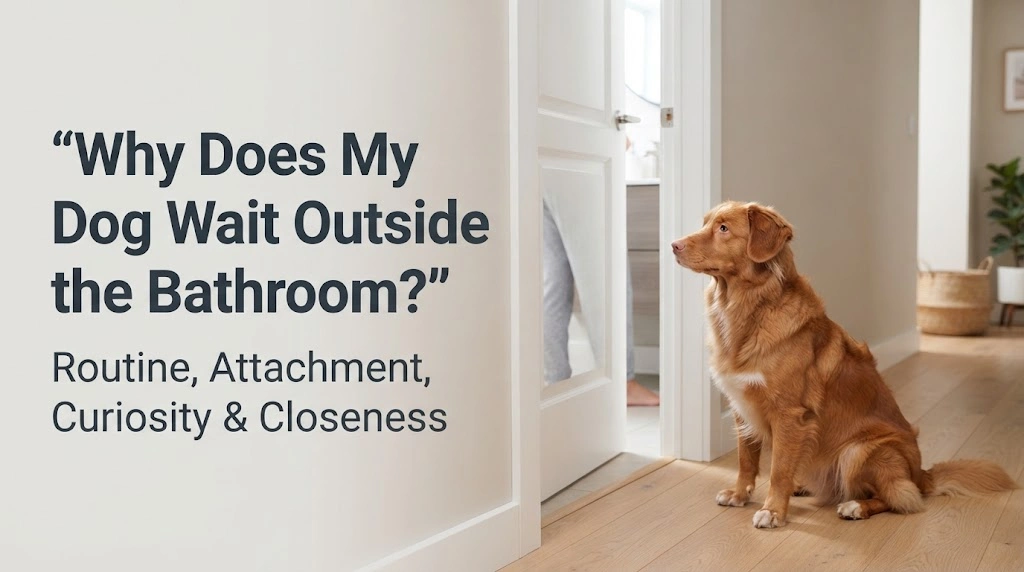
A dog waiting outside the bathroom usually has a simple explanation: it prefers to stay near you and has learned that you will reappear through that door. Curiosity and household routine can reinforce the pattern. Waiting quietly is very different from panicking when access is blocked.
Quick Answer
A relaxed dog that waits, lies down, or walks away normally is usually showing routine proximity seeking. Concern is greater when a closed door triggers frantic scratching, prolonged barking, drooling, pacing, destruction, or attempts to escape.
Proximity seeking
Dogs are social animals and many choose to keep track of household members. Following you to a doorway and waiting nearby can simply be part of that individual dog's normal social style.
Routine and prediction
Repeated daily events become cues. The dog may know that a bathroom visit is brief and wait because attention, a walk, food preparation, or another routine often follows.
Curiosity about a closed door
A barrier can make an otherwise uninteresting room more noticeable. If the dog is calm and easily redirected, curiosity is a more likely explanation than severe distress.
When attachment becomes distress
The important distinction is the dog's emotional state. Panic behaviors during ordinary separation—not the mere fact of waiting near a door—are what raise concern for a separation-related problem.
Encourage comfortable independence
Provide a resting place, chew, or food puzzle when appropriate and reward calm settling away from the door. Build independence gradually; do not suddenly impose long separations on a dog that already shows panic.
When to get help
If barrier or separation distress is intense, frequent, or causes injury or destruction, discuss the pattern with a veterinarian and a qualified behavior professional. Sudden major behavior change in an older dog also deserves medical assessment.