
When a dog turns around during petting, people often assume either “he trusts me completely” or “he does not want affection.” Both can be too simple. The useful question is what the dog does next.
Quick Answer
Your dog may turn his back during petting because that position feels comfortable, because he prefers touch on the shoulders or back, because he wants less face-to-face pressure, or because he is trying to end the interaction. The direction he faces matters less than whether his body stays loose and whether he chooses to continue contact.
Turning Can Be a Repositioning Choice
A dog may rotate so your hand reaches a preferred area more easily. If the dog backs gently into you, leans against your legs, or remains relaxed after turning, the new position may simply be more comfortable.
Facing Away Can Reduce Social Pressure
Direct eye contact, leaning over the head, and hands reaching from above can feel intense to some dogs. Turning sideways or away creates a lower-pressure interaction while allowing the dog to stay close.
Use a Petting Pause Instead of Guessing
Pet gently for a few seconds and then stop. If the dog turns back toward you, nudges your hand, leans in, or remains positioned for more contact, continuing is reasonable. If the dog walks away, becomes still, avoids your hand, or increases distance, let the interaction end.
| Body language after turning | Useful response |
|---|---|
| Loose body, leans into you | Continue gently if the dog reinitiates |
| Walks away | Respect the choice to end contact |
| Freezes, shows hard eyes, growls | Stop immediately and create space |
| Suddenly reacts when one area is touched | Consider pain and veterinary evaluation |
A Sudden Change Can Be a Pain Clue
If a dog that normally enjoys petting suddenly turns away, flinches, guards a body area, or avoids touch, pain should be considered. Merck emphasizes ruling out medical contributors to behavior change. Skin disease, ear pain, neck or back pain, orthopedic discomfort, and other problems can alter tolerance for touch.
Do Not Hold the Dog in Place
Restraining a dog so it must accept affection can increase conflict. Let the dog move away. AVSAB recommends reward-based, humane approaches rather than force or aversive methods.
Related Virixoo Guides
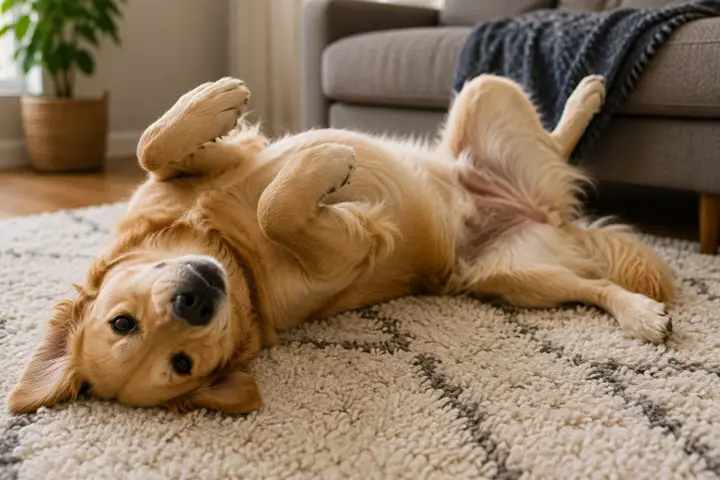
If your dog presses its body against you, read why dogs lean on people. For belly-up behavior, see what rolling onto the back can mean. If your dog physically stands over you during social contact, compare why a dog may stand over a seated owner.
Bottom Line
Turning the back during petting has no single universal translation. Pause, read the whole body, and let the dog's voluntary return or departure tell you more than the position alone.