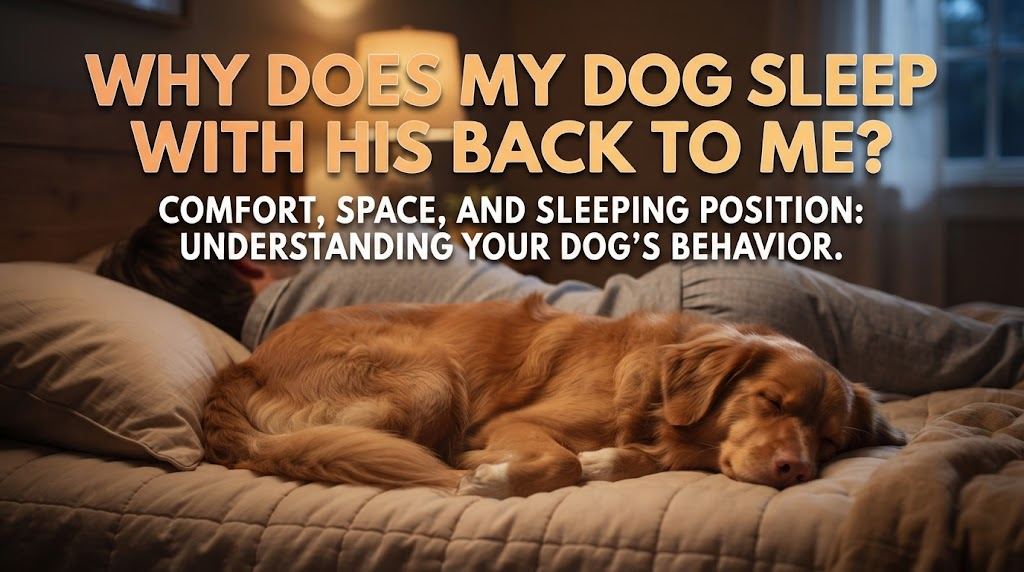
A dog sleeping with its back toward you can feel oddly meaningful because people often associate facing away with disinterest. Dogs do not necessarily use sleeping orientation that way.
Quick Answer
Your dog may sleep with his back to you simply because that position is physically comfortable, fits the available space, or allows closeness without face-to-face contact. The position alone does not scientifically prove trust, protection, rejection, or dominance. Voluntary proximity and relaxed sleep are more useful clues.
Comfort Can Explain Most Sleeping Positions
Dogs choose positions based on body comfort, temperature, support, room layout, bedding, and where people or other pets are located. A dog may face the room because that is where there is space for the head, while its back happens to rest against you.
Close Contact Without Face-to-Face Contact
Some dogs enjoy physical proximity but do not need direct visual engagement while resting. Pressing the back against a person can provide warmth and stable contact while leaving the dog's face unobstructed.
Do Not Assign One Emotional Meaning
| Observation | More useful interpretation |
|---|---|
| Dog voluntarily settles beside you | Proximity appears comfortable |
| Loose muscles and normal breathing | Dog appears relaxed |
| Faces away but sleeps deeply | Orientation alone is not concerning |
| Suddenly avoids all usual sleeping positions | Look for environmental or health changes |
Does Facing Away Mean the Dog Is Protecting You?
You cannot tell that from the sleeping direction alone. A dog may coincidentally face a doorway or open room, but that is not proof of a deliberate guarding role. Avoid building strong claims from one body position.
Respect a Sleeping Dog's Space
Even affectionate dogs can startle when awakened. Avoid hugging, climbing on, or suddenly grabbing a sleeping dog. Children should be taught to leave sleeping dogs undisturbed and to call them over when interaction is wanted.
When a Sleeping-Position Change Matters
A single new position is usually not a medical sign. Pay attention when the dog repeatedly gets up, cannot settle, pants at rest, cries, avoids lying on one side, becomes stiff, or stops using previously comfortable beds. Those additional signs are more important than which direction the dog faces.
Related Virixoo Guides
If the dog repeatedly changes position, read why dogs may keep repositioning during sleep. If your dog suddenly avoids one side, see why a dog may avoid lying on one side. For daytime body contact, read why dogs lean against people.
Bottom Line
Sleeping with the back toward you is usually best understood as a comfortable orientation, not a hidden message. Focus on whether your dog chooses to rest nearby, appears relaxed, and can sleep comfortably rather than trying to decode one exact direction.