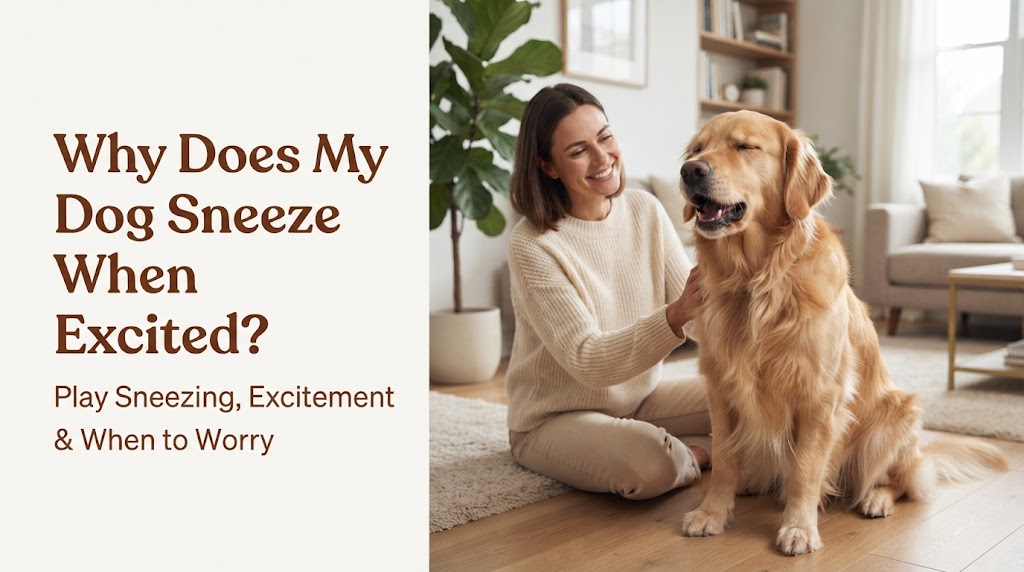
Brief sneezing during play or greetings can be normal social behavior, but sneezing outside those moments deserves a closer look.
Quick Answer
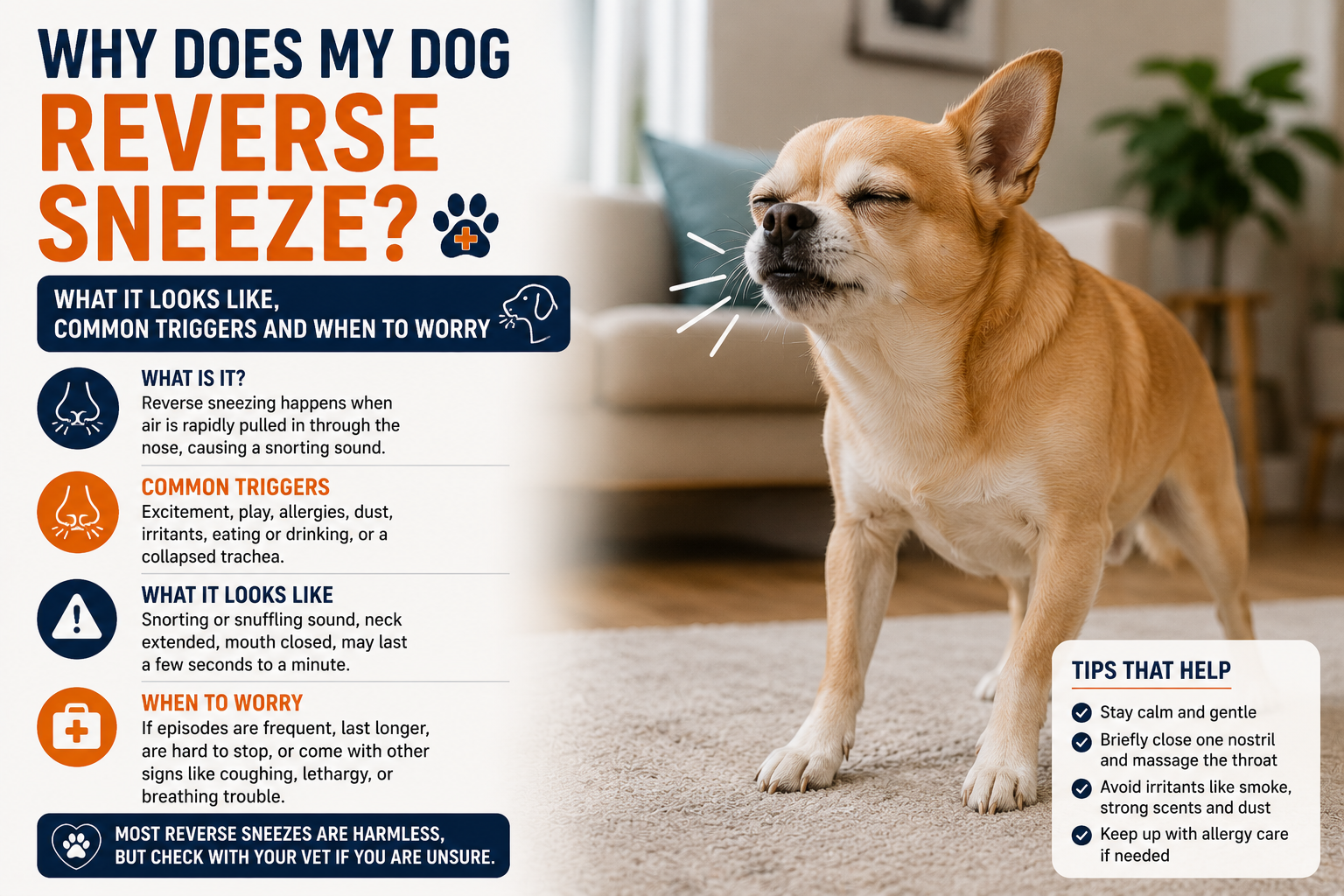
If you are searching for why does my dog sneeze when excited, compare what you are seeing with your dog's normal baseline. A brief familiar event in a comfortable dog is different from a sudden, repeated, painful, or worsening change.
Why the Pattern Matters
Start with timing. Ask what happened immediately before the behavior or symptom, how long it lasts, how easy it is to interrupt, and whether it is becoming more frequent. Then look at the whole dog: appetite, water intake, urination, stool, sleep, energy, breathing, movement, and social behavior.
Common Reasons
1. Play-related excitement
Play-related excitement is one possible explanation. Context matters: timing, duration, severity, age, recent changes, and other symptoms help determine whether it is a harmless pattern or a problem that needs professional attention.
2. Rapid facial movement
Rapid facial movement is one possible explanation. Context matters: timing, duration, severity, age, recent changes, and other symptoms help determine whether it is a harmless pattern or a problem that needs professional attention.
3. Dust or fragrance exposure
Dust or fragrance exposure is one possible explanation. Context matters: timing, duration, severity, age, recent changes, and other symptoms help determine whether it is a harmless pattern or a problem that needs professional attention.
4. Nasal irritation
Nasal irritation is one possible explanation. Context matters: timing, duration, severity, age, recent changes, and other symptoms help determine whether it is a harmless pattern or a problem that needs professional attention.
5. A separate respiratory problem
A separate respiratory problem is one possible explanation. Context matters: timing, duration, severity, age, recent changes, and other symptoms help determine whether it is a harmless pattern or a problem that needs professional attention.
What to Check Safely at Home
- Record when the problem started and whether onset was sudden or gradual.
- Note frequency, duration, triggers, and anything that makes it better or worse.
- Check for pain, swelling, redness, discharge, odor, limping, vomiting, diarrhea, cough, or breathing changes when relevant.
- Review recent food, treats, medications, grooming, exercise, travel, weather, household products, and outdoor exposure.
- Take a clear photo or short video if the sign is intermittent and it is safe to do so.
What You Can Do Now
Use calm management, reduce obvious triggers, and reward the behavior you want to see. Make changes gradually rather than forcing the dog through fear or discomfort.
Make one low-risk change at a time. This keeps the situation easier to interpret and avoids masking a pattern that may be useful to your veterinarian or a qualified behavior professional.
What Not to Do
- Do not give human pain relievers, cough medicines, stomach remedies, sedatives, antibiotics, eye drops, or other medication unless a veterinarian recommends the exact product and dose.
- Do not use essential oils, harsh disinfectants, or forceful home procedures on painful skin, eyes, ears, paws, or mouth tissue.
- Do not repeatedly provoke the symptom just to test whether it happens again.
- Do not punish a dog for behavior that may be driven by fear, pain, nausea, or confusion.
When Monitoring May Be Reasonable
Short observation can be reasonable when the change is mild and isolated and your adult dog remains alert, comfortable, eating, drinking, breathing, walking, urinating, and passing stool normally. Monitoring should be active: if the sign returns, intensifies, becomes painful, or is joined by another symptom, the plan should change.
When to Contact a Veterinarian
Contact your veterinarian when the problem is persistent, recurrent, painful, spreading, or clearly different from your dog's usual behavior. Seek urgent care for breathing difficulty, blue or gray gums, collapse, seizures, severe weakness, uncontrolled bleeding, severe pain, inability to urinate, repeated unproductive retching, major trauma, or another rapidly worsening emergency sign.
What to Tell the Vet
Bring a concise timeline. Include onset, frequency, duration, appetite, drinking, urine and stool changes, sleep, energy, mobility, recent medications, diet changes, possible toxins or foreign objects, and any photos or videos. This often saves time and helps the clinician decide which examination or tests are most useful.
Frequently Asked Questions
Can this be normal sometimes?
Sometimes. A familiar, brief, flexible pattern in an otherwise comfortable dog is generally less concerning than a new sign that is intense, painful, repetitive, or difficult to interrupt.
How long should I wait before asking for help?
There is no universal safe waiting period. Puppies, senior dogs, and dogs with chronic illness may need earlier assessment. Severe or rapidly worsening signs should not be watched at home simply to reach a certain number of hours.
Will a video help?
Often yes. Coughs, unusual movements, repetitive behaviors, sleep events, eye changes, and intermittent discomfort may not happen during an appointment. A clear short recording can provide useful context.
Bottom Line
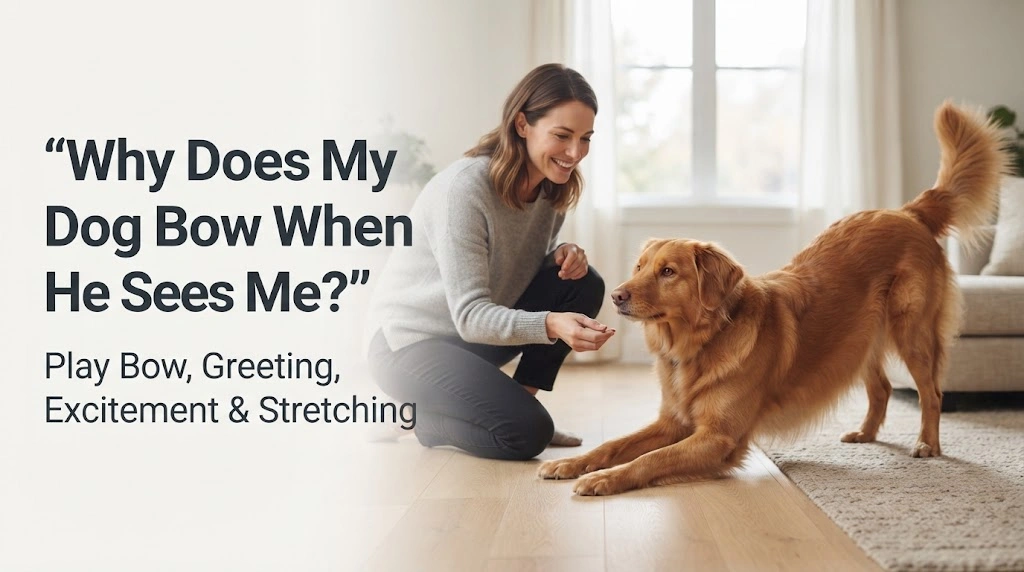
Brief sneezing during play or greetings can be normal social behavior, but sneezing outside those moments deserves a closer look. Focus on the whole pattern, avoid risky home remedies, and get professional help when the change is sudden, persistent, painful, worsening, or associated with other warning signs.