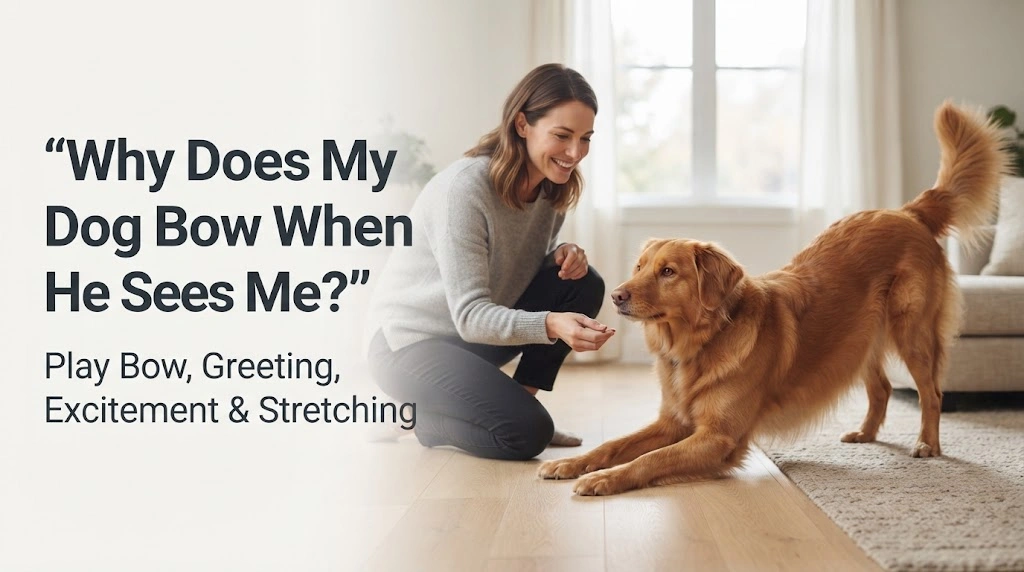
A bow when your dog sees you is commonly a play invitation or excited greeting. Body language and what happens next help distinguish a play bow from stretching or discomfort.
Quick Answer
A classic play bow has the front end lowered and the rear end up, often with loose movement, an open relaxed face, bouncing, or an invitation to chase. It is communication rather than a medical sign.
Stretching Can Look Similar
Some dogs also stretch when they approach a familiar person, especially after getting up. If the dog smoothly returns to normal movement and the posture is not repetitive or painful, this may simply be part of the greeting routine.
Read the Whole Body
Look at the whole sequence: loose wiggly movement and re-engagement support play; stiffness, reluctance to rise, repeated posturing, guarding the abdomen, or inability to settle points away from ordinary play.
How to Respond to the Bow
Respond to a friendly play bow with appropriate play if you want to engage. Avoid labeling every bow as dominance or submission; context is more useful than a single posture.
When a Bow-Like Posture Is Concerning
A new repetitive bow-like posture with vomiting, abdominal swelling, pain, weakness, or marked behavior change deserves veterinary assessment. Severe abdominal distress or collapse is urgent.