
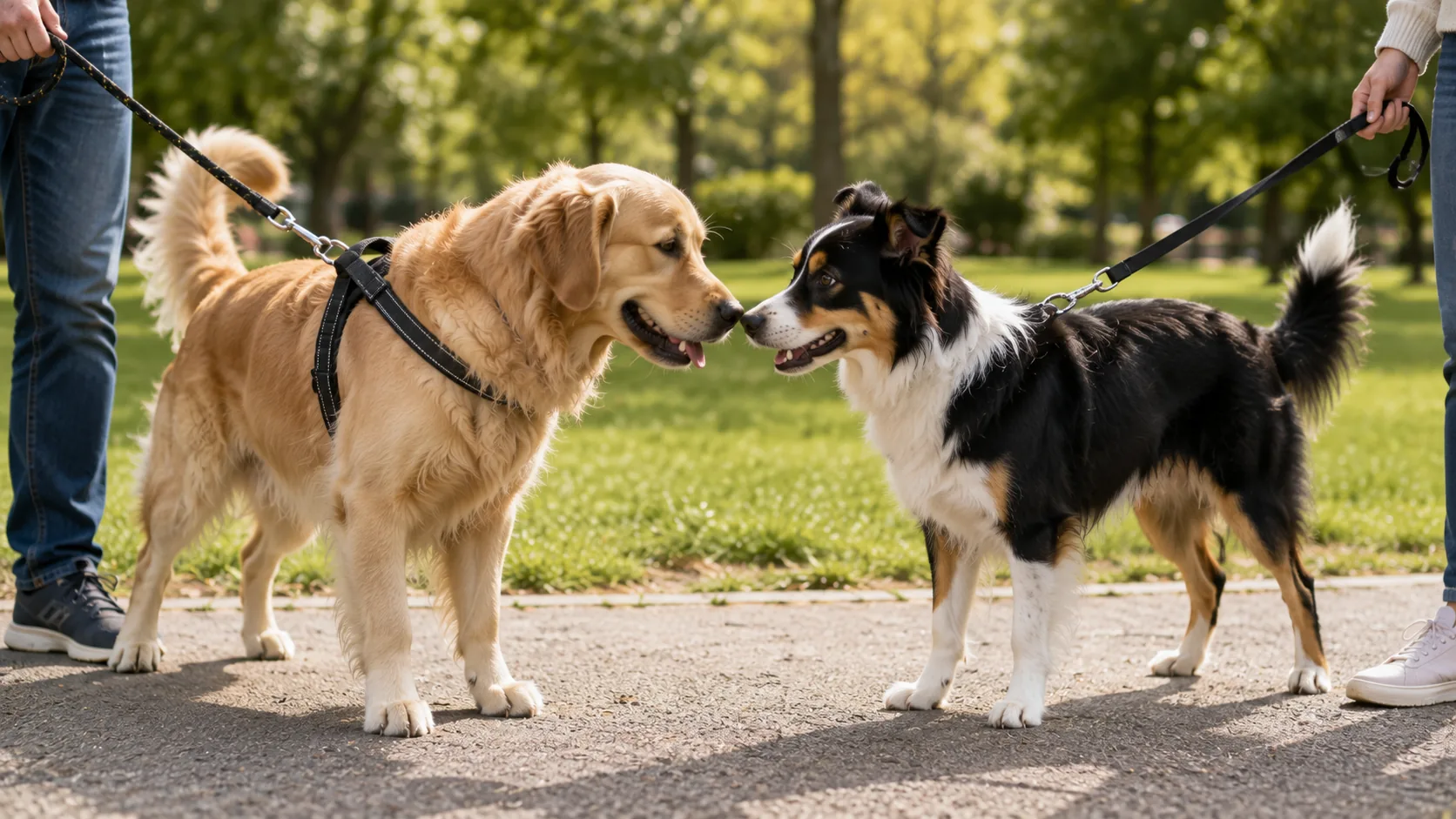
How to Introduce Two Dogs Safely is easier to address when you understand what happens before, during, and after the behavior. Dogs respond to their environment, learning history, physical comfort, and emotional state. A practical plan starts with safety and management, then teaches an alternative without intimidation or unnecessary force.
Quick Answer
Observe the situation for several days when it is safe to do so. Note the time, location, people or animals present, the dog's posture, and what happens immediately afterward. Patterns often reveal whether excitement, fear, access to a reward, boredom, frustration, or discomfort is contributing.
Start by Identifying the Pattern
Prevent repeated practice while training is underway. Gates, leashes, distance, separate rooms, supervision, and carefully chosen enrichment can reduce opportunities for the unwanted behavior. Management protects progress; it is not a substitute for training, but it makes training possible.
Manage the Environment First
Choose one behavior the dog can perform instead. Sitting, moving to a mat, looking at the owner, carrying a toy, walking away, or calmly remaining at a distance may be useful depending on the situation. Reinforce the alternative before the dog becomes too excited to respond.
Teach a Clear Alternative
Reward timing matters. Deliver food, play, praise, movement, sniffing, or access immediately after the behavior you want. If reinforcement arrives too late, the dog may associate it with a different action. Begin generously and adjust rewards as the skill becomes reliable.
Use Rewards at the Right Moment
Change one challenge at a time. Distance, duration, novelty, and distraction all affect difficulty. If the dog stops responding, increase distance or shorten the session. Repeating a cue more loudly rarely fixes a task that has become too difficult.
Increase Difficulty Gradually
Loose movement, normal breathing, curiosity, sniffing, taking food, and easy recovery usually indicate a workable learning state. Freezing, frantic movement, escape attempts, sustained barking, growling, refusal of normally valuable food, or inability to disengage mean the situation should be made easier.
Watch Body Language and Stress
Avoid punishment for fear, warning signals, confusion, or behavior the dog has never been taught to replace. Do not force close contact, deliberately provoke the behavior to test the dog, or expect family members to use conflicting rules. Consistency and prevention produce clearer learning.
Common Mistakes to Avoid
Sudden behavior change can be associated with pain, skin or ear irritation, gastrointestinal or urinary discomfort, neurologic problems, sensory changes, medication effects, or other health issues. Training should not be used to explain away new physical or behavioral signs.
When Health May Be Part of the Problem
A veterinarian should assess sudden or severe changes, pain, appetite or weight changes, abnormal thirst or urination, weakness, collapse, breathing difficulty, wounds, or self-injury. A qualified reward-based behavior professional is appropriate when fear, aggression, compulsive behavior, or household safety is involved.
When to Seek Professional Help
Keep sessions short enough that the dog can succeed repeatedly. Record progress over days rather than judging one difficult moment. Reliable improvement comes from many manageable repetitions, not from forcing a dramatic breakthrough.
A Simple Decision Guide
| What You Observe | Best Response |
|---|---|
| Relaxed and responsive | Reward and continue at the same level |
| Excited but able to recover | Shorten the session or add distance |
| Fearful, frozen, frantic, or unable to respond | Stop increasing difficulty and create space |
| Pain, injury, aggression, or sudden major change | Prioritize safety and professional assessment |
Related Virixoo Guides
For behavior linked to being alone, read How to Help a Dog With Separation Anxiety. For general vocal behavior and trigger identification, see Why Does My Dog Bark So Much?. For safe outdoor control, continue with How to Teach a Dog to Come When Called.
FAQ
Should I punish the behavior?
Punishment may suppress visible behavior without resolving fear, discomfort, frustration, or the reward maintaining it. Management plus reinforcement of a suitable alternative is generally clearer and safer.
How long should training take?
There is no fixed timeline. Health, age, learning history, environment, trigger intensity, and consistency all affect progress. Increase difficulty only when the dog is comfortable and successful.
What if the behavior suddenly becomes much worse?
Reduce exposure and consider health or environmental changes. Sudden unexplained deterioration deserves veterinary discussion, especially when physical signs or pain are present.
Bottom line: Understand the trigger, prevent repeated failure, reward a useful alternative, and progress at a level the dog can handle. Safety and emotional comfort matter as much as the visible behavior.