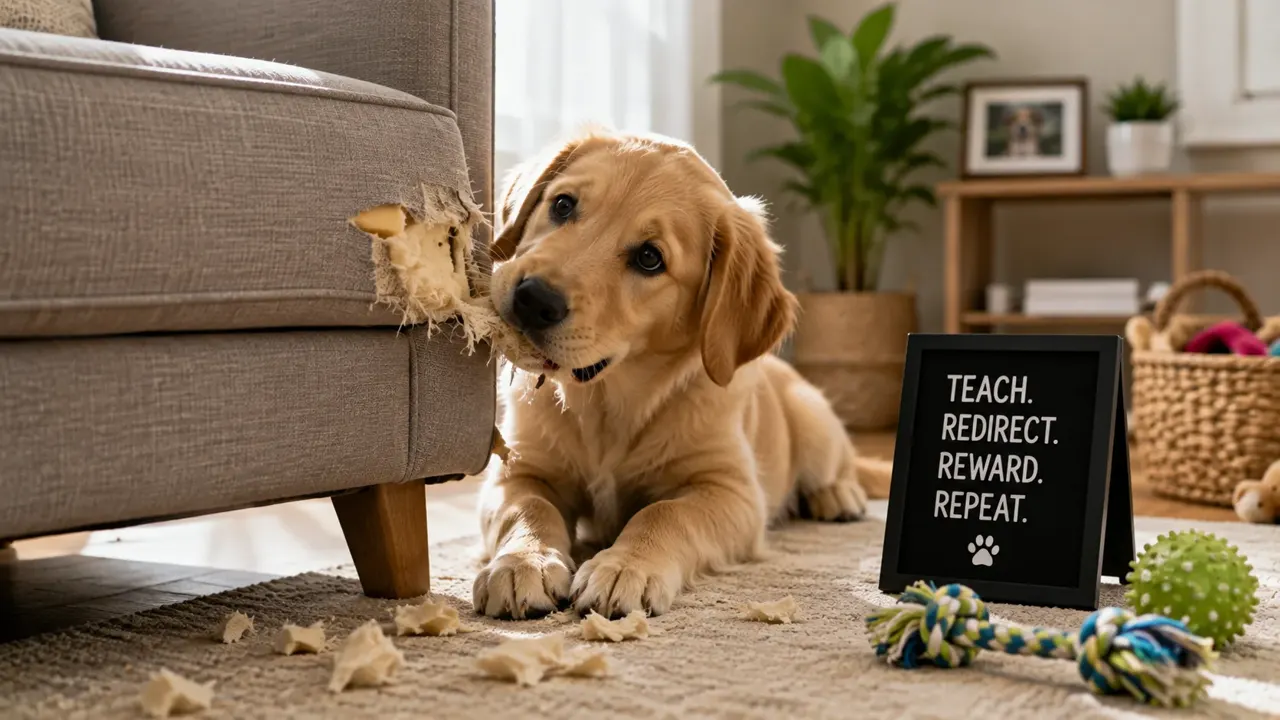
Destructive chewing on furniture, table legs, or shoes is a frustrating problem that requires management and appropriate redirection rather than punishment. Chewing is a natural canine behavior, but directing it toward approved toys solves the issue.
Quick Answer
Stop furniture chewing by blocking access to valuable items with gates or bitter sprays, providing durable and engaging chew toys, increasing mental enrichment and physical exercise, and rewarding the dog immediately when choosing legal chew items.
Step 1: Prevent Access and Rehearsal
Use baby gates, closed doors, or crate management when you cannot actively supervise. Every time a dog chews furniture successfully, the habit reinforces itself.
Step 2: Provide Satisfying Alternatives
Offer high-value rubber chew toys filled with safe treats or peanut butter. Rotate toys frequently so the dog maintains active interest in them.
Step 3: Redirect Calmly
If you catch your dog chewing furniture, interrupt with a neutral sound, guide them away, and hand them an approved chew toy, rewarding them when they accept it.
Common Mistakes to Avoid
Do not scold your dog hours after furniture damage is discovered; dogs cannot connect past actions to delayed punishment.
Related Virixoo Guides
To understand canine chewing needs further, read How Much Exercise Does a Dog Need?.
Bottom Line
Manage the environment to protect your belongings, offer appealing legal chew outlets, and reinforce your dog for selecting the right items to chew.