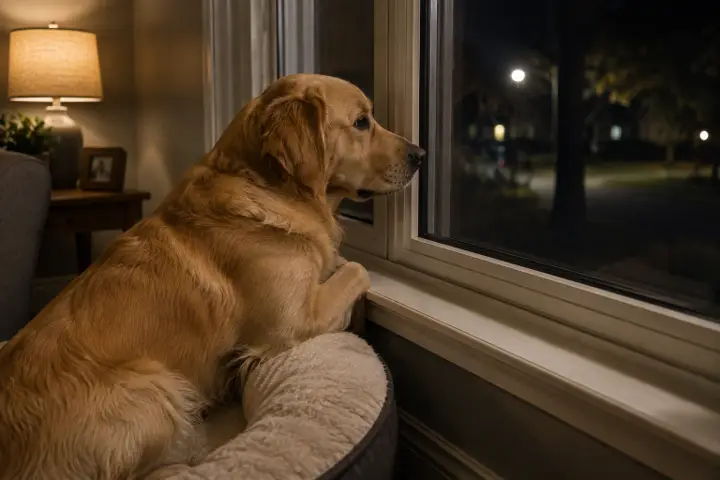
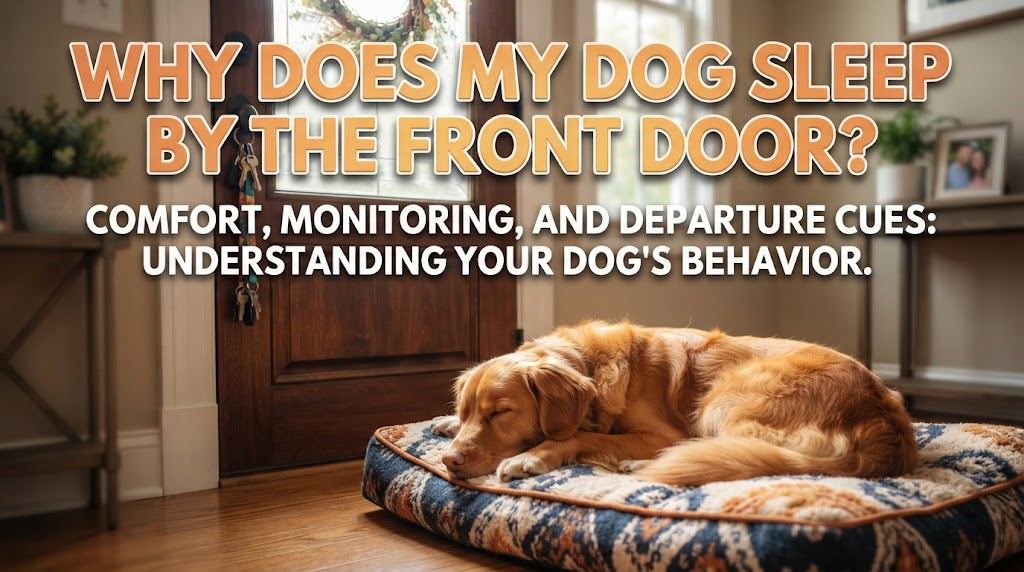
The front door is one of the most information-rich places in a home. It predicts walks, visitors, deliveries, family arrivals, outdoor noises, and temperature changes. A dog resting there may be choosing the location for several ordinary reasons.
Quick Answer
Your dog may sleep by the front door because the floor feels comfortable, the location offers useful sounds and scents, or the door has become associated with important household events. The resting spot by itself does not prove protection, guarding, dominance, or separation anxiety.
The Doorway May Simply Be Comfortable
Hard floors near an entrance can be cooler than beds or carpets. Some doors also create slight drafts. If the dog lies loosely, sleeps deeply, and moves away easily, physical comfort may explain much of the choice.
Doors Predict Things Dogs Care About
Leashes come out near doors. People arrive through them. Interesting sounds and scents enter around them. A dog can learn that the entrance is an efficient place to notice what happens next without having any complex “guarding mission.”
Relaxed Monitoring vs. Tense Guarding
| Relaxed resting | Potential concern |
|---|---|
| Loose body, normal sleep | Stiffening when people approach |
| Moves away easily | Blocks access or growls |
| Can ignore routine sounds | Explosive response to every noise |
| No escape attempts | Rushes or bolts when door opens |
Do Not Step Over or Crowd a Resting Dog
A dog sleeping directly in the swing path of a door creates a safety problem even if the behavior itself is harmless. Provide an equally comfortable bed a short distance to the side and reward the dog for using it. Move the dog before opening the door rather than pushing it with the door or stepping over it.
Does This Mean Separation Anxiety?
Not by itself. Separation anxiety is a broader distress pattern that occurs around absence and can include vocalization, pacing, salivation, elimination, destruction, escape attempts, or inability to settle. A dog that simply sleeps near the entrance when relaxed does not meet that description.
When the Location Changes Suddenly
If your dog abruptly abandons normal resting places for the front door, look for environmental changes first: heat, new household sounds, construction, visitors, another pet, or a moved bed. Also watch for pain, panting, restlessness, appetite change, or difficulty getting comfortable.
Related Virixoo Guides
If your dog hesitates around thresholds, read why dogs may suddenly refuse to walk through doorways. If outside activity triggers repeated barking, see how to identify a barking trigger. For nighttime restlessness, compare why a dog may pant at night.
Bottom Line
Sleeping by the front door is often a location preference shaped by comfort, information and routine. Judge the dog by its full behavior: relaxed sleep is different from blocking, guarding, panic, or escape attempts.