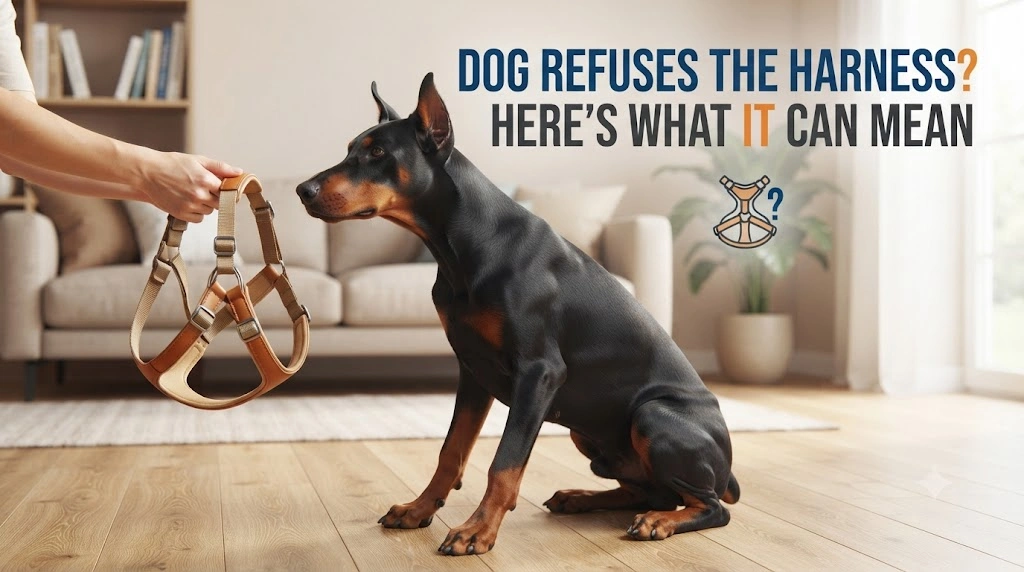
A dog that backs away, hides, freezes, or mouths at the harness is not necessarily being stubborn. The dog may dislike the fit, feel pain when the harness goes over the head, fear handling around the legs, or have learned that the harness predicts something stressful. The solution is to identify what part of the process causes discomfort and rebuild the experience in very small steps.
Quick Answer
First inspect the harness for rubbing, tightness, awkward straps, and pressure near painful areas. Watch whether the dog objects to seeing the harness, having it pass over the head, lifting a paw, or feeling the straps tighten. Then train only at the easiest step the dog can tolerate comfortably. Reward cooperation and stop before the dog feels the need to escape.
Rule Out Pain
A dog with neck, shoulder, back, skin, or joint pain may suddenly resist equipment that was previously accepted. Watch for stiffness, reluctance to jump, limping, sensitivity to touch, or changes when the harness is fastened. If refusal is sudden and accompanied by pain signs, veterinary assessment comes before training.
Check the Fit Carefully
A harness should not pinch behind the front legs, restrict shoulder movement, twist across the chest, or press into the throat. Growing puppies need frequent fit checks because their body shape changes quickly. Weight gain or loss can also change how straps sit.
If the dog develops redness, hair loss, sores, or rubbing marks, stop using the harness until fit and skin health are addressed.
Find the Exact Trigger
Present the harness without putting it on. Does the dog leave immediately? If not, move it toward the head. Does the dog back away? If the dog accepts the head loop but resists when a leg is lifted, handling sensitivity may be the issue. Breaking the process into pieces helps you avoid treating the whole harness as one problem.
Cooperative Training Steps
| Step | Goal |
|---|---|
| Harness appears | Dog remains relaxed |
| Dog approaches harness | Reward voluntary investigation |
| Nose passes through opening | Reward and remove immediately |
| Straps touch body | Reward calm contact |
| Buckle closes briefly | Reward and release |
| Dog wears harness indoors | Short comfortable session |
Move forward only when the dog is relaxed at the current step. If the dog retreats, return to an easier stage.
Do Not Chase the Dog With the Harness
Chasing teaches the dog that seeing the harness predicts loss of control. Instead, set up training when you are not in a hurry. If the dog walks away, pause and reduce difficulty. The goal is voluntary participation rather than winning a contest before every walk.
What if the Harness Predicts Something Scary?
Some dogs dislike the harness because it predicts car travel, a noisy street, veterinary visits, or encounters they find stressful. In that case, improving the harness alone may not solve the problem. Change what happens after the harness goes on by including short, pleasant sessions that do not always lead to the difficult event.
Head-Over vs. Step-In Designs
Some dogs dislike anything passing over the head, while others dislike having legs lifted into a step-in harness. There is no universal best design. Choose the style that fits the dog's body and handling preferences without compromising safety.
Use Food Carefully
Treats can help create a positive association, but do not use food to lure the dog so far into discomfort that the dog feels trapped. Reward voluntary steps and allow the dog to move away. Cooperative training works best when the dog still has a sense of choice.
What Not to Do
- Do not chase or corner the dog with the harness.
- Do not force painful limbs through straps.
- Do not ignore rubbing or skin injury.
- Do not rush training because a walk is waiting.
- Do not assume every refusal is behavioral before checking pain.
When to Ask for Help
Consult a veterinarian if refusal is sudden or pain is suspected. A qualified reward-based trainer or behavior professional can help if the dog panics, bites during handling, or cannot progress despite slow training.
Bottom Line
Harness refusal usually makes sense once you identify the uncomfortable step. Check fit and pain first, then use cooperative training that rewards voluntary participation. A dog that feels safe and physically comfortable is much more likely to accept equipment calmly.
How Long Should a Session Last?
Harness training can be very short. Thirty seconds of relaxed voluntary participation may be more valuable than ten minutes of repeated attempts. End while the dog is still comfortable. Several tiny sessions across the week reduce pressure and make progress easier to measure.
If the dog begins turning the head away, licking the lips, freezing, backing up, or refusing food, the step is probably too difficult. Return to the last easy stage instead of pushing forward.
How to Tell Fear From Physical Discomfort
A dog that refuses before the harness touches the body may have learned to fear the object or what it predicts. A dog that accepts the harness until a strap touches one shoulder or a leg is lifted may be showing localized discomfort. Watch the exact point where body language changes.
Handling Sensitivity Around the Legs
Some harnesses require lifting a front paw. Dogs that dislike paw handling may resist even if the harness fits well. Practice gentle cooperative paw handling separately: touch the shoulder, reward; slide the hand down the leg, reward; briefly lift the paw, reward. Do not combine several difficult steps at once.
Noise From Buckles Can Matter
A sharp buckle click close to the dog's ears can startle sensitive dogs. Practice the buckle sound at a distance first, pairing it with something pleasant. Gradually bring the sound closer only while the dog remains relaxed.
Harnesses That Go Over the Head
For dogs uncomfortable with head handling, teach the dog to voluntarily place the nose through a wide opening. Hold the harness steady and reward the dog for approaching. Never move the opening toward the dog's face while the dog is retreating.
When to Change Equipment
If a harness consistently rubs, restricts movement, or requires handling the dog finds very difficult, another style may be appropriate. Choose equipment for fit, security, and comfort rather than fashion. A veterinarian or experienced trainer can help assess fit.
How to Rebuild a Negative Association
For several days, the harness can appear without a walk happening. Put it on briefly, give a calm reward, then remove it. Later, wear it indoors for a minute. Only after the dog is relaxed should it consistently predict going outside again. This breaks the old pattern where harness always meant stress.
What Progress Looks Like
Progress may be the dog staying in the room when the harness appears, then approaching it, then placing the head through voluntarily. Celebrate small changes. Rushing to full wear can undo several days of careful work.
What to Do if Walk Time Creates Pressure
Harness training often fails because the owner is trying to leave immediately. The dog senses urgency, the handler moves faster, and refusal becomes stronger. Separate training from walking. Practice when you have nowhere to go, then put the harness away. Later, do a brief successful session before a meal or calm activity. Once the dog accepts the full sequence comfortably, reconnect it with normal walks.
If the dog suddenly refuses after months of normal use, compare the current harness with earlier fit. Check whether straps have tightened as the dog grew, whether padding has worn down, whether a buckle now sits over a sensitive area, or whether a recent grooming or skin problem has made contact uncomfortable.
Why Cooperative Care Helps Beyond the Harness
Teaching the dog to participate voluntarily in handling can make nail trims, veterinary exams, paw checks, and grooming easier too. Reward brief calm touches and allow pauses. A dog that learns it can communicate discomfort is less likely to escalate immediately to struggling or biting.