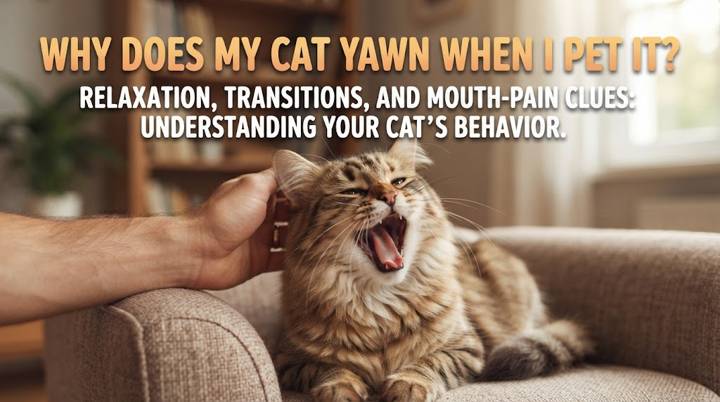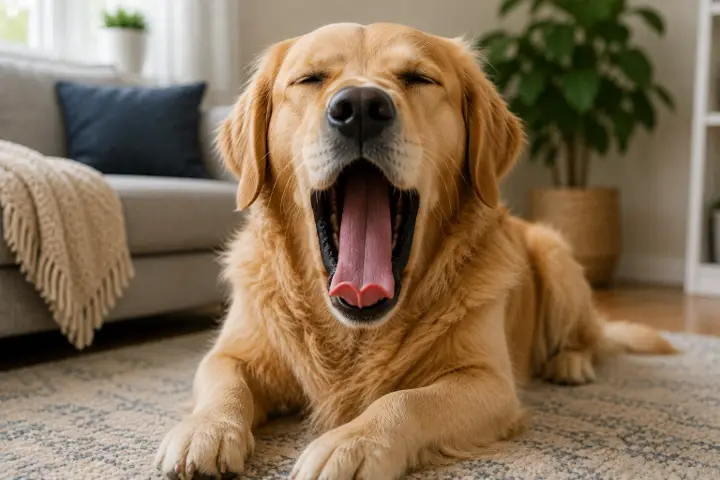
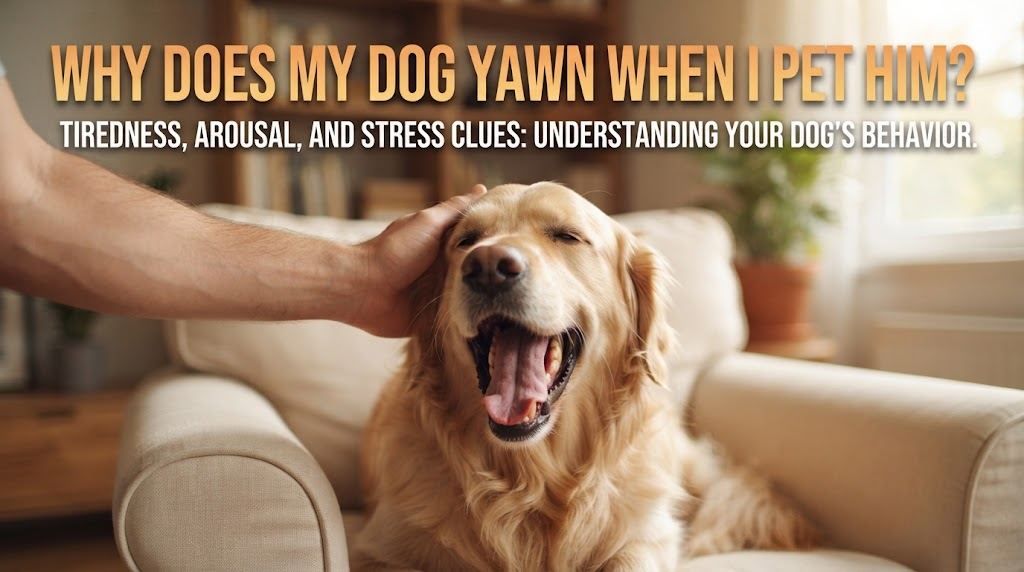
A yawn during petting is easy to overinterpret. Some people call it a sign of trust, others a stress signal, and others simple sleepiness. All can be possible in different contexts.
Quick Answer
Your dog may yawn when you pet him because he is tired, shifting between arousal states, excited, mildly uncomfortable, or stressed. One yawn is not enough to label the emotion. Look at the rest of the body, what happened immediately before it, and whether the dog chooses to continue the interaction.
Yawning Has More Than One Context
PetMD notes that dogs can yawn with tiredness, emotional changes, and stress. Veterinary behavior research also includes yawning among behaviors that may occur during stressful situations. That does not mean every yawn equals stress.
Read the Signals Around the Yawn
| Other signs | Interpretation to consider |
|---|---|
| Loose body, sleepy eyes, settles afterward | Tiredness or relaxation may fit |
| Turns head away, lip licks, stiffens | Petting may be creating social pressure |
| Yawns before an exciting routine | Arousal or anticipation may contribute |
| Repeated yawning plus oral pain signs | Consider a health problem rather than body language alone |
Try a Brief Petting Pause
Pet for a few seconds, then stop. If the dog moves closer, nudges your hand, or clearly asks for more, continue gently. If the dog turns away, freezes, walks off, or stays neutral, respect the pause. This gives the dog more control and provides better information than forcing contact.
Where You Pet Can Matter
Many dogs are more comfortable with touch on the chest, shoulder, or side than with a hand coming directly over the head. Individual preferences vary. Watch for soft versus tense posture rather than assuming every dog likes the same type of petting.
When Yawning Becomes a Health Question
Repeated yawning accompanied by drooling, bad breath, difficulty chewing, pawing at the mouth, facial swelling, coughing, breathing changes, or obvious pain should not be treated only as a behavior signal. Contact a veterinarian when the pattern is new, frequent, or associated with other physical signs.
Related Virixoo Guides
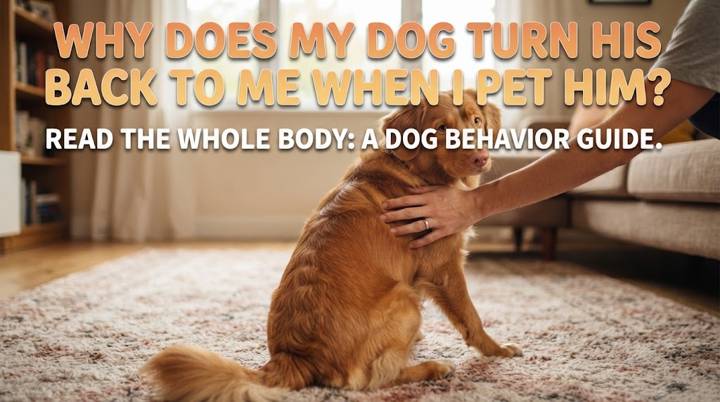
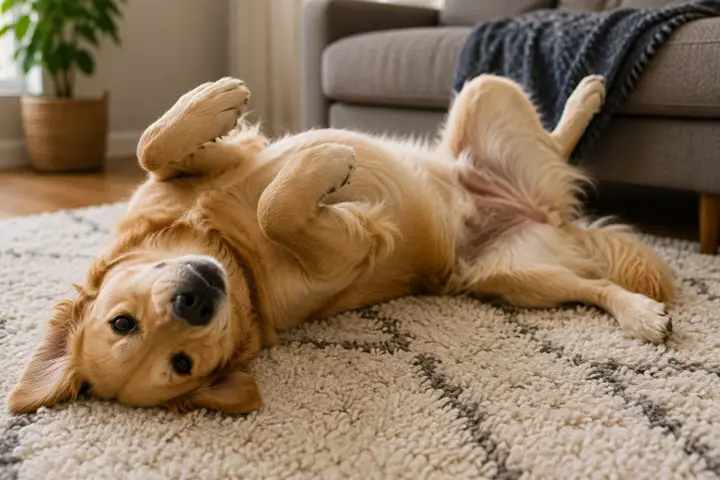
If your dog leans into your body during contact, read why dogs lean on people. For another posture that can have several meanings, see why dogs roll onto their backs. If a dog suddenly avoids touch by turning away, compare why dogs turn their backs during petting.
Bottom Line
A yawn during petting is a clue, not a translation. Consider sleepiness, arousal, stress and the dog's full body language, then let the dog choose whether the interaction continues.