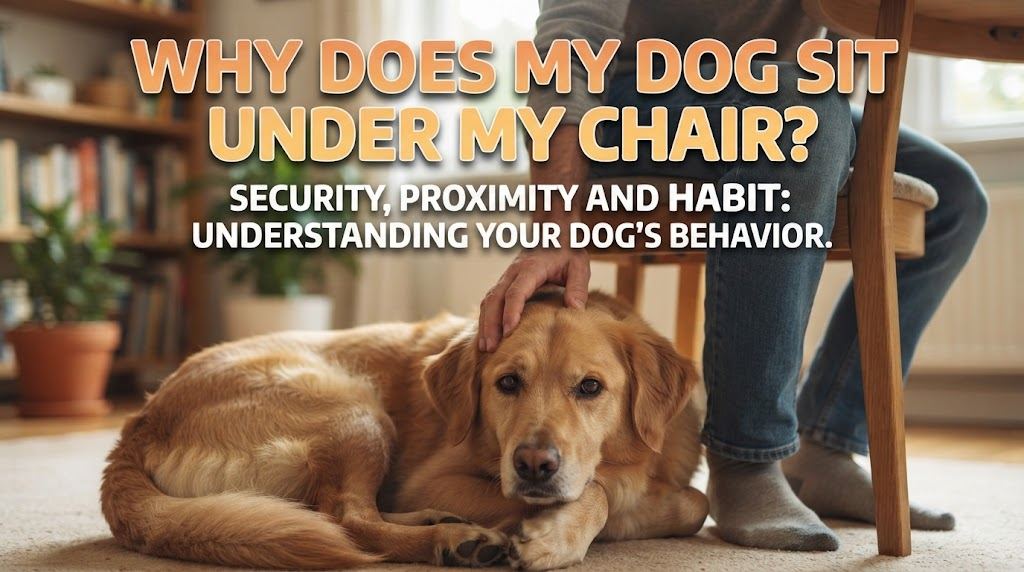
Under a chair, a dog can be close to a person without being in the center of a room. The space may feel sheltered, quiet, cool, or simply familiar.
Quick Answer
Your dog may sit under your chair because it combines social closeness with a partly enclosed resting place. The dog may also prefer the floor temperature, avoid foot traffic, or have learned that this is where it receives calm attention. Relaxed voluntary resting is different from fearful hiding.
Why the Space Can Feel Useful
A chair creates overhead cover and clear physical boundaries while still allowing the dog to see or smell the person above it. In a busy room, that can be an efficient compromise between joining the household and having some personal space.
Look at How Easily the Dog Leaves
| Relaxed preference | Possible concern |
|---|---|
| Dog enters and leaves freely | Dog hides and resists coming out |
| Loose posture and normal sleep | Trembling, panting or crouching |
| Normal eating and activity | Withdrawal from normal routines |
| Uses several resting spots | Suddenly uses only hidden spaces |
The Chair May Become Part of a Routine
If you work at the same desk or sit in the same chair every day, your dog may learn that the area predicts long periods of calm companionship. Repetition can make the location valuable even when there is no fear involved.
Make the Space Physically Safe
Rolling office chairs, recliners, folding mechanisms, and moving feet can injure a dog hidden underneath. If the location is risky, offer a bed beside the chair and reward the dog for using it. Do not scare the dog out from under furniture.
When Hiding Is New
A dog that suddenly begins hiding under chairs or other furniture may be responding to noise, visitors, conflict with another pet, pain, illness, or another environmental change. Merck recommends considering medical contributors when behavior changes suddenly.
Related Virixoo Guides
If your dog prefers deeper hiding spaces, read why dogs sleep under beds. If the main feature is body contact, see why dogs lean on people. If your dog stands directly over you rather than under the chair, compare why dogs may stand over a seated person.
Bottom Line
Under-chair sitting is often a practical, comfortable form of social proximity. Judge whether the dog is relaxed and flexible. Sudden hiding, fear, pain or withdrawal from normal activity changes the interpretation.