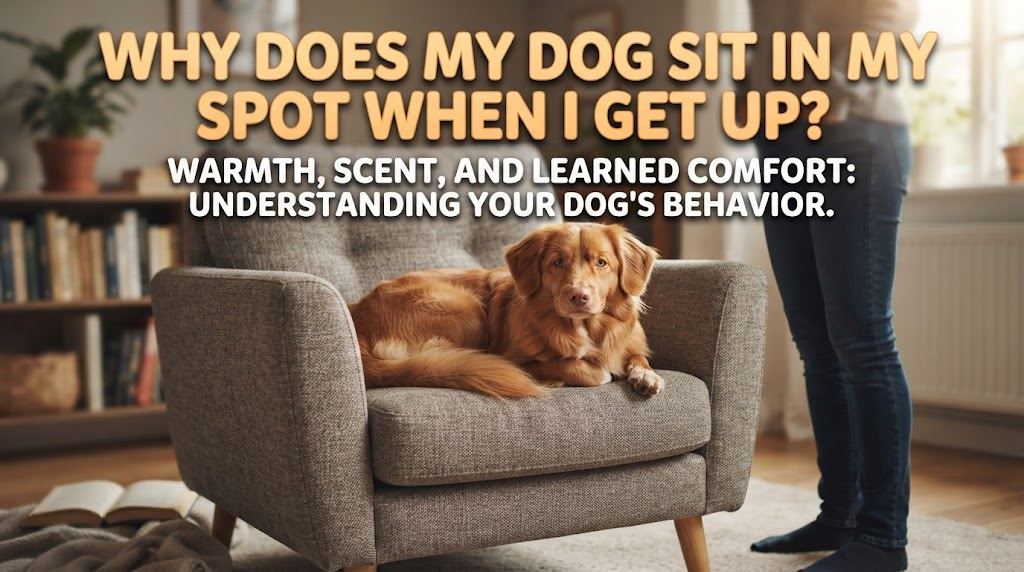
You stand up for a minute and return to find your dog exactly where you were sitting. The speed can make the takeover look deliberate, but your departure has changed that seat in several simple ways.
Quick Answer
Your dog may sit in your spot because it is warm, carries your fresh scent, is already comfortable, and has just become available. The behavior is usually better explained by comfort and learning than by dominance. The situation changes if the dog guards the spot or threatens people who approach.
Your Seat Is Warmer Than the Others
Body heat can make one couch cushion or chair immediately more attractive. This is especially noticeable in cool rooms or with dogs that actively seek warm surfaces.
Your Scent Is Concentrated There
A place you use frequently carries familiar scent from skin, clothing and the surrounding environment. For a social dog, the combination of familiar smell and comfort may make your seat appealing even when other furniture is available.
Attention Can Make the Habit Stronger
If taking your spot always produces laughter, petting, negotiation, or a playful game of moving the dog, the behavior can become part of a predictable routine. That does not make it problematic unless you need the dog to move and it cannot do so safely.
Comfort Is Different From Resource Guarding
| Ordinary seat stealing | Possible guarding |
|---|---|
| Loose body | Freezing or stiff posture |
| Moves easily for a cue or reward | Growling, snapping or blocking approach |
| No concern when people sit nearby | Threatens people or pets near the seat |
| Uses other resting places too | Defends the location repeatedly |
How to Get Your Seat Back Without Conflict
Teach a positive “off” or “go to bed” cue using rewards, and make the alternative location comfortable. Do not grab the collar, drag the dog, alpha-roll, or physically challenge a dog that is guarding furniture.
If Guarding Appears
Resource guarding can escalate and deserves careful management. Avoid confrontations and seek help from a veterinarian or qualified reward-based behavior professional, especially if there has been a snap or bite.
Related Virixoo Guides
If your dog chooses body contact rather than your seat, read why dogs lean on people. For hidden sleeping locations, see why dogs sleep under beds. If your dog stands over you while you sit, compare why dogs stand over seated owners.
Bottom Line
Your recently vacated spot is warm, familiar and comfortable, which is usually enough to explain why your dog takes it. Treat seat guarding as a separate behavior problem rather than assuming every couch takeover is a status challenge.