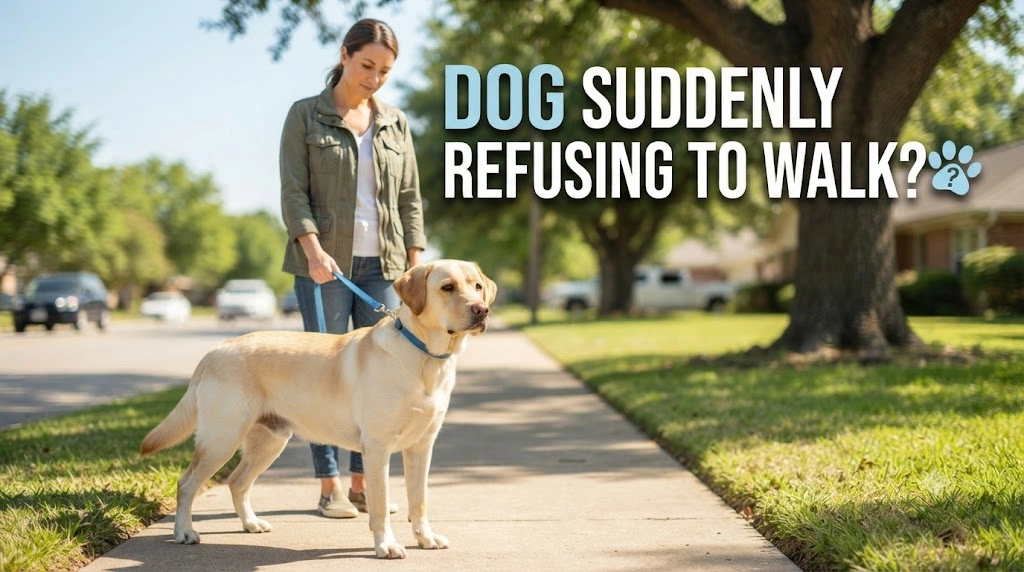
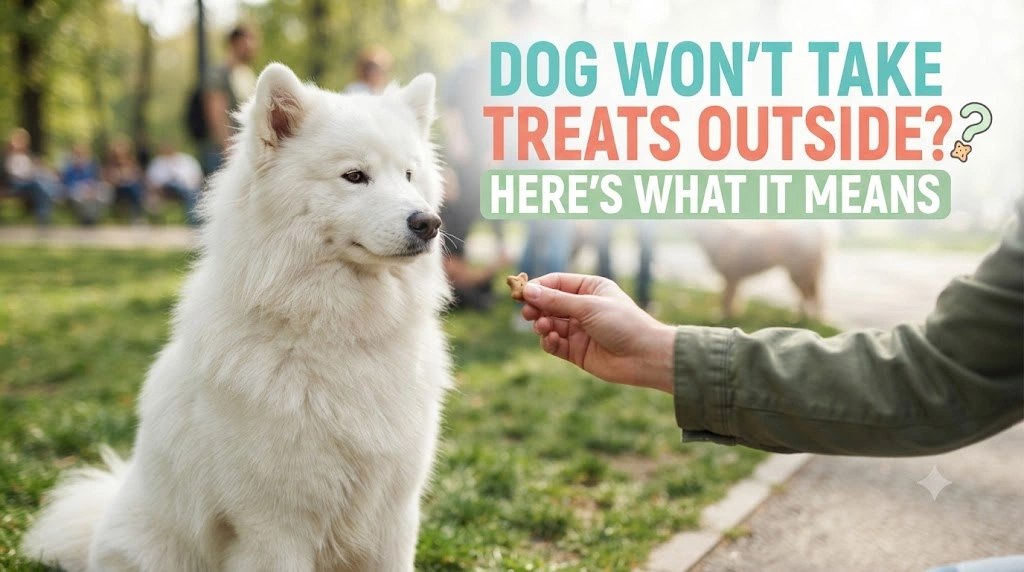
A dog that loves treats indoors but refuses them outside is often telling you that the environment is too difficult. High excitement, fear, intense smells, motion, unfamiliar dogs, traffic, or general stress can reduce interest in food. In some cases, nausea or another health problem can also reduce appetite. Food refusal is therefore useful information about the dog's current state.
Quick Answer
Move farther from the trigger or choose a quieter environment. If the dog begins taking food again, stress or distraction was probably too high at the previous location. Start training where the dog can still eat, sniff, respond, and recover. Do not repeatedly push the dog closer to a trigger while using treats as proof that the dog should cope.
Why Stress Can Reduce Eating
When a dog is highly alert, survival-related systems take priority over casual eating. A fearful dog may scan the environment, freeze, pant, or try to escape rather than take food. An excited dog may also be too focused on movement or smells to care about a treat that is valuable indoors.
Treat Refusal Is a Threshold Clue
In training, “threshold” refers to the level of intensity at which the dog can still think and learn. If the dog stops eating, stops responding to familiar cues, or becomes fixated on a trigger, the situation may be too difficult. Increase distance or reduce intensity until the dog can function normally again.
Start With a Quieter Outdoor Location
The front step, driveway, quiet courtyard, or empty parking area may be easier than a busy sidewalk. Build success gradually. A dog that can eat comfortably ten meters from a trigger may not be ready to work two meters away.
Food Value Matters, but It Is Not the Whole Answer
Higher-value food can help in moderately distracting environments, but constantly upgrading treats can hide the real issue if the dog is overwhelmed. If even favorite food is refused, the answer is usually not an even richer snack—it is often more distance or less pressure.
Could the Dog Simply Be Full?
Yes. Large meals, frequent treats, or training immediately after eating can reduce interest. Consider feeding schedule, but do not withhold food excessively just to make the dog hungry enough to tolerate a stressful environment.
Medical Causes Still Matter
If the dog refuses food both indoors and outdoors, loses weight, vomits, drools, has diarrhea, or seems nauseated, a health issue may be more important than training. A sudden appetite change deserves veterinary attention.
Useful Body-Language Clues
| Observation | What It May Suggest |
|---|---|
| Scanning and refusing food | High alert or fear |
| Pulling toward smells and ignoring food | Environmental distraction |
| Panting, trembling, tucked tail | Stress or fear |
| Takes food only after moving away | Previous distance was too difficult |
| Refuses food everywhere | Possible appetite or medical problem |
Use Other Rewards Too
Food is useful, but some dogs value sniffing, moving forward, access to a safe area, or a favorite toy. The key is to use rewards that do not increase stress. For example, allowing the dog to move farther from a frightening trigger can itself be reinforcing.
What Not to Do
- Do not force the dog closer to a trigger because treats are available.
- Do not assume refusal means stubbornness.
- Do not starve the dog to create food motivation.
- Do not keep training after the dog is clearly overwhelmed.
- Do not ignore a broader loss of appetite.
A Simple Progression
Begin where the dog can take food easily. Practice a few calm repetitions, then end. Over multiple sessions, move slightly closer to the challenging environment only if the dog remains relaxed. Progress is measured by comfort and responsiveness, not by how quickly you reach the busiest location.
When to Seek Help
Ask a veterinarian or qualified behavior professional for help if the dog is consistently unable to eat outside, shows strong fear, panics, or the problem limits normal walks and daily life. Sudden refusal of food in all settings should be evaluated medically.
Bottom Line
When a dog will not take treats outside, treat that as information. The environment may be too intense, the dog may be too distracted, or appetite may be affected by health. Lower the difficulty until the dog can eat and think again, then build outward gradually.
How to Tell Distraction From Fear
A distracted dog may lean toward smells, pull forward, and ignore food while remaining loose and curious. A fearful dog may freeze, crouch, scan, pant, tremble, or try to retreat. Both may refuse treats, but the training response differs. The distracted dog may simply need a quieter place to learn, while the fearful dog also needs greater distance and emotional safety.
Do not use food refusal as the only measure. Body language, recovery speed, and willingness to explore are equally important.
Why Some Dogs Take Treats and Then Spit Them Out
A dog may accept food automatically but then drop it when attention returns to the environment. This can still indicate that the dog is near threshold. Do not count swallowed treats as the only measure of comfort. Look at body tension, scanning, breathing, tail position, and recovery.
Start With Easy Wins
Stand just outside the home, ask for one simple behavior, reward, and go back inside. Repeat on another day. Gradually increase time and distance. The dog does not need to complete a full walk for training to be successful.
Use Distance as a Reward
For a fearful dog, moving away from a trigger can be more valuable than food. If the dog sees something scary and chooses to look back at you, calmly increase distance. This teaches that checking in with you produces safety.
What If the Dog Only Eats When the Trigger Leaves?
That pattern strongly suggests the trigger was too intense. Begin the next session farther away so the dog can eat before the trigger disappears. Training works best when the dog remains functional throughout the exposure.
Why Hunger Should Not Be Used to Override Fear
Skipping meals to make the dog desperate for food may produce eating in a stressful environment, but it does not necessarily mean the dog feels safer. Preserve normal nutrition and adjust the training setup instead.
Check for Motion Sickness and Nausea
If treat refusal happens mainly after car travel or in certain locations, nausea may contribute. Drooling, lip licking, swallowing, or vomiting are useful clues. Discuss recurrent signs with your veterinarian.
How to Know You Are Ready for a Harder Environment
The dog should be able to take food normally, sniff, respond to familiar cues, and recover quickly from mild distractions. Increase difficulty in small steps. If any of these abilities disappear, return to an easier setting.
Why the Same Dog May Eat in One Outdoor Place but Not Another
Outdoor environments vary dramatically. A quiet courtyard may contain familiar smells and little movement, while a busy sidewalk adds traffic, dogs, people, bicycles, and unpredictable noise. If the dog eats in one place but not another, use the easier location as the starting point and increase difficulty gradually.
Training Sessions Should End While the Dog Is Still Successful
Do not wait for food refusal before ending every session. If the dog is taking treats comfortably and responding well, stop after a few successful repetitions. Short sessions preserve confidence and prevent the dog from repeatedly crossing threshold.
What If the Dog Is Too Excited Rather Than Afraid?
Some dogs refuse food because they are intensely interested in smells or movement, not because they are frightened. The strategy is still to lower difficulty. Use a quieter area, allow a few minutes of sniffing before training, and ask for simple behaviors. Once the dog can shift attention voluntarily, move toward more distracting environments in small steps.