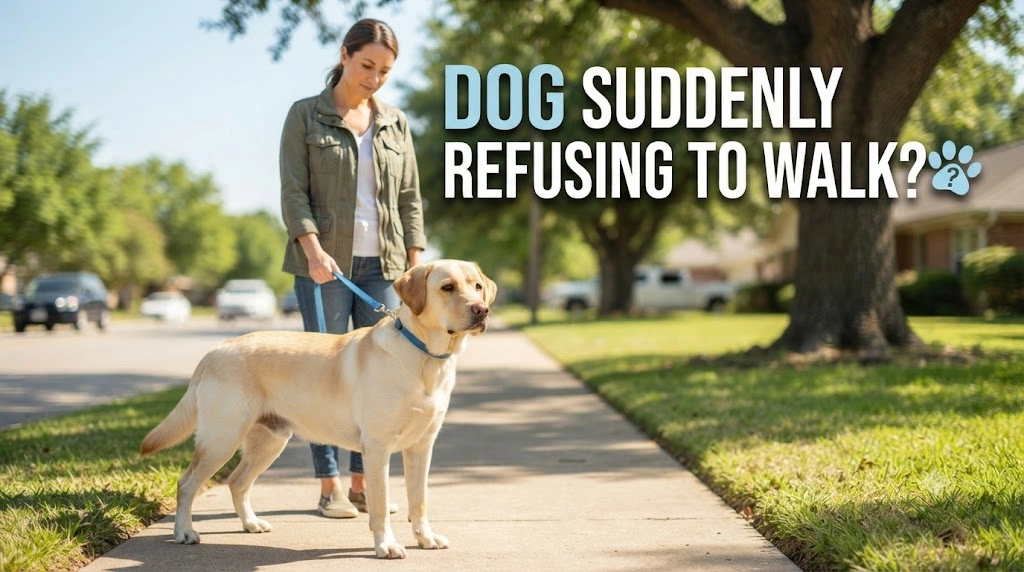
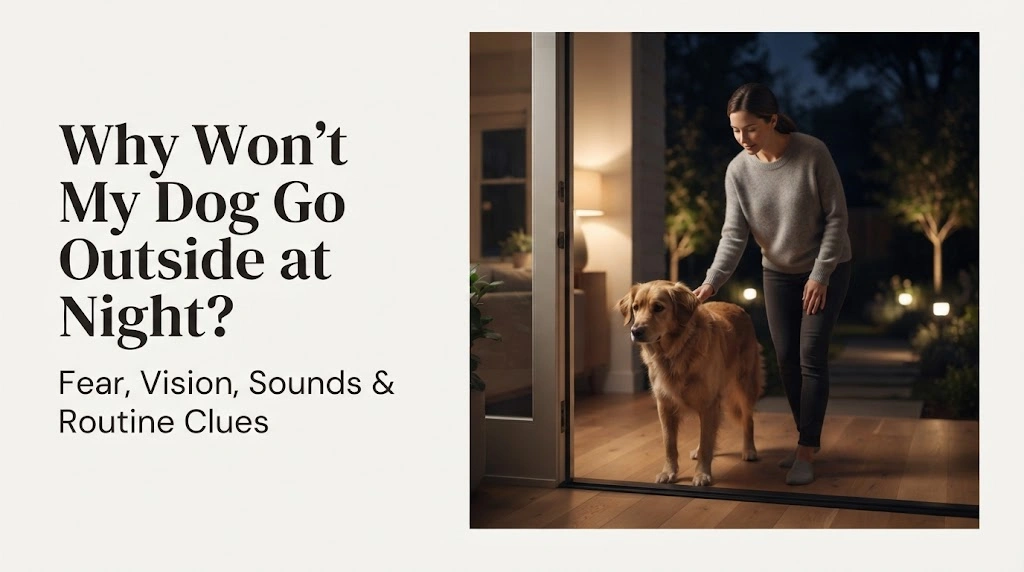
Nighttime refusal is often about what changes after dark: visibility, sounds, wildlife, temperature, wind, or a remembered frightening event. In older dogs, pain or declining vision can also make nighttime footing and navigation harder.
Quick Answer
Compare daytime and nighttime behavior. Use good outdoor lighting, accompany the dog calmly, and note whether the refusal occurs at a particular doorway, location, sound, or weather condition. Do not drag or punish the dog. Sudden persistent reluctance with mobility or vision changes deserves veterinary evaluation.
Darkness and visual confidence
Dogs with reduced vision may manage familiar areas in daylight but hesitate when contrast falls at night. New bumping into objects, difficulty finding steps, or abnormal-looking eyes strengthens the case for an eye examination.
Sounds, scents, and wildlife
A dog may hear or smell animals and distant activity that people do not notice. Refusal limited to certain nights or one part of the yard can point toward an environmental trigger.
A previous scare
Fireworks, a fall, another animal, or a startling noise can create a strong association with going outside after dark. Repeated forcing may intensify that association.
Weather and footing
Cold, rain, wind, wet surfaces, ice, or uncomfortable ground can change willingness to toilet outside. Dogs with arthritis or paw sensitivity may be especially affected.
A practical retraining approach
Improve lighting, choose a quiet route, keep sessions brief, and reward voluntary steps toward and outside the door. If possible, identify and reduce the specific trigger rather than trying to overpower the dog's hesitation.
When to involve a veterinarian
Seek assessment when nighttime refusal is sudden and persistent or occurs with stiffness, pain, weakness, confusion, altered sleep, abnormal eyes, appetite changes, or other signs of illness.