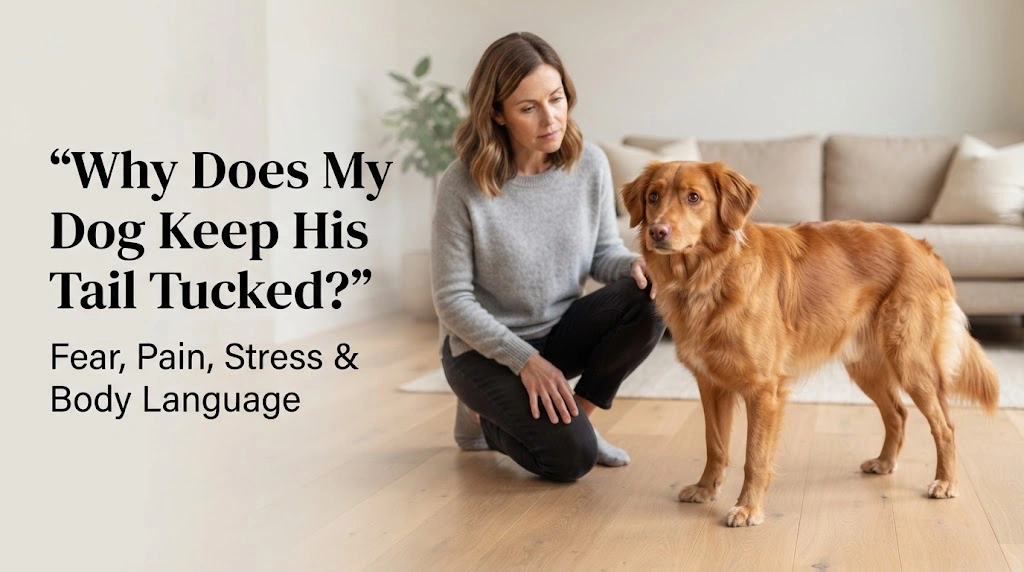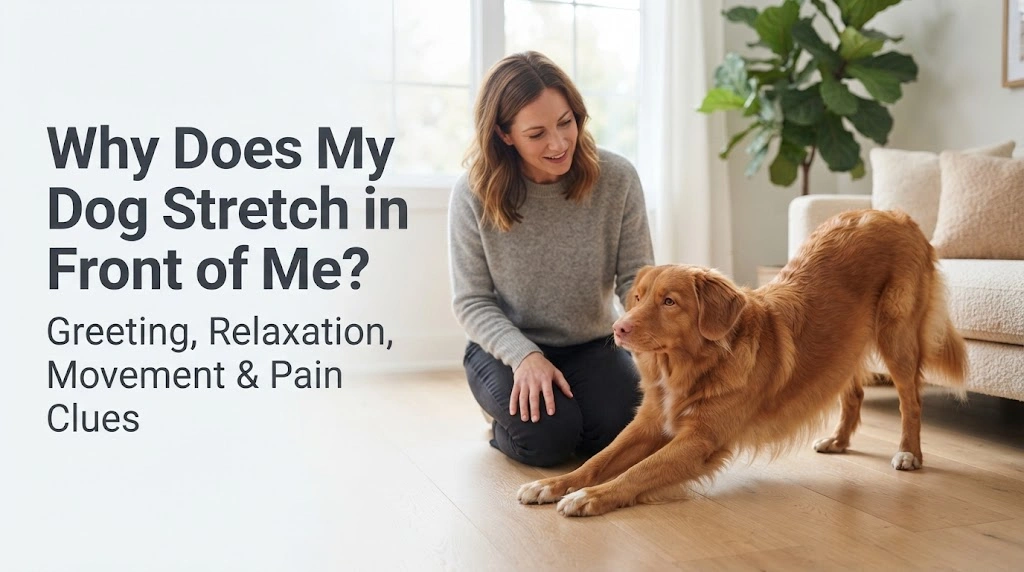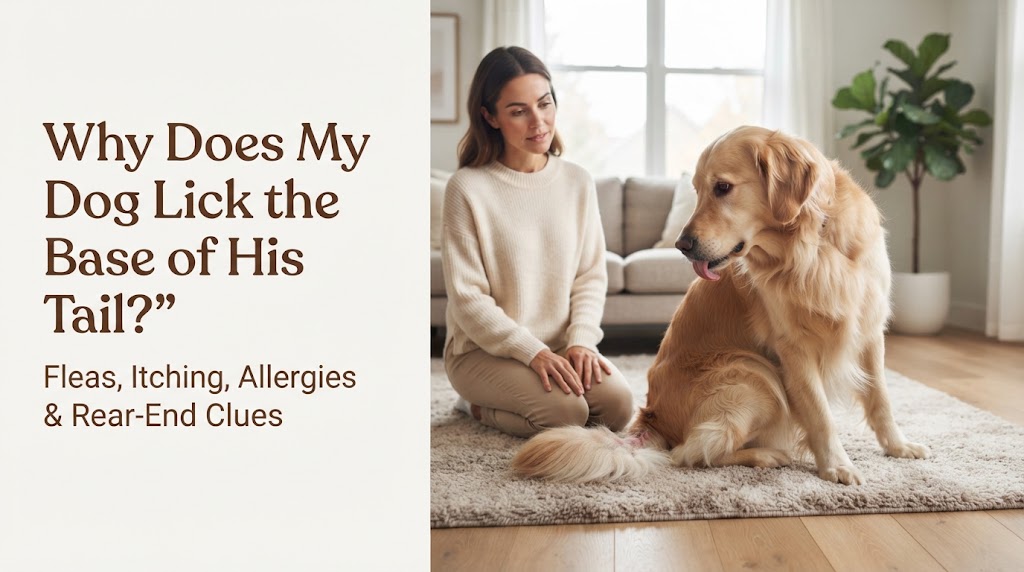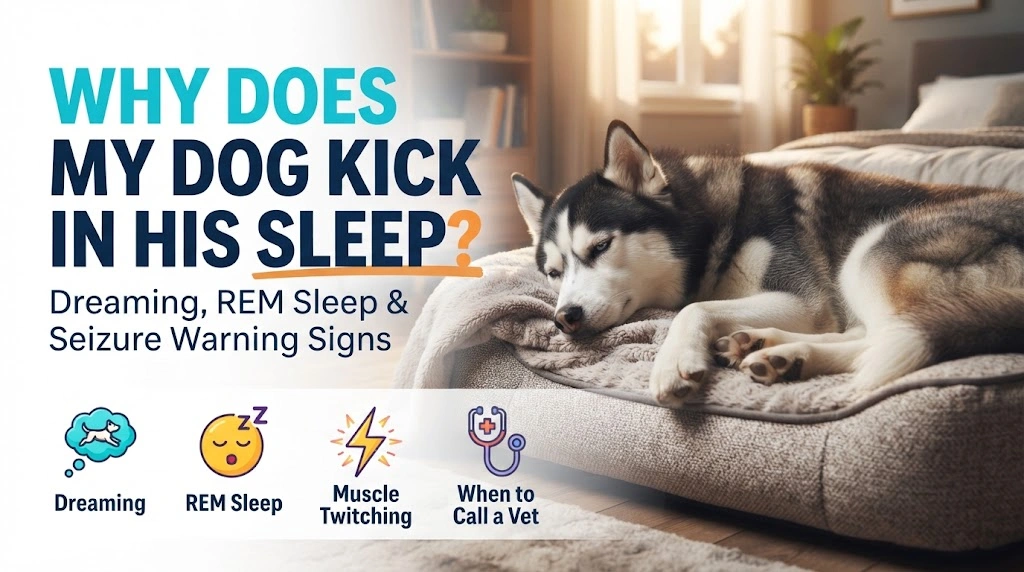
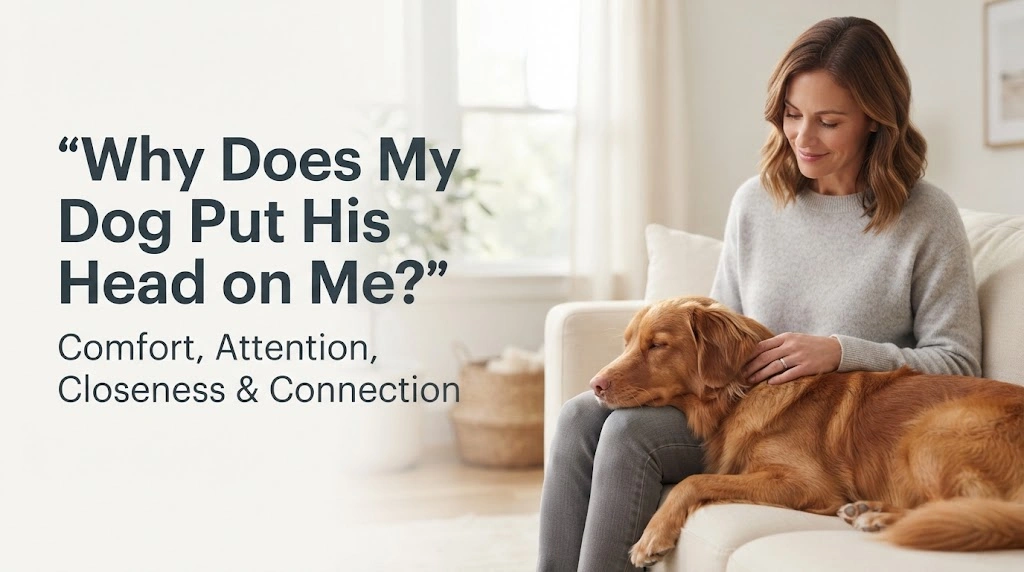
A dog placing its head on you is usually ordinary social behavior. Your body is warm, familiar, and often associated with rest or attention. The meaning depends on the rest of the dog's body language and on whether the behavior is a long-standing habit or a sudden change.
Quick Answer
If the dog is loose-bodied, comfortable, and behaving normally, head resting usually needs no correction. Notice whether it appears mainly during relaxation, when attention is wanted, or during stressful events. A sudden persistent need for contact combined with pain, weakness, confusion, or other illness signs deserves a health check.
Comfort and physical closeness
Many dogs choose direct contact while resting. A soft posture, normal breathing, relaxed face, and ability to move away freely support a simple comfort explanation.
Attention seeking
If head placement is followed by petting, talking, or treats, the dog may learn that it works well to start interaction. That is not inherently a problem unless the behavior becomes disruptive.
Reassurance during uncertainty
Some dogs move closer during storms, visitors, travel, or unfamiliar situations. Look for additional stress signals such as trembling, panting when not hot, pacing, avoidance, or difficulty settling.
Respect choice and boundaries
You can allow the behavior when you enjoy it and calmly redirect the dog to a bed or mat when you need space. Consistent, reward-based boundaries are clearer than pushing or scolding.
When a change may matter
A dog that suddenly becomes unusually clingy may be responding to a change in routine, stress, pain, or illness. The contact itself does not diagnose the cause; accompanying changes in appetite, mobility, sleep, elimination, or behavior matter more.
Bottom line
For most healthy dogs, resting the head on a trusted person is simply comfortable social contact. Evaluate the whole pattern rather than assigning one fixed emotional meaning to the gesture.