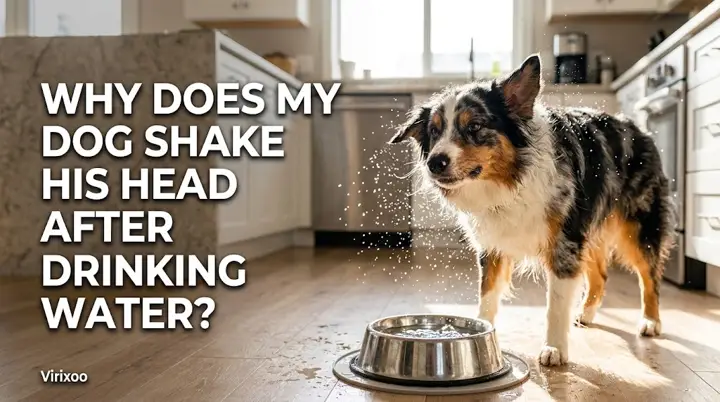
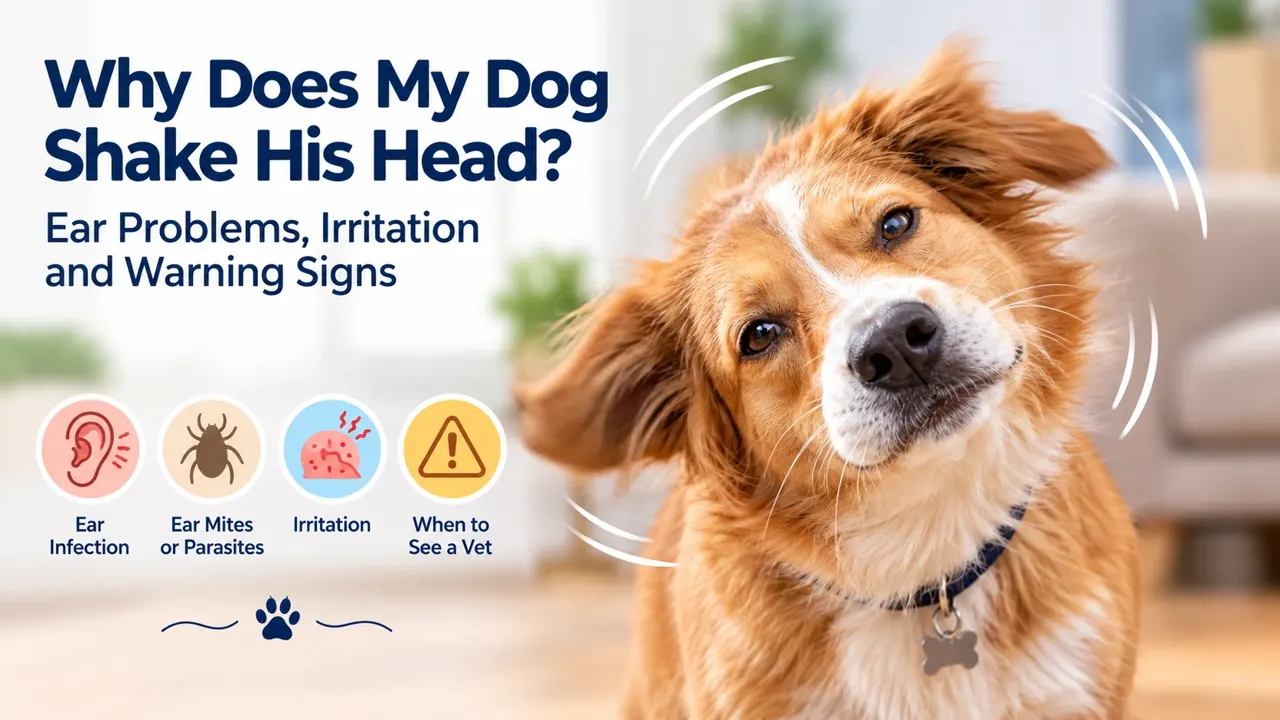
A single head shake after waking or getting wet is usually ordinary — repeated head shaking deserves a closer look. Dogs shake their heads when something in or around the ear feels itchy, wet, painful, or irritating.
Quick answer
Look only at the outer ear. Compare both sides for redness, swelling, odor, discharge, or debris. Do not insert cotton swabs or pour anything into the canal. If shaking persists for more than a day, affects one side, or comes with pain, odor, discharge, head tilt, or balance problems, see your vet.
Common possibilities
Ear inflammation or infection
Redness, odor, discharge, tenderness, or repeated ear scratching can accompany ear disease. Bacteria and yeast may be involved, but treatment depends on what is happening inside the ear and whether the eardrum is healthy.
Allergy
Recurring ear problems can occur alongside allergic skin disease. Paw licking, generalized itching, or seasonal flare-ups are useful details to tell your veterinarian.
Water or debris
Head shaking may start after bathing or swimming. Grass material and other foreign objects can also enter the ear canal, sometimes causing sudden intense shaking on one side.
Ear mites or other parasites
Parasites are possible, particularly in certain environments and animals, but dark debris alone cannot confirm the cause. A veterinary ear examination and microscopic testing may be needed.
What you can check safely
Look only at the visible outer ear. Compare both sides for redness, swelling, odor, discharge, wounds, or obvious debris. Stop if touching the ear causes pain or defensive behavior.
What not to put in the ear
Do not insert cotton swabs deep into the canal. Avoid peroxide, alcohol, essential oils, leftover ear medications, or unprescribed cleaners in a painful ear. Some products can irritate tissue, and certain medications may be unsafe if the eardrum is damaged.
Why repeated shaking should not be ignored
Strong, repeated shaking can traumatize the ear flap and contribute to an aural hematoma — a swollen pocket of blood in the pinna. Treating the underlying ear problem early can reduce ongoing discomfort and self-trauma.
When to call the veterinarian
Arrange veterinary care for persistent shaking, pain, odor, discharge, marked redness, swelling, head tilt, balance problems, or recurrent ear trouble. Sudden severe neurologic signs, inability to stand normally, or significant trauma require prompt care.
Bottom line: Repeated head shaking is a sign of discomfort. Inspect only what you can see safely, avoid home remedies inside a painful ear, and get veterinary help when the behavior persists or other ear signs appear.