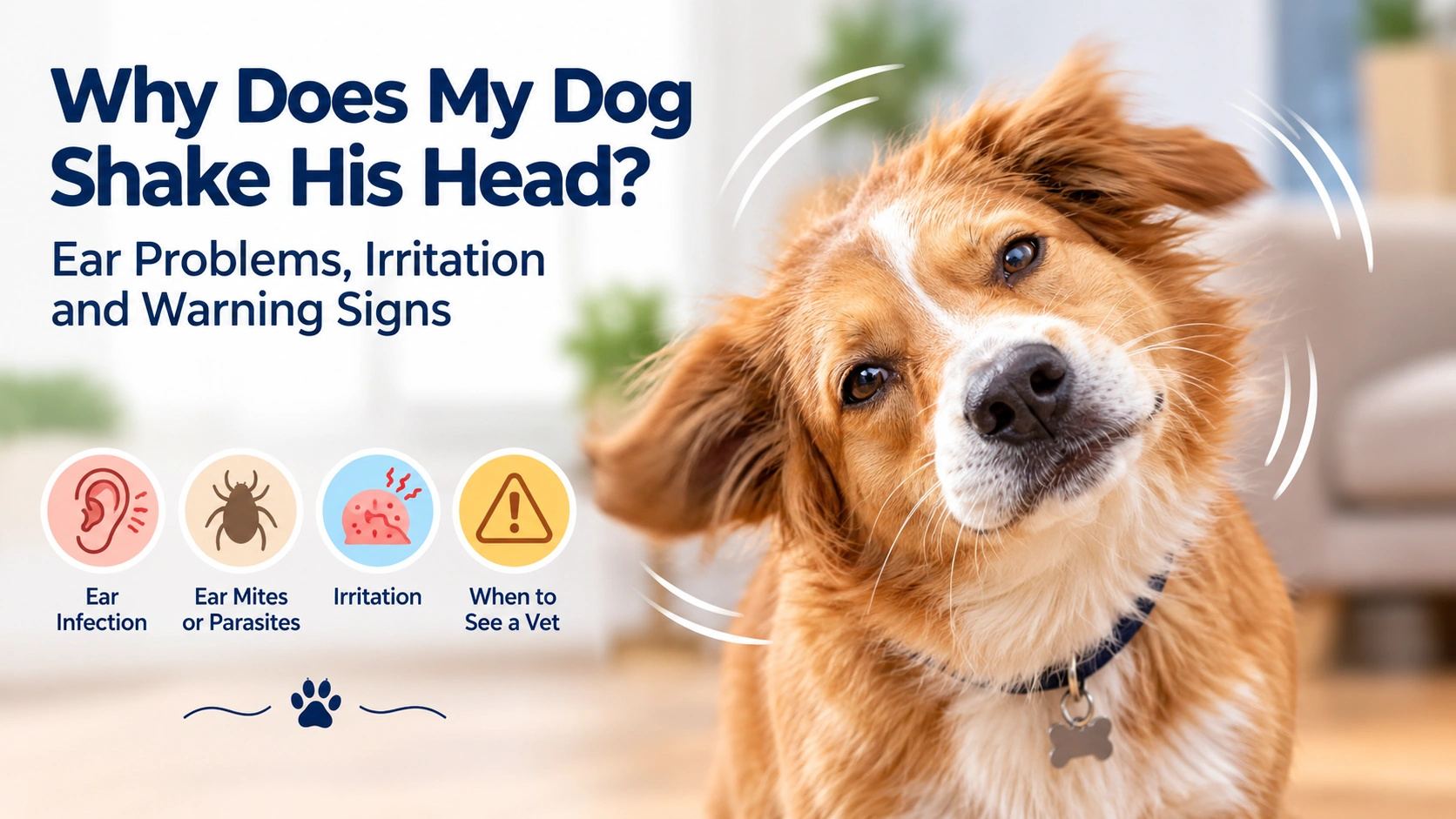
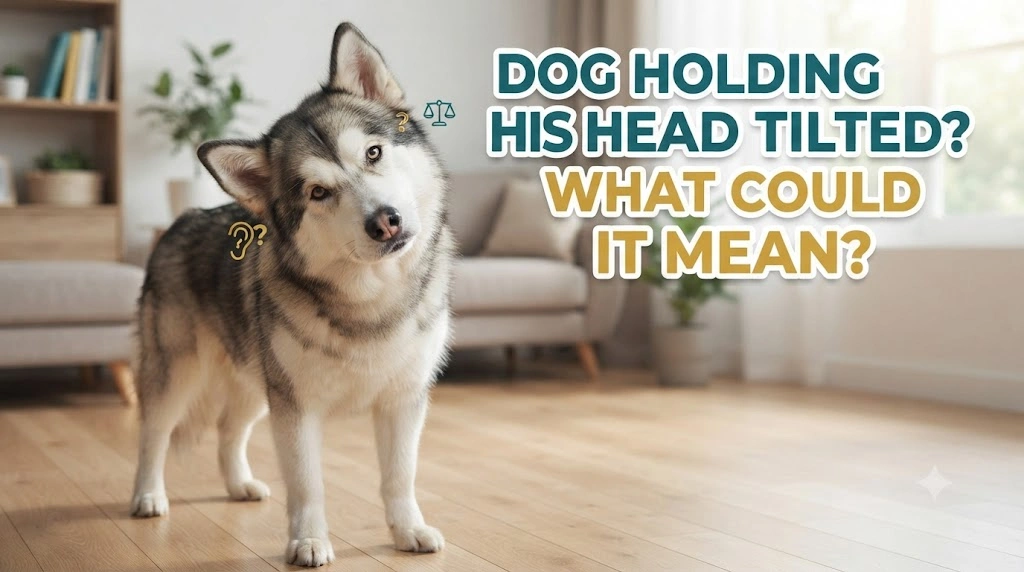
A persistent head tilt is different from the cute brief head cock dogs make when listening. A new tilt that remains for minutes or hours can occur with ear disease, vestibular dysfunction, neurologic problems, pain, or trauma. The most important clues are balance, eye movement, walking ability, and signs of ear discomfort.
Quick Answer
If your dog suddenly develops a persistent head tilt, watch for falling, circling, vomiting, rapid eye movements, weakness, or inability to stand. Contact a veterinarian promptly. Seek urgent care if the dog cannot walk, repeatedly falls, collapses, has severe neurologic deficits, or deteriorates rapidly.
Ear Problems
Outer or middle ear disease can cause pain and head tilt. Signs may include scratching, odor, discharge, redness, sensitivity around the ear, or shaking the head. Do not insert cotton swabs or unprescribed drops into a painful ear.
Vestibular Disease
The vestibular system helps control balance. Dysfunction can cause head tilt, leaning, falling, circling, nausea, and abnormal eye movements called nystagmus. Some vestibular episodes are dramatic even when recovery is possible, but veterinary assessment is still needed to determine the cause.
Neurologic Causes
Brain or nerve disease can also produce head tilt, especially when accompanied by weakness, abnormal awareness, seizures, unequal pupils, or other neurologic deficits.
What to Watch
| Finding | Why It Matters |
|---|---|
| Ear odor or discharge | Ear disease becomes more likely |
| Falling to one side | Vestibular dysfunction may be present |
| Rapid eye movements | Important vestibular or neurologic clue |
| Weakness or seizures | Raises neurologic concern |
| Vomiting with dizziness | Can accompany severe vestibular signs |
Keep the Dog Safe From Falls
Block stairs, use non-slip flooring, and keep the dog in a small safe area if balance is poor. Support with a harness if needed for short bathroom trips. Do not allow jumping onto furniture.
Do Not Clean a Painful Ear Aggressively
If the ear is painful, inflamed, or the eardrum may be affected, home cleaning can worsen discomfort. Veterinary examination should guide which products are safe.
Why Video Helps
Record the dog walking naturally, the head position, and any abnormal eye movement if it can be done safely. A video can help the veterinarian understand how severe the balance problem is.
When to Seek Urgent Care
Seek urgent veterinary care for inability to stand, repeated falling with injury risk, collapse, seizures, severe weakness, rapidly worsening neurologic signs, or major trauma.
What the Veterinarian May Evaluate
The veterinarian may examine the ears, eyes, gait, cranial nerves, and neurologic function. Depending on findings, ear cytology, imaging, blood tests, or other diagnostics may be recommended.
Bottom Line
A persistent head tilt is a clinical sign, not a personality quirk. Ear disease, vestibular problems, and neurologic conditions can all cause it. Protect the dog from falls, avoid aggressive ear cleaning, and arrange veterinary evaluation—especially when balance or neurologic signs are present.
Why Nausea Often Accompanies Vestibular Problems
Dogs with sudden balance disturbance may feel motion-sick. Drooling, lip licking, vomiting, and refusal of food can occur because the brain is receiving conflicting balance signals. Keep the dog in a quiet safe area and ask the veterinarian how to manage nausea appropriately.
How to Help a Wobbly Dog Move Safely
Use a harness for support, block stairs, remove slippery rugs or clutter, and keep food and water easy to reach. Do not allow the dog to wander near pools, balconies, or furniture it could fall from.
Why Head Tilt Direction Is Useful but Not Diagnostic
The side of the tilt can provide clues during a neurologic or ear examination, but owners should not try to diagnose the affected ear from direction alone. Record the tilt and let the veterinarian interpret it with the rest of the examination.
Outer, Middle, and Inner Ear Problems Are Different
An outer ear infection may cause scratching and odor without affecting balance. When deeper middle or inner ear structures are involved, head tilt and vestibular signs become more likely. Owners cannot reliably determine depth at home, especially when the ear is painful.
What Is Nystagmus?
Nystagmus is involuntary repetitive eye movement. It may be horizontal, vertical, or rotational. If you notice the eyes flicking rapidly while the dog is dizzy or falling, record a brief video and seek veterinary care. The direction and pattern can help the veterinarian localize the problem.
How to Help With Eating and Drinking Safely
A severely dizzy dog may struggle to reach bowls. Place food and water at an easy height and keep them close to the resting area. Do not force-feed a nauseated or poorly coordinated dog. Ask the veterinarian for guidance if the dog cannot eat or drink normally.
Why Sudden Vestibular Signs in Senior Dogs Can Be Dramatic
Older dogs can develop sudden vestibular syndromes that look frightening, with severe tilt and falling. Some improve over time, but similar signs can also come from ear disease or central neurologic problems. Veterinary assessment is needed rather than assuming age-related vestibular disease.
What Improvement May Look Like
Recovery can begin with less falling and better ability to stand, while a mild head tilt may persist longer. If the dog worsens, develops new weakness, seizures, altered awareness, or cannot maintain hydration, return for veterinary reassessment promptly.
Why Ear Pain and Vestibular Disease Can Overlap
Deep ear disease can affect structures involved in balance, so a dog may show both ear discomfort and neurologic-looking signs. Odor, discharge, scratching, and pain around the ear can appear alongside head tilt, falling, and nystagmus. This overlap is one reason home diagnosis is unreliable.
How to Set Up a Safe Recovery Area
Use a small quiet room with non-slip flooring. Block stairs and sharp furniture edges, keep water nearby, and use a supportive harness for brief toilet trips if the dog is unstable. Avoid carrying a large struggling dog on stairs unless you can do so safely.
Why Eating May Be Difficult
Dizziness and nausea can make a dog refuse food even when there is no primary stomach disease. Offer food only as directed and do not force-feed. If the dog cannot keep water down or becomes dehydrated, contact the veterinarian promptly.
What Changes Require Reassessment
New weakness, seizures, altered awareness, inability to stand, worsening eye movements, or progressive collapse require urgent reassessment. Improvement should look like better balance, less nausea, and increasing ability to move safely, even if a mild head tilt remains for a while.
Why Follow-Up Matters
Some dogs improve quickly, while others need additional testing to identify middle-ear disease or central neurologic causes. Attend recommended rechecks even if the tilt begins to improve, especially when the initial cause was uncertain.