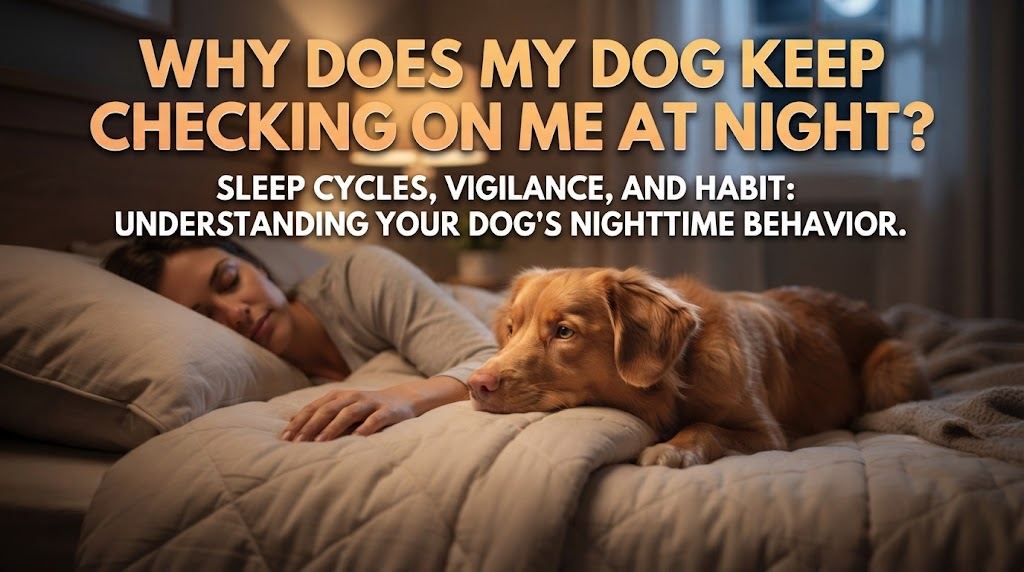
Some dogs wake, walk over to the bed, look at their person for a few seconds, and then return to sleep. That pattern can be perfectly ordinary. What matters is whether the dog appears calm and functional or restless and unable to settle.
Quick Answer
Your dog may keep checking on you at night because it naturally wakes between sleep periods, notices sounds or movement, or has learned a social routine of confirming where you are. Calm brief check-ins are different from pacing, panting, whining, confusion, repeated nudging, or obvious discomfort.
Dogs Do Not Sleep Exactly Like People
Dogs commonly shift position and wake briefly during the night. A dog that notices you moving, hears a sound, or changes resting spots may simply look at you as part of checking the environment before settling again.
Look at the Recovery, Not Just the Check-In
| Pattern | What it suggests |
|---|---|
| Brief look, then returns to bed | Likely routine monitoring |
| Comes over after you move or cough | Response to a normal cue |
| Paces, pants, whines, or cannot settle | Stress, discomfort, temperature, or medical causes need consideration |
| Older dog seems confused or vocal at night | Discuss sleep and cognitive changes with a veterinarian |
Your Response Can Build a Nighttime Habit
If every visit to the bed leads to petting, conversation, food, or going outside when there is no actual need, the check-in can become a reliable way to start interaction. For a healthy dog, keep nighttime responses calm and predictable while ensuring genuine needs have been met.
Make the Sleeping Environment Easy to Use
Provide a comfortable bed in a location where the dog can rest without being repeatedly disturbed. Check room temperature, noise, outdoor activity, and whether another pet is interfering with sleep. Senior dogs may benefit from good nighttime lighting and easy access to water and toileting areas.
When Nighttime Checking Is More Than a Behavior Question
New restlessness can accompany pain, gastrointestinal discomfort, urinary urgency, breathing problems, endocrine disease, medication effects, sensory decline, or cognitive change. A dog that cannot settle, repeatedly wakes crying, pants heavily at rest, or appears confused should not be treated as merely “clingy.”
Record the Pattern for Several Nights
Note the time, what woke the dog if anything, whether it went to a door or water bowl, whether it could lie down comfortably, and how quickly it returned to sleep. A short video can help if the behavior is unusual but intermittent.
Related Virixoo Guides
If waking includes vocalizing, read why dogs wake up crying during the night. For repeated repositioning, see why a dog may keep changing sleeping positions. If nighttime panting is the main issue, read why dogs may pant at night.
Bottom Line
A calm dog that briefly checks on you and then sleeps again may simply be following a normal social and environmental routine. The pattern becomes more important when the dog cannot settle or develops pain, confusion, panting, vocalization, or other new signs.