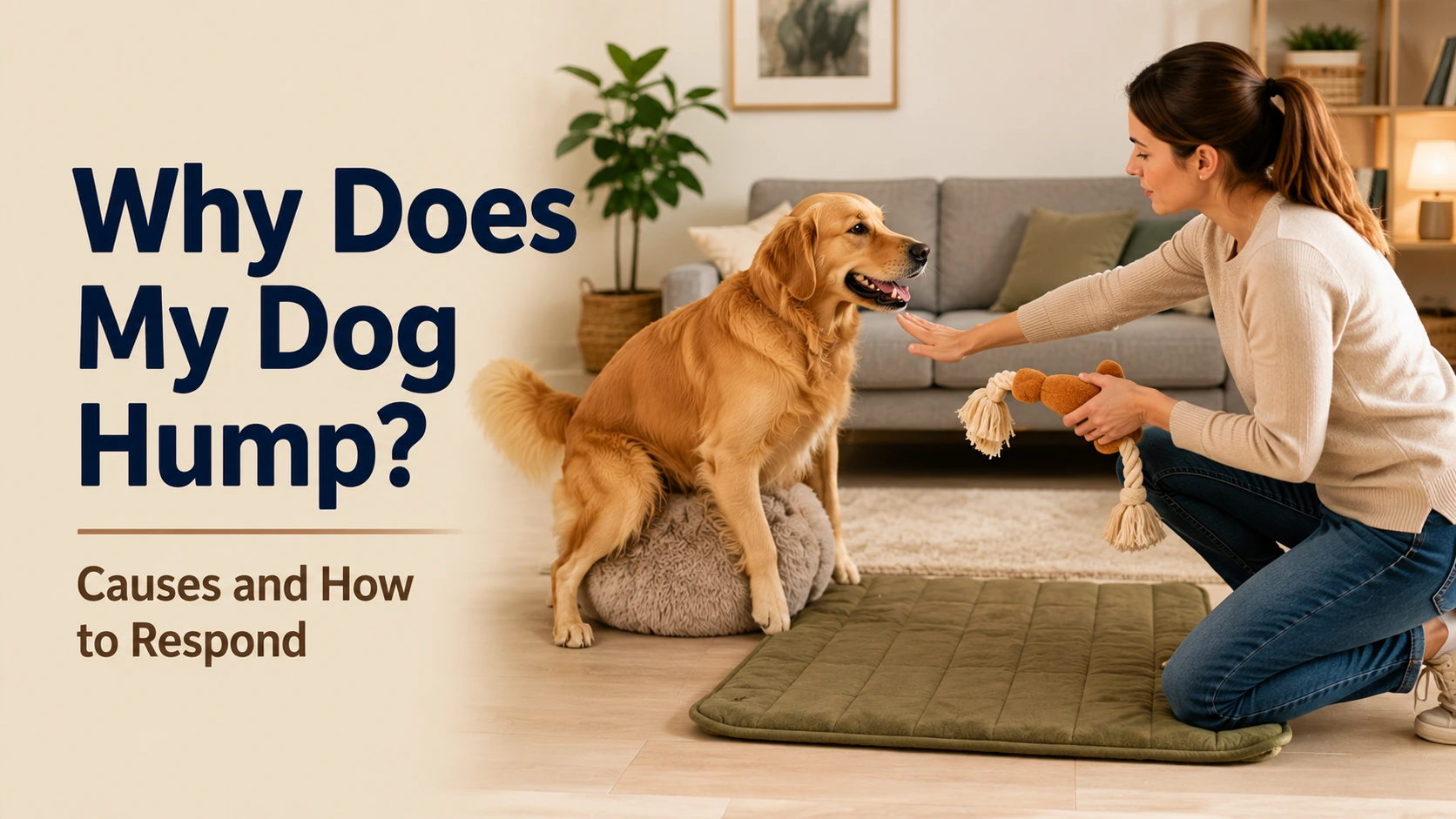
Humping, also called mounting, is not automatically sexual behavior. Dogs may mount during play, excitement, stress, frustration, social interaction, or because the behavior has become a habit. Both male and female dogs can do it. The safest response is calm interruption, better management of high-arousal situations, and reinforcement of an alternative behavior.
Quick Answer
If humping happens during excitement or play, interrupt early and calmly, guide your dog to a simple alternative such as coming to you, sitting, going to a mat, or taking a short decompression break, and reward the calmer choice. Avoid yelling or physical punishment. Veterinary assessment is appropriate when mounting begins suddenly, becomes obsessive, or occurs with genital licking, urinary problems, pain, skin irritation, or other physical signs.
Why Dogs Hump
1. Excitement and Overarousal
Some dogs mount when they become too excited to regulate themselves. Guests arriving, rough play, daycare, a new dog, or intense games can raise arousal until the behavior appears. Look for what happens in the minute before the mounting rather than focusing only on the final behavior.
2. Play
Mounting can occur briefly during dog-dog play. The important issue is whether both dogs remain comfortable. A dog that repeatedly mounts another dog that is trying to leave can trigger conflict, so owners should interrupt before frustration escalates.
3. Stress or Frustration
Some dogs mount during uncertain or stressful social situations. Panting, whining, pacing, jumping, frantic movement, or difficulty responding to cues may indicate that the dog is over threshold. Reducing the intensity of the situation is often more useful than adding commands.
4. Learned Attention
If mounting reliably causes people to shout, chase, laugh, push, or engage, the behavior may gain attention value. Even negative attention can maintain a behavior in some dogs. Calmly removing access and rewarding a better behavior reduces that payoff.
5. Sexual Motivation
Hormones can contribute, especially in intact dogs, but they are not the only explanation. Neutering or spaying may reduce sexually motivated mounting in some dogs but will not necessarily erase a behavior that has become associated with excitement or habit.
6. Medical Irritation
Urinary problems, genital irritation, skin disease, or other discomfort can occasionally contribute to mounting or increased genital attention. Sudden behavior change should not be assumed to be “bad manners.”
How to Stop Humping Without Creating a Bigger Problem
Step 1: Interrupt Before Full Mounting
Learn your dog’s pre-humping pattern. Some dogs begin with intense sniffing, pawing, whining, body pressure, or frantic play. Call the dog away while they can still respond.
Step 2: Lower Arousal
Use a short calm break behind a gate, on leash near you, or in another quiet area. The goal is not punishment; it is to allow the nervous system to settle. Release the dog again when the body is loose and responsive.
Step 3: Reinforce an Alternative
Reward sitting, lying on a mat, carrying a toy, sniffing calmly, or checking in with you. The alternative should be easy enough to succeed before the dog becomes highly excited.
Step 4: Manage Repeated Triggers
If visitors reliably trigger mounting, use a leash, gate, or separate settling space before guests enter. If high-intensity dog play triggers it, choose shorter play periods and interrupt earlier. Management prevents rehearsal while new habits develop.
What If My Dog Humps Other Dogs?
Do not assume the other dog will “teach yours a lesson.” Some dogs tolerate mounting; others react strongly. Interrupt repeated mounting, create distance, and allow both dogs to calm. If your dog struggles to disengage from other dogs, reduce group play intensity and seek guidance from a qualified trainer or behavior professional.
What If My Dog Humps Guests?
Prepare before the person arrives. Use a leash or gate, provide an activity in a separate area, and reward four paws on the floor and calm orientation toward you. This approach is similar to the management used for jumping on people: prevent rehearsal, reinforce the behavior you actually want, and keep greetings manageable.
When Professional Help Is Useful
Seek veterinary advice if mounting is sudden, intense, difficult to interrupt, or accompanied by urinary changes, pain, discharge, excessive licking, or skin irritation. A qualified behavior professional can help when mounting causes fights, appears compulsive, or creates significant household problems.
Track the Trigger Before Trying to Stop the Behavior
For several days, record what happens immediately before mounting. Was there intense play? A visitor? A dog entering the room? Frustration at a barrier? Excited greeting? A favorite pillow? Also record what people do afterward. If mounting reliably creates laughter, chasing, physical play, or attention, that consequence may help maintain it. This simple observation often reveals a much clearer training target.
A Better Replacement Depends on the Trigger
| Trigger | Useful Alternative |
|---|---|
| Guests entering | Go to mat, chew, or calm greeting routine |
| Wild dog play | Short break, sniffing, then lower-intensity play |
| Attention seeking | Reward sitting, toy play, or calm contact |
| Frustration | Increase distance and give an achievable task |
| Repeated mounting of one object | Temporarily remove access while building other activities |
Do Not Wait for a Fight
When another dog stiffens, turns away, hides, growls, or repeatedly tries to leave, end the interaction. Allowing one dog to continue because “they will sort it out” can turn an avoidable social mismatch into conflict. Shorter, better-managed play sessions are more useful than repeatedly letting arousal escalate.
Consistency Across the Household
Everyone should respond in the same calm way. If one person laughs and plays while another person scolds, the dog receives mixed consequences. Agree on one interruption cue, one alternative behavior, and one management plan for visitors or high-energy play. Consistency makes the replacement behavior easier to learn and reduces accidental reinforcement.
FAQ
Do female dogs hump?
Yes. Mounting occurs in both male and female dogs and can be related to excitement, play, stress, habit, or sexual behavior.
Does humping mean my dog is dominant?
It should not be reduced to a single “dominance” explanation. Context and arousal often provide more useful information.
Will neutering stop humping?
It may reduce hormonally influenced mounting in some dogs, but learned or excitement-related behavior can continue.
Should I punish my dog for humping?
No. Calm interruption, management, and reinforcement of an alternative are more useful and less likely to add stress.
Trusted Reference
American Kennel Club: Why Does My Dog Hump? Understanding Dog Humping or Mounting