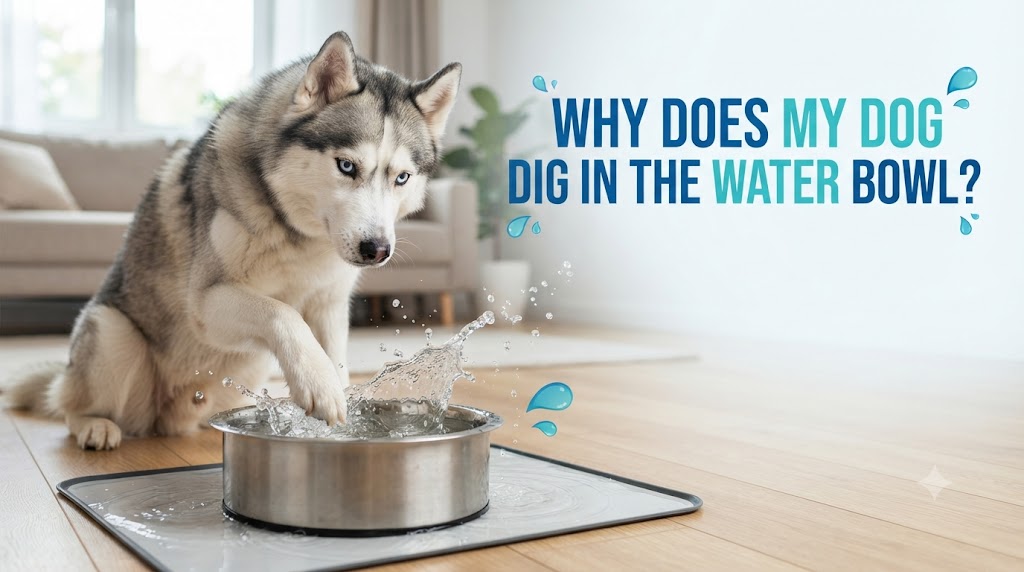
A dog that paws or digs in the water bowl is often playing, cooling off, reacting to the bowl, or repeating a behavior that gets attention. The mess itself is usually not the important part. What matters is whether your dog is drinking a normal amount and otherwise feels well. If splashing occurs together with excessive thirst, frequent urination, weakness, vomiting, confusion, or heat illness, the behavior becomes a medical clue rather than a simple household nuisance.
Quick answer
Use a heavy, non-slip bowl filled with fresh water in a calm, easy-to-clean location. Do not restrict water to stop splashing. If the behavior is playful, redirect calmly and provide a safer water-play outlet at another time. If your dog is truly drinking much more than normal, waking at night to drink, urinating frequently, losing weight, or acting unwell, contact a veterinarian.
Why water is so interesting
Water reacts instantly when a dog touches it. One paw creates ripples, reflections, noise, and movement. For puppies and curious young dogs, that makes the bowl an interactive object. Some dogs discover that splashing also produces a dramatic human response: people laugh, shout, grab towels, or chase the dog. Attention can accidentally turn a one-time experiment into a repeated game.
Start with the bowl and location
A lightweight bowl may slide or tip. Tags may strike a metal rim. A highly reflective surface can attract a dog that likes moving light. Food debris, hair, or insects floating on top can also trigger pawing. Try a clean, stable food-safe bowl on a non-slip mat. Place it away from electrical cords, doorways, and slippery stairs.
Give the dog enough space to drink comfortably. In multi-pet homes, make sure another animal cannot block access. More than one water station can be useful when a home is large or pets have different preferred resting areas.
Is your dog trying to cool down?
Dogs mainly cool themselves through panting, but contact with cool water can still feel good. After vigorous play or in warm weather, a dog may place paws in the bowl or splash the face and chest. That does not mean bowl splashing is an adequate cooling method. Shade, rest, ventilation, and unrestricted drinking water are more important.
Heavy panting that does not settle, weakness, vomiting, confusion, collapse, abnormal gum color, or difficulty walking after heat exposure can signal heatstroke. Move the dog to a cooler environment and seek urgent veterinary care rather than waiting for the dog to cool itself in a bowl.
When it is simply play
If your dog is bright, relaxed, drinking normally, urinating normally, and splashes mainly during excited moments, management is usually enough. Avoid yelling or repeatedly grabbing the bowl because that can make the game more exciting. Calmly redirect the dog, wipe up the spill, and keep drinking water available.
Dogs that clearly love water may enjoy supervised water play outdoors in safe conditions. Keep play water separate from drinking water so the main bowl remains boring and predictable.
Could boredom contribute?
Some dogs invent repetitive activities when they do not have enough appropriate stimulation. The solution is not endless high-intensity exercise. Balanced enrichment can include sniffing walks, short training sessions, food-search games, chewing, social interaction, and enough sleep. If splashing predictably happens during quiet periods, adding a calm enrichment activity beforehand may reduce it.
Separate splashing from excessive thirst
A dog can empty a bowl by spilling it or by drinking it. Those are very different situations. For a day or two, measure roughly how much water you add and estimate how much is clearly spilled. You do not need laboratory accuracy. You are looking for a meaningful change from your dog’s normal routine.
If your dog is genuinely consuming much more water, read Virixoo’s guide to excessive thirst in dogs. Do not limit water unless a veterinarian specifically instructs you to do so.
Patterns that help interpret the behavior
| Pattern | What it may suggest |
|---|---|
| Pawing after active play | Excitement, cooling, or water play |
| Pawing only with one bowl | Noise, movement, shape, or reflection |
| Pawing when people react | Attention may reinforce the behavior |
| Pawing plus constant drinking | Possible medical change in thirst |
| Sudden repetitive fixation in an older dog | Behavioral or medical evaluation may be needed |
How to reduce the mess safely
Use a broad non-slip mat that extends beyond the bowl. Choose a bowl heavy enough that it does not slide, but make sure the design is easy to clean and comfortable to drink from. Wipe up standing water promptly because wet floors create slipping risk, especially for senior dogs and dogs with orthopedic problems.
What if the dog paws before every drink?
Some dogs develop a harmless ritual of touching the water before drinking. If the behavior is brief, unchanged for months or years, and the dog drinks normally, it may simply be a preference. A new repetitive ritual paired with staring, confusion, pacing, or other unusual behavior deserves a closer look. A video can help your veterinarian see the full sequence.
What about fountains?
A fountain can make some dogs drink more calmly, while moving water makes other dogs even more excited. There is no universal best choice. Whatever system you use, clean it thoroughly and make sure the dog always has reliable access to fresh water.
Pool water and outdoor sources
Dogs that love playing in water may also drink from pools, puddles, or outdoor containers. These sources can contain chemicals, salt, algae, microorganisms, or debris. Fresh drinking water should remain available. If a dog drinks a large amount of salt water or pool water and then develops vomiting, weakness, tremors, confusion, or seizures, seek veterinary care promptly.
What not to do
- Do not withhold water to prevent splashing.
- Do not add salt or random flavorings to make water more interesting.
- Do not use punishment near the drinking station.
- Do not assume an empty bowl always means excessive thirst.
- Do not ignore sudden changes in thirst or urination.
When to contact a veterinarian
Arrange veterinary advice if the behavior starts suddenly and persists, or if you notice increased thirst, increased urination, indoor accidents, weight loss, vomiting, diarrhea, weakness, or unusual behavior. Some medications also increase thirst and urination, so bring a complete medication list.
Seek urgent care for collapse, severe weakness, seizures, repeated vomiting with inability to keep water down, breathing difficulty, or suspected heatstroke.
A useful home record
For several days, note when splashing happens, what your dog was doing beforehand, whether water was actually consumed, and whether urination changed. This simple record often makes the pattern obvious and gives a veterinarian or behavior professional better information than a general description such as “he is obsessed with water.”
Bottom line
Water-bowl digging is usually manageable once you identify whether your dog is playing, cooling off, reacting to the bowl, or truly drinking abnormally. Keep hydration freely available, make the setup stable and safe, and focus on changes in thirst, urination, energy, appetite, and behavior rather than the mess alone.
A simple two-day water log
For two days, record when the dog splashes, whether the bowl is later empty because of drinking or spilling, and how often the dog urinates. Note weather, exercise, and any medication. This helps separate recreational water play from a true change in thirst.
If thirst is clearly increased, do not reduce the amount offered. Bring the log to your veterinarian because the pattern can guide the next steps.
How to decide whether to monitor or call
Use your dog’s normal baseline as the reference. A mild, familiar pattern in a comfortable dog is very different from a new or rapidly changing problem. With dog digging in water bowl, contact a veterinary professional sooner when pain, weakness, bleeding, vomiting, breathing changes, appetite loss, or rapid progression appears. Online guidance can organize what you observe, but it cannot replace an examination when your dog is becoming unwell.
When you do call, give a simple timeline: when the change began, whether it is getting better or worse, what other symptoms are present, and what medications or recent exposures may be relevant. Clear information helps the veterinary team triage the situation efficiently.
How to change the behavior without turning the bowl into a battle
Make the drinking station predictable. Put the bowl in the same place, use the same calm response when splashing starts, and redirect the dog to an activity that is incompatible with pawing, such as settling on a mat or carrying a toy. Avoid repeatedly snatching the bowl away, because that can create frustration around an essential resource. If your dog splashes mainly when excited, wait for a calmer moment before offering interactive play elsewhere.
Household management matters too. Use flooring that provides traction, keep towels nearby, and protect nearby electrical items. For dogs that share water, make sure a playful dog is not preventing another pet from drinking. Multiple bowls can reduce competition and make it easier to see which dog is changing its drinking pattern.
Questions to ask if the behavior suddenly starts
Think about what changed in the previous few days. Was the weather hotter? Did the dog begin a new medication? Did you change bowls or move the water station? Is the dog exercising more, eating a drier diet, or waking at night to drink? Is urination more frequent? These details help separate an environmental trigger from a health change.
A sudden increase in both drinking and urination is more important than the digging itself. A veterinarian may recommend urine testing, blood work, or other evaluation based on the dog’s age, history, and physical examination. Do not try to diagnose the cause by water intake alone.