
Why Does My Dog Put His Head on Me? Comfort, Attention and Connection
Resting a head on you is usually a social or comfort behavior. Learn how context distinguishes affection, attention seeking, reassurance, and unusu...

Browse 66 Virixoo dog behavior guides, organized to help you move between closely related questions.
Resting a head on you is usually a social or comfort behavior. Learn how context distinguishes affection, attention seeking, reassurance, and unusu...
Stopping mid-walk and looking back can be communication or checking in, but a new repeated pattern may also signal pain, fatigue, fear, heat, or en...
Refusing to go outside at night can reflect darkness, noises, wildlife, weather, a past scare, or physical discomfort. Learn how to identify the tr...
Sitting on your feet is often about closeness, warmth, habit, or security rather than dominance[cite: 18].
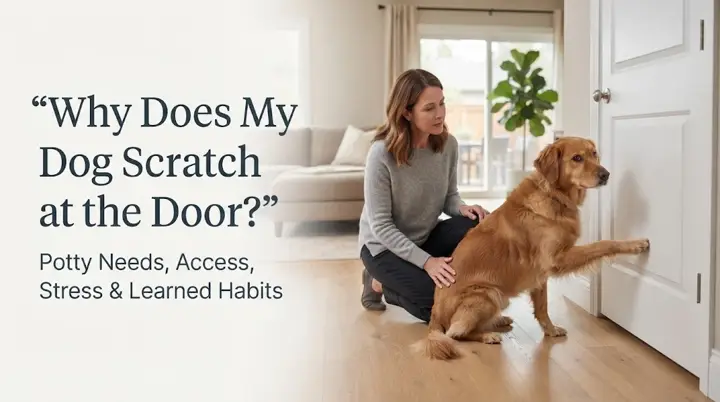
Door scratching may communicate a toilet need, desire for access, response to outside sounds, learned reinforcement, or separation distress.
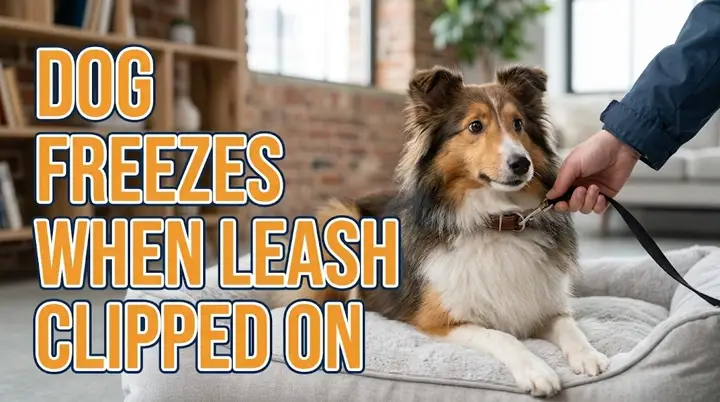
Freezing when the leash is attached can reflect fear, equipment discomfort, pain, negative associations, or uncertainty about what happens next.
Standing over a person can be a learned attention-seeking habit, a request for contact, uncertainty, guarding-related behavior, or simply a preferr...
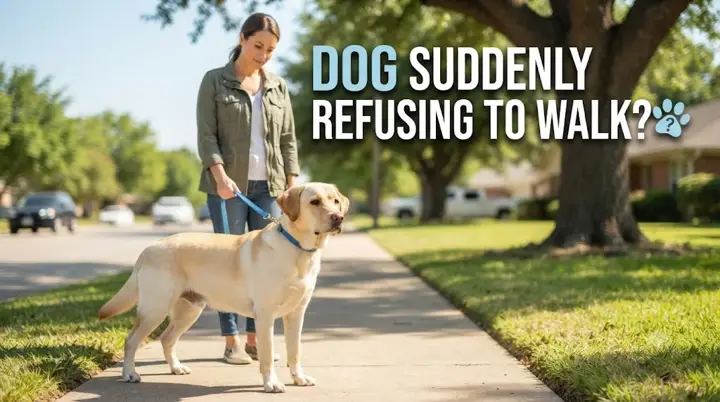
A practical way to tell whether a dog that suddenly stops on walks is reacting to pain, fear, heat, equipment, or something in the environment.
Barking at a reflection often reflects novelty, arousal, uncertainty, or incomplete recognition of the visual image rather than aggression toward a...
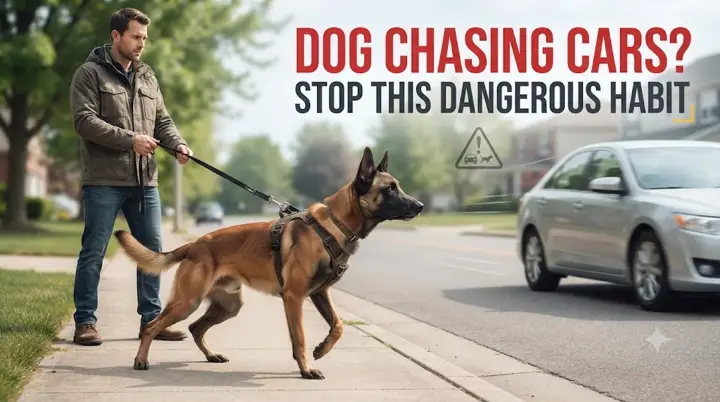
Why dogs chase moving vehicles and how to build a safer roadside management and training plan before the behavior turns into an accident.
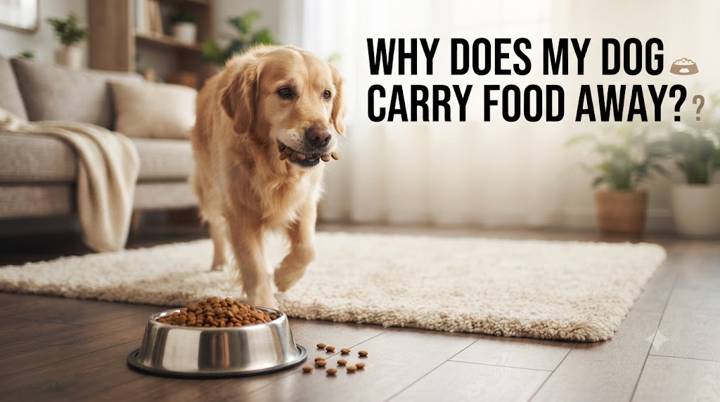
Carrying food away before eating can reflect comfort, competition avoidance, surface preference, learned habit, or a desire to eat in a quieter loc...
Leaning against a person can reflect closeness, comfort, attention seeking, or a desire for security, but sudden leaning with weakness or imbalance...
Rear-end sniffing is a normal canine greeting because scent carries information about identity, reproductive status, health, and recent activity.
Why dogs carry kibble or mouthfuls away from the bowl, how to distinguish a harmless preference from stress or mouth pain, and how to make meals ca...
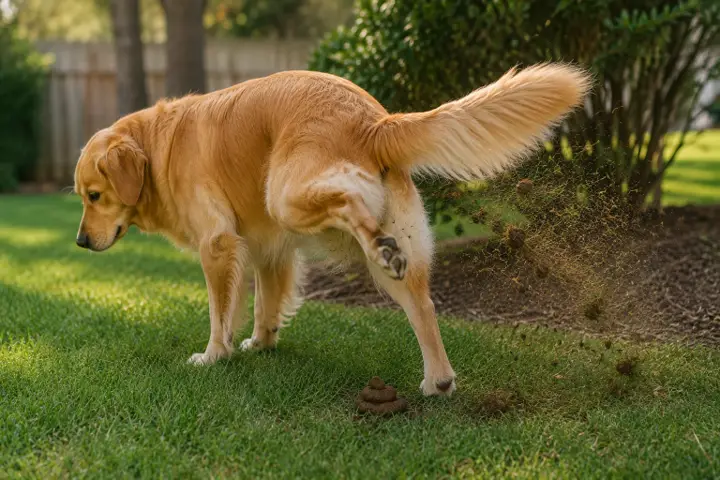
Kicking the ground after toileting is usually normal scent-marking behavior that spreads visual and scent signals from the paws[cite: 18].
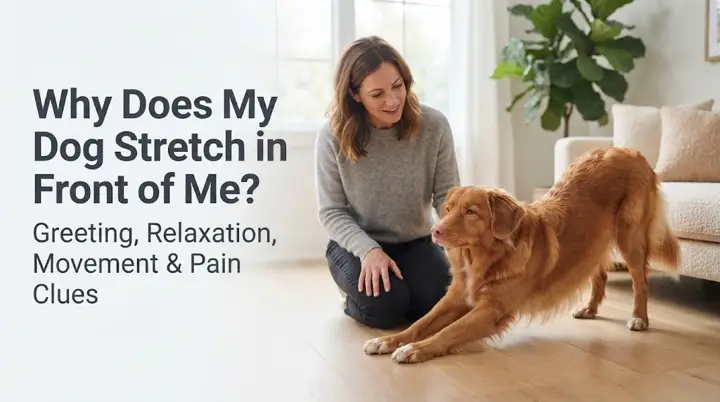
Stretching in front of you is often a normal post-rest stretch, greeting ritual, or transition into activity. Repeated prayer-like posturing with i...
Sleeping on top of you is commonly driven by warmth, closeness, habit, and a preference for a soft resting place. Learn when boundaries may help.
Scratching or digging at bedding before sleep is often a normal nesting routine, but destructive or frantic digging can reflect stress or discomfort.
Carrying a favorite toy can be normal comfort, play, attention seeking, or self-soothing; concern rises when it becomes compulsive or accompanies d...
Circling before lying down is often normal nesting behavior, but repeated compulsive circling, imbalance, or confusion can signal pain or neurologi...
Learn when chasing shadows, laser-like reflections, or moving light is harmless curiosity and when repetitive fixation may need behavioral or veter...
Sudden fear of a floor can follow slipping, poor traction, pain, vision change, or a frightening event. Learn how to restore confidence without for...
Sudden doorway hesitation can reflect fear, poor vision, slippery flooring, pain, a startling past event, or a change in the environment.
Hiding or burying treats can be a normal food-caching behavior, especially when a dog is not ready to eat the item immediately.