No chew toy is completely risk-free for every dog. The safest choice depends on body size, jaw strength, chewing style, dental health, and whether the dog tears, swallows, or guards objects. Supervision is especially important when introducing a new product.
Quick Answer
Choose a toy too large to swallow whole, made for your dog’s size and chewing intensity, and inspect it frequently. Remove toys that crack, splinter, develop sharp edges, or become small enough to swallow. Avoid extremely hard objects that can fracture teeth. Dogs that swallow pieces or guard chews need a more controlled plan.
Match the Toy to the Dog
A toy appropriate for a small gentle chewer may be dangerous for a powerful dog that destroys objects quickly. Follow manufacturer size guidance, but also observe how your individual dog uses the toy.
Hardness Matters
Very hard chews can damage teeth. If a product is essentially unyielding under pressure, ask your veterinarian whether it is appropriate for your dog, especially if the dog already has dental disease or fractured teeth.
Watch for Swallowing Risk
Remove a chew when it becomes small enough to fit entirely in the mouth or when pieces are breaking off. Intestinal foreign bodies can require emergency treatment. Vomiting, appetite loss, abdominal pain, repeated retching, or inability to keep water down after suspected object ingestion needs prompt veterinary attention.
Supervise New Toys
Do not assume a toy is safe simply because it is marketed as durable. Watch the first several sessions. Some dogs lick and carry toys while others systematically tear them apart.
Guarding Changes the Safety Plan
If your dog freezes, growls, snaps, or refuses to release a chew, do not forcibly take it. Learn safer management in Why Does My Dog Guard Food or Toys?.
Chewing Furniture vs. Chewing Toys
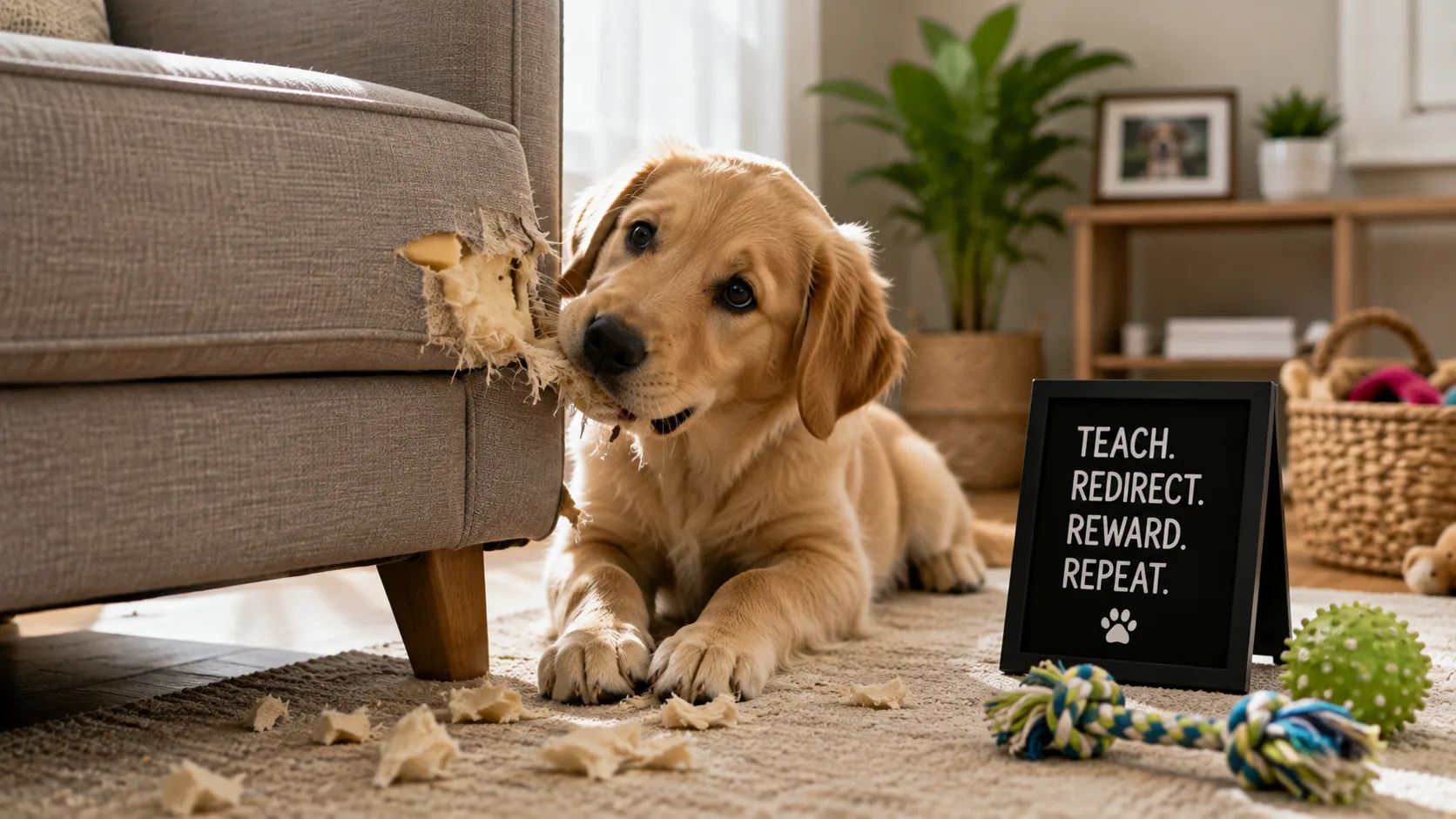
Appropriate chew options are useful only if the dog can access them before destructive chewing begins. Pair safe toys with management and training from How to Stop a Dog From Chewing Furniture.
Related Virixoo Guides
For dental warning signs, see Why Does My Dog Have Bad Breath?. For vomiting after possible ingestion, read Why Is My Dog Vomiting?.
FAQ
Are bones always safe for dogs?
No. Bones can fracture teeth, splinter, obstruct the digestive tract, or cause other injuries. Discuss specific chew choices with your veterinarian.
Should I leave chew toys out all day?
That depends on the toy and the dog. Items that can be destroyed or swallowed should not be left unsupervised.
What if my dog destroys every toy?
Choose supervised enrichment that does not depend on prolonged chewing and discuss safer options with your veterinarian or trainer.
Bottom line: Safe chewing is a matching problem: size, hardness, durability, supervision, dental health, and the dog’s actual behavior all matter.