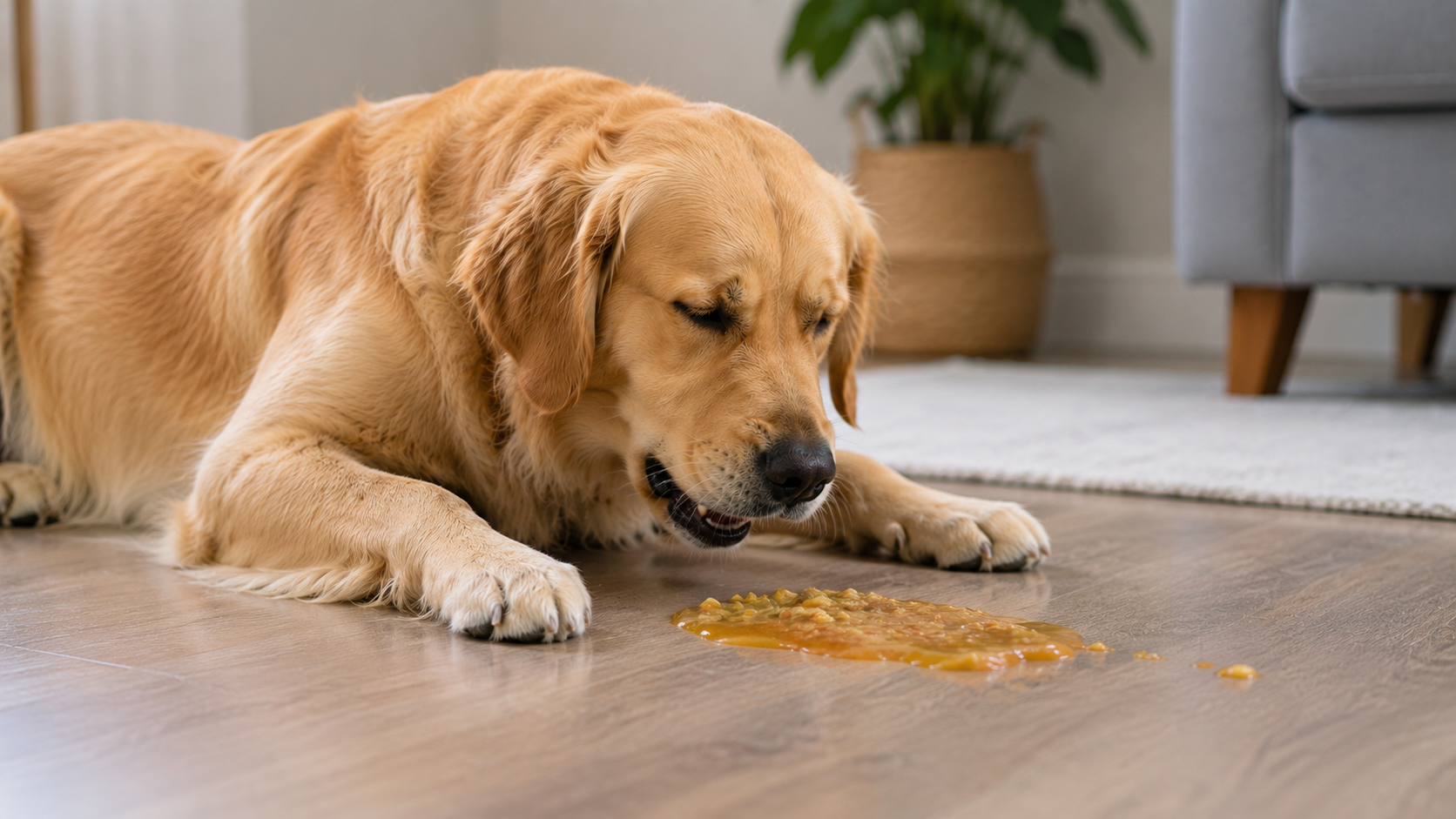
Vomiting is common enough that many owners see it at least once, but repeated or severe vomiting can become dangerous. The most useful first step is to distinguish an isolated episode in an otherwise normal dog from vomiting accompanied by pain, weakness, dehydration, toxin exposure, or other warning signs.
Vomiting versus regurgitation
Vomiting is an active process and may include nausea, drooling, abdominal contractions, or retching. Regurgitation is often more passive, with food or fluid coming back up without obvious abdominal effort. A short video, if safe to take, can help your veterinarian distinguish the two.
Possible reasons dogs vomit
Dogs can vomit after dietary indiscretion, sudden food changes, motion sickness, gastrointestinal inflammation, parasites, pancreatitis, foreign-body obstruction, toxin exposure, medication reactions, systemic illness, and many other conditions. Because the list is broad, the pattern and accompanying signs matter more than trying to diagnose the cause at home.
Information worth recording
| Observation | Why it helps |
|---|---|
| Number of episodes | Shows whether the problem is isolated or recurring |
| Food, foam, bile, blood, or foreign material | Helps characterize the episode |
| Water intake | Helps assess hydration and whether drinking triggers more vomiting |
| Stool changes | Vomiting plus diarrhea can change the clinical picture |
| Possible toxin or object access | May make evaluation urgent |
What to do after an isolated episode
Keep your dog calm and observe closely. Do not give human anti-nausea drugs or other medicines unless a veterinarian specifically recommends them. Because feeding and water advice can differ based on age, size, medical history, and the cause of vomiting, call your veterinary clinic for individualized guidance if vomiting continues.
Emergency warning signs
Seek urgent veterinary care for repeated unproductive retching, a swollen or painful abdomen, collapse, severe weakness, breathing difficulty, suspected poisoning, known or suspected foreign-object ingestion, significant blood, repeated vomiting that prevents water from staying down, or rapidly worsening condition. Puppies and medically fragile dogs can deteriorate more quickly and deserve a lower threshold for professional advice.
Related Virixoo Guides
If appetite has also changed, read Why Is My Dog Not Eating?. If diarrhea is present, see Why Does My Dog Have Diarrhea?.
Sources & References
For general veterinary information and help finding veterinary care, visit the American Animal Hospital Association.
FAQ
Is yellow vomit always serious?
Yellow fluid is often bile, but color alone cannot determine severity. Frequency, behavior, hydration, pain, and other symptoms are more important.
Should I give my dog a human stomach medicine?
No medicine should be given simply because it is available at home. Doses, contraindications, and the underlying cause matter; ask a veterinarian first.
Why does my dog vomit repeatedly after drinking?
Repeated inability to keep water down can lead to dehydration and may indicate a significant problem. Contact a veterinarian promptly.
Bottom line: One episode in a bright, comfortable dog is different from repeated vomiting in a painful or weak dog. Count episodes, note associated signs, and escalate quickly when red flags appear.