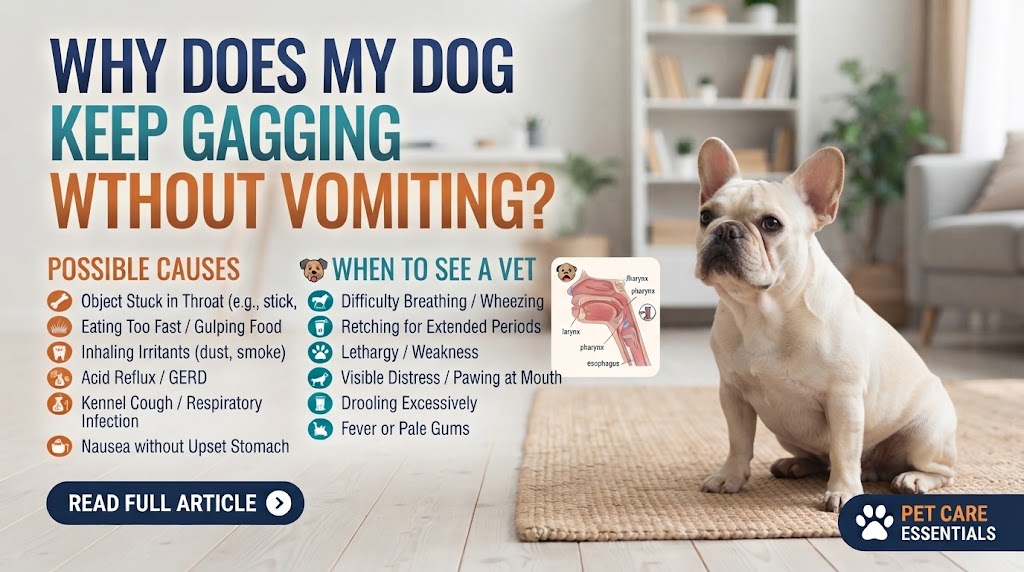
Repeated gagging without producing vomit can come from throat irritation, coughing, a foreign object, nausea, airway disease, or an emergency such as bloat when paired with abdominal swelling and unproductive retching. A single sign rarely identifies one diagnosis, so the safest approach is to look at the whole pattern: when it started, how often it happens, what triggers it, and whether your dog is otherwise acting normally.
Quick Answer
Repeated gagging without producing vomit can come from throat irritation, coughing, a foreign object, nausea, airway disease, or an emergency such as bloat when paired with abdominal swelling and unproductive retching. The important clues are whether the change is new, persistent or worsening, whether it affects normal function, and whether pain or other symptoms are present. Seek veterinary care promptly for severe pain, breathing difficulty, collapse, major trauma, rapid deterioration, or another loss of basic function.
Possible Causes
Upper-airway irritation
Throat irritation, inflammation, or material near the pharynx can trigger gagging or repeated swallowing. The timing, severity, and accompanying signs help determine how much weight to give this possibility.
Cough mistaken for gagging
Some coughs end with a gag-like motion. A video helps a veterinarian distinguish coughing, gagging, retching, and reverse sneezing. The timing, severity, and accompanying signs help determine how much weight to give this possibility.
Urgent respiratory or abdominal disease
Breathing difficulty, blue or gray gums, collapse, abdominal distension, or repeated unproductive retching requires urgent care. The timing, severity, and accompanying signs help determine how much weight to give this possibility.
Bottom Line
Repeated gagging without producing vomit can come from throat irritation, coughing, a foreign object, nausea, airway disease, or an emergency such as bloat when paired with abdominal swelling and unproductive retching. The most useful next step is not to guess a diagnosis from one symptom, but to document the pattern and judge whether normal function is changing. If the sign is persistent, painful, progressive, or accompanied by other abnormalities, veterinary evaluation is the safest course.