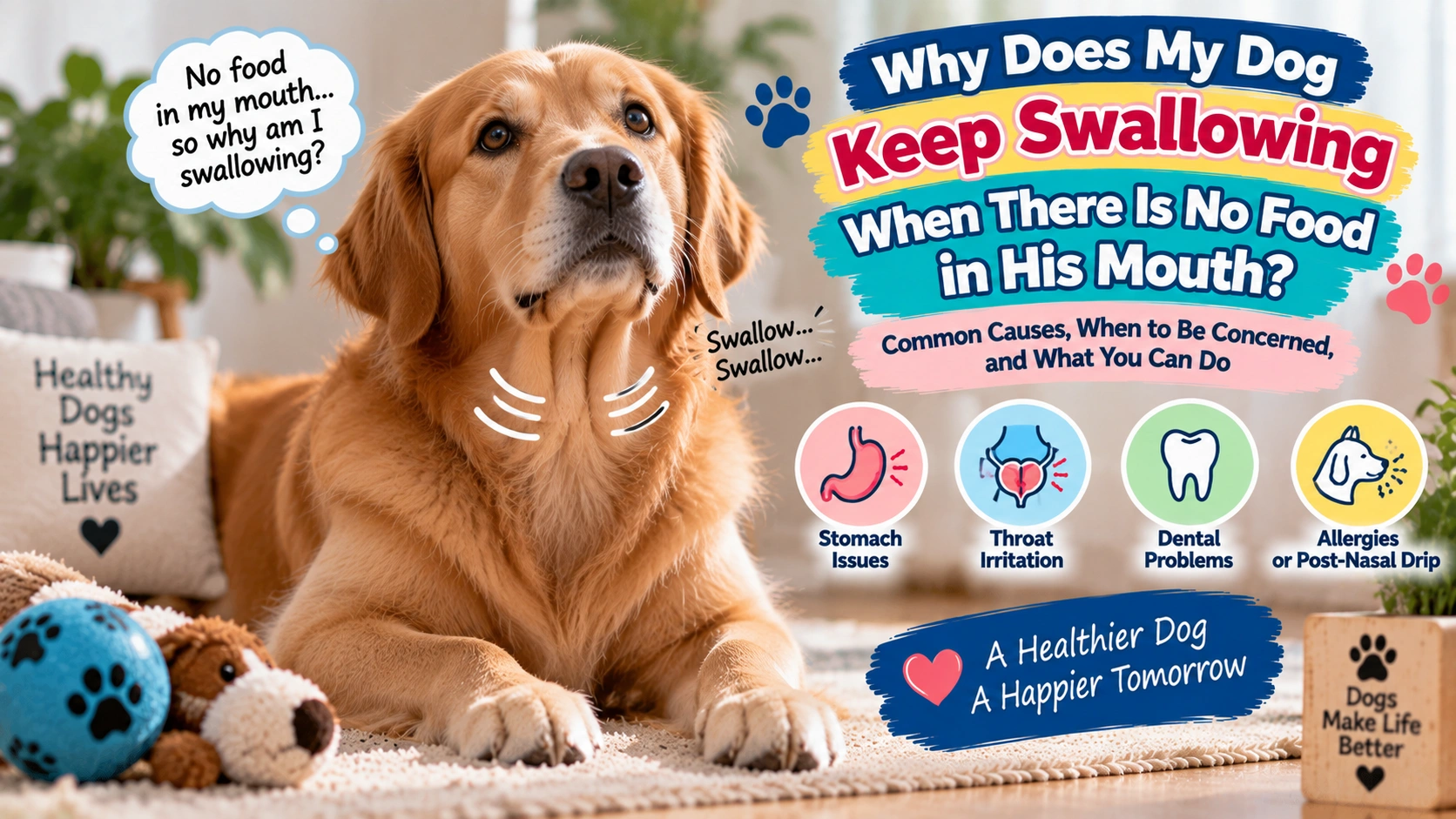

Nighttime gulping and repeated swallowing may reflect nausea, reflux-like discomfort, excess saliva, oral pain, throat irritation, or a swallowing disorder. The key is to interpret the exact pattern instead of assuming one diagnosis from a single behavior.
Quick Answer
Nighttime gulping and repeated swallowing may reflect nausea, reflux-like discomfort, excess saliva, oral pain, throat irritation, or a swallowing disorder. A new pattern that persists, worsens, causes pain, or interferes with normal eating, drinking, breathing, movement, sleep, or elimination should be assessed by a veterinarian.
Why This Pattern Is Different
The combined pattern of gulping plus swallowing is more specific than simple lip licking. Track whether episodes follow food, drinking, medication, coughing, or a change in sleeping position.
Possible Causes
Nausea
Nauseated dogs may gulp, swallow, lick the lips, pace, drool, or seek grass without vomiting.
Excess Saliva or Oral Pain
Dental disease and oral irritation can increase saliva and swallowing.
Throat or Esophageal Discomfort
Gagging, coughing, regurgitation, neck stretching, or trouble with water makes a swallowing problem more likely.
Meal Timing
Episodes that repeatedly occur after the evening meal are worth documenting.
When to Call the Veterinarian
Call a veterinarian if nighttime episodes recur, disturb sleep, or come with poor appetite, vomiting, drooling, pain, or weight loss. Seek urgent care for choking, breathing difficulty, inability to swallow, collapse, or suspected foreign-object or toxin exposure.
Related Virixoo Guides
Why Does My Dog Keep Licking His Lips? Why Is My Dog Drooling So Much?
Bottom Line
Nighttime gulping and repeated swallowing may reflect nausea, reflux-like discomfort, excess saliva, oral pain, throat irritation, or a swallowing disorder. Focus on what is new, whether basic functions are changing, and whether the sign is becoming more frequent or painful. Early evaluation is preferable to repeatedly testing a dog that is trying to avoid discomfort.