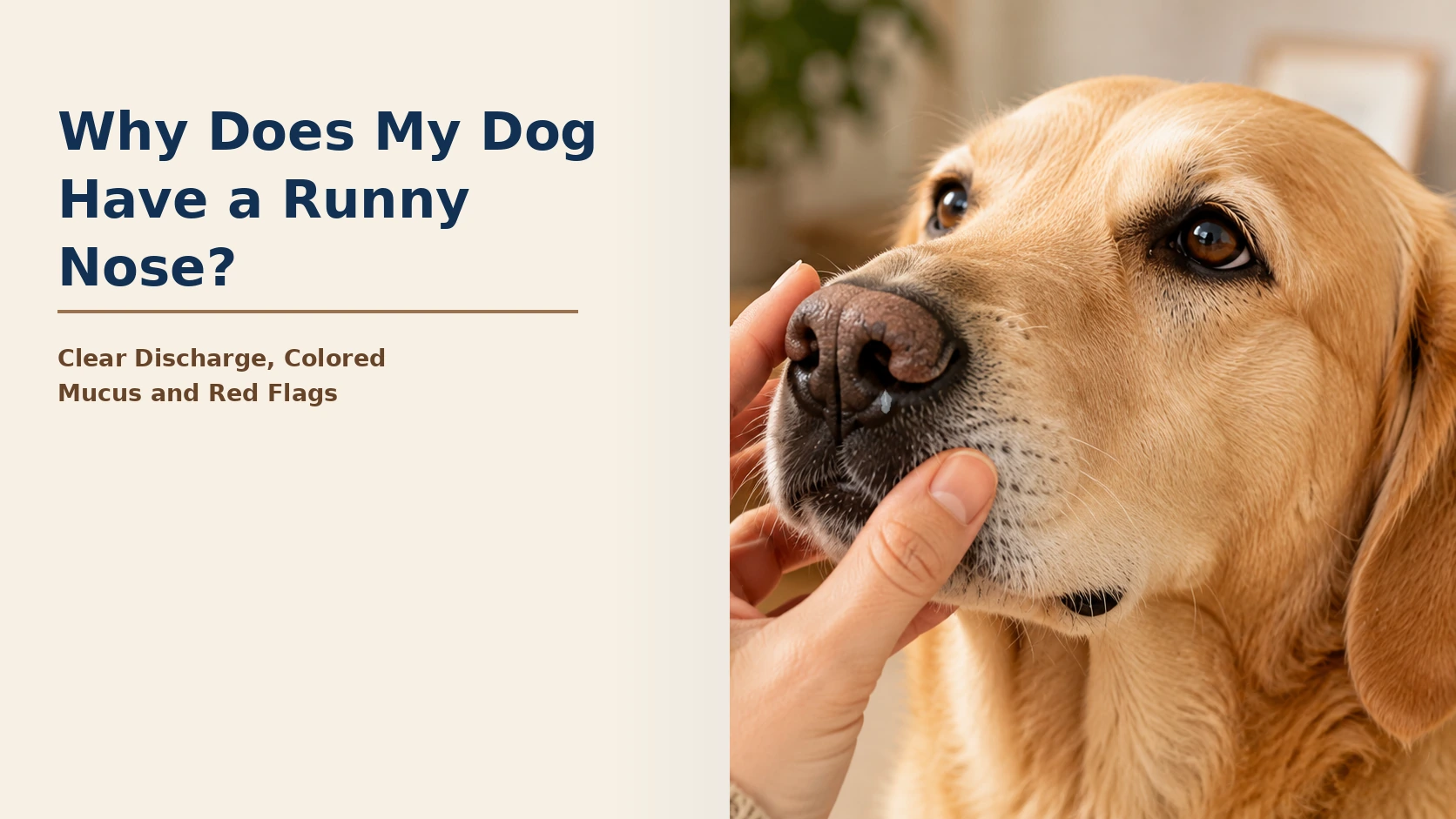
A small amount of clear nasal moisture can be normal, but persistent discharge deserves context. Dogs can develop a runny nose from irritation, infection, inflammation, allergies, a foreign object, dental disease, trauma, structural problems, or other causes. The most useful details are whether discharge comes from one nostril or both, how long it lasts, what color it is, and whether the dog has sneezing, coughing, facial pain, fever-like illness signs, or breathing difficulty.
Quick Answer
If your dog has a tiny amount of clear discharge and otherwise feels normal, monitor it and keep the face clean with a soft damp cloth. Contact a veterinarian if discharge persists, becomes yellow, green, cloudy, thick, foul-smelling, or bloody; comes mainly from one nostril; or occurs with repeated sneezing, coughing, poor appetite, facial swelling, pain, or lethargy. Difficulty breathing, heavy bleeding, collapse, or severe distress requires urgent care.
What Normal Nasal Moisture Looks Like
Healthy dogs can have moisture around the nostrils because normal nasal tissues produce fluid. A brief clear drip after sniffing or exposure to cool air may not be important. Persistent discharge that wets the face, crusts around the nostril, changes color, or is accompanied by other signs is different.
Common Causes of a Runny Nose in Dogs
1. Irritation
Dust, smoke, fragrances, cleaning aerosols, dry air, and other irritants can trigger temporary nasal discharge. Remove the dog from the suspected irritant and observe whether the signs settle. Avoid strong sprays around pets.
2. Respiratory Infection
Infectious respiratory disease can produce nasal discharge along with sneezing, coughing, reduced energy, or appetite change. Dogs that have recently boarded, attended daycare, visited dog parks, or been around many unfamiliar dogs may have relevant exposure history.
3. Environmental Allergy
Allergic inflammation may contribute to clear discharge or sneezing in some dogs, but infection, irritation, and nasal disease can look similar. Do not assume every seasonal symptom is allergy without considering the whole pattern.
4. Foreign Material in the Nose
Grass awns, seeds, plant fragments, or debris can enter a nostril during sniffing. Sudden intense sneezing, pawing at the face, and discharge mainly from one nostril raise suspicion. Do not probe the nostril with tweezers or cotton swabs.
5. Dental Disease
The roots of some upper teeth lie close to the nasal cavity. Significant dental disease can contribute to nasal signs, sometimes on one side. Bad breath, difficulty chewing, facial swelling, or obvious dental disease strengthens the need for examination. See Why Does My Dog Have Bad Breath?.
6. Structural Disease or Growths
Polyps, fungal disease, trauma, or masses can cause persistent discharge. Older dogs with progressive one-sided discharge or bleeding need veterinary investigation rather than repeated home treatment.
What the Color Can Tell You—and What It Cannot
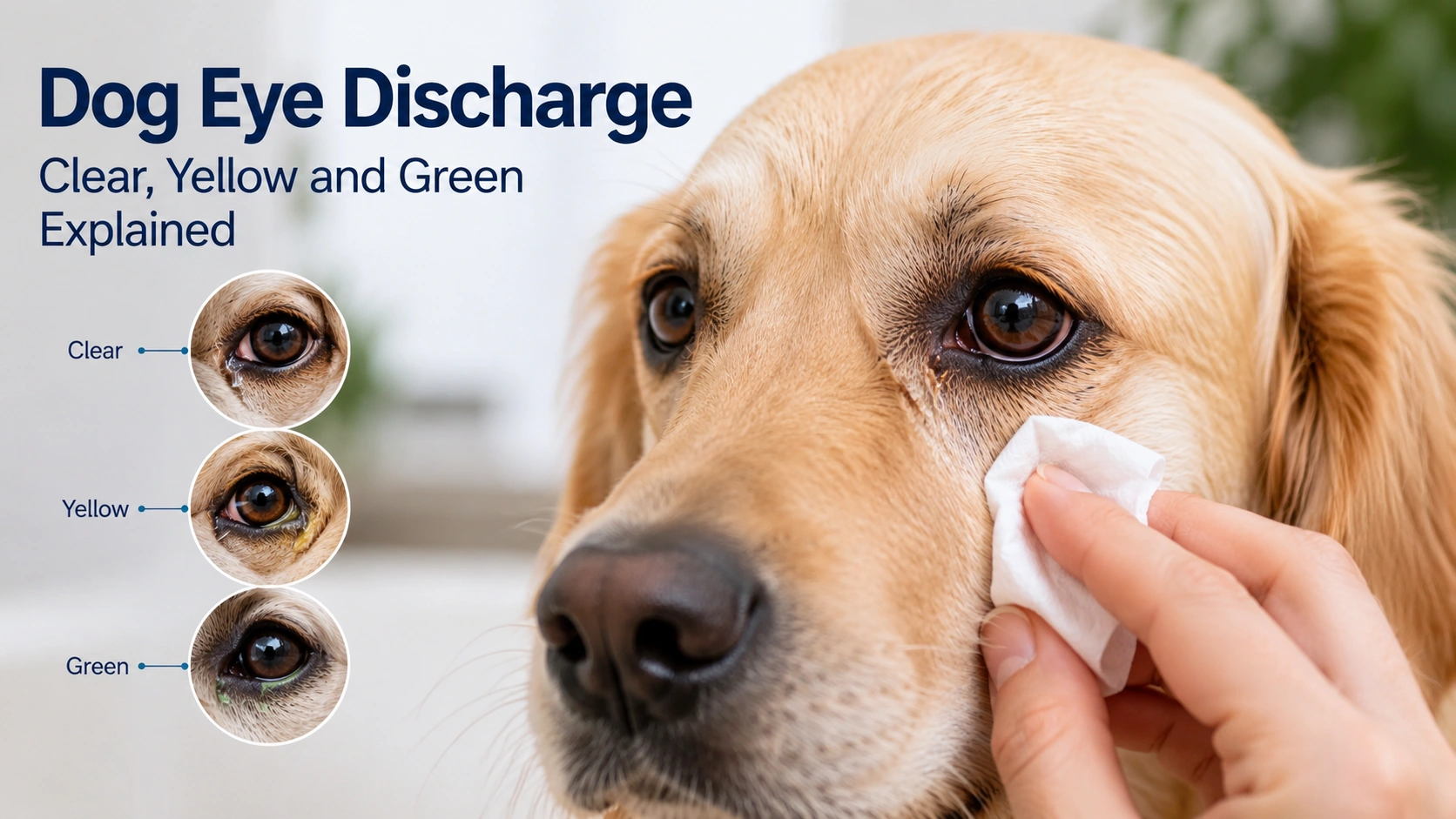
Clear fluid can occur with normal moisture, mild irritation, allergy, or early disease. Yellow or green discharge suggests inflammatory material but does not identify the exact cause. Blood may occur with trauma, a foreign body, severe inflammation, clotting problems, or a nasal lesion. Color is useful information, not a diagnosis.
One Nostril Versus Both
Discharge from both nostrils may occur with generalized respiratory or inflammatory conditions. Persistent one-sided discharge can make a local problem such as foreign material, dental disease, trauma, or a nasal lesion more important to rule out. Tell your veterinarian which side is affected.
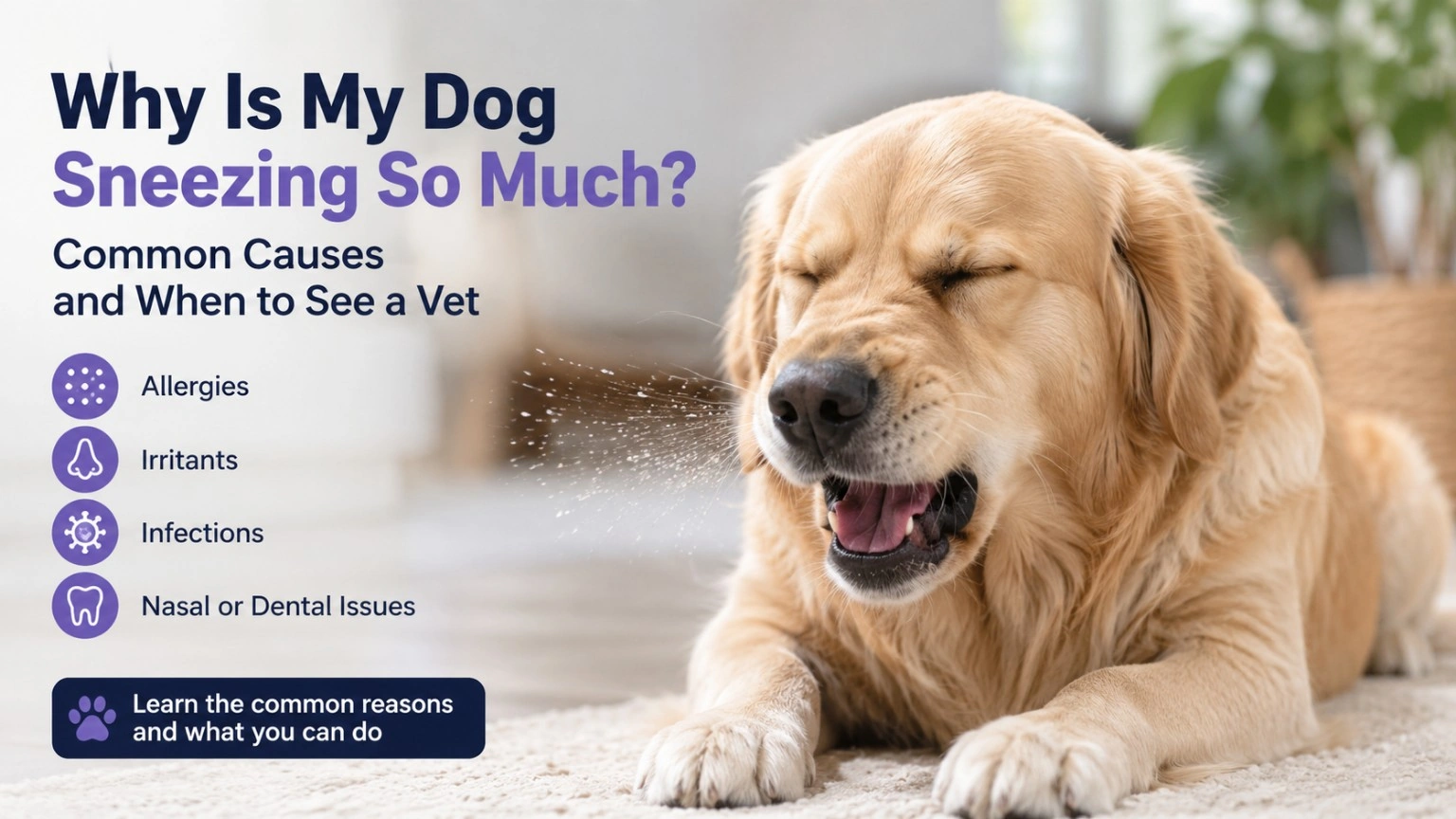
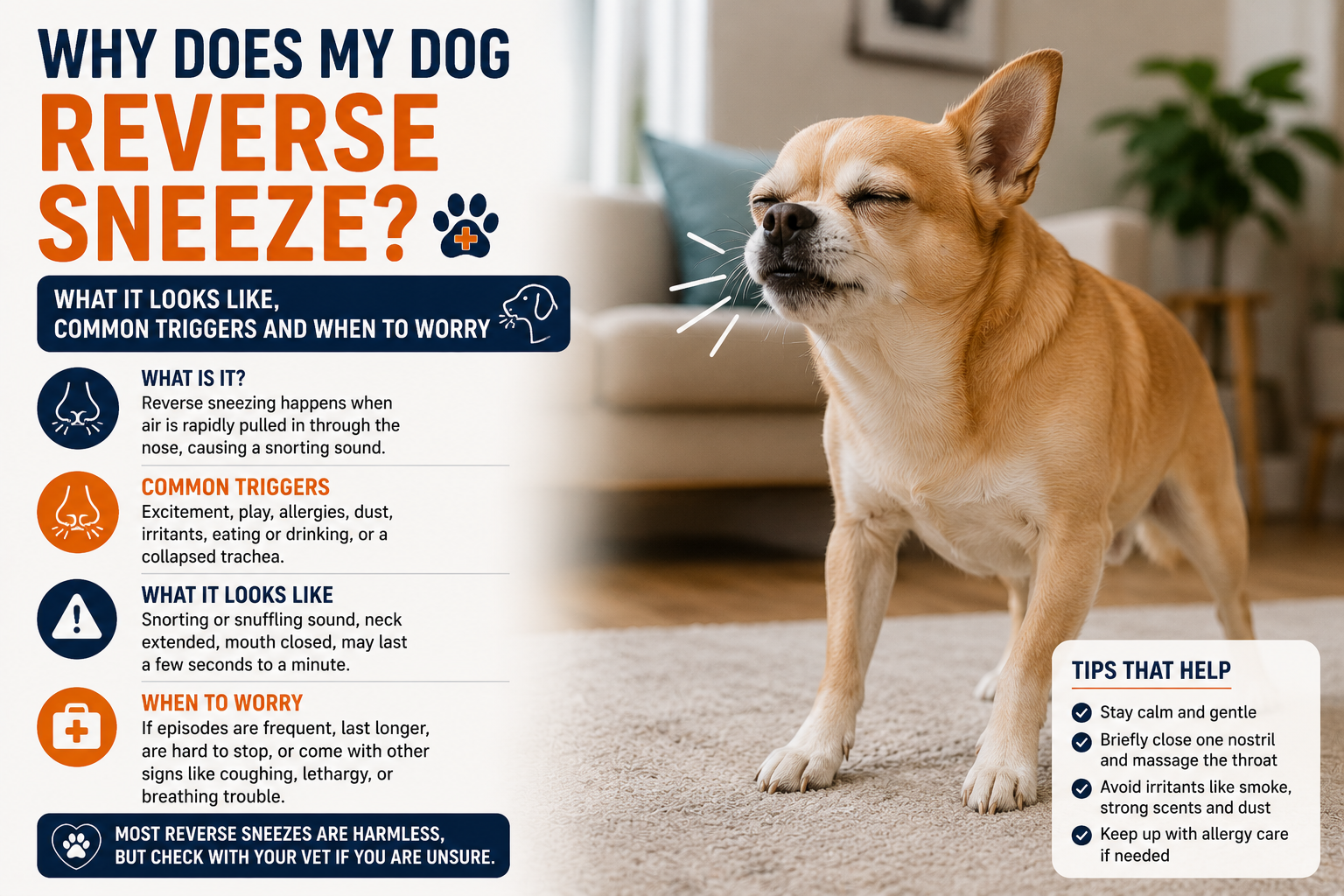
Runny Nose With Sneezing
Sneezing is the body’s attempt to clear the nasal passages. Repeated sneezing plus discharge should be evaluated as one pattern. For a deeper guide, read Why Is My Dog Sneezing So Much?.
Runny Nose With Coughing
Coughing suggests that more than the nose may be involved. Track whether the dog was recently around other dogs and whether coughing occurs at rest, during excitement, or at night. See Why Is My Dog Coughing?.
Safe Home Care While You Monitor
- Wipe the outside of the nose gently with a soft damp cloth.
- Keep fresh water available.
- Avoid smoke, strong fragrances, and aerosol cleaners.
- Limit strenuous activity if the dog is coughing or unwell.
- Take a photo of discharge color and a video of sneezing or breathing changes.
- Do not put medication, oils, drops, or tools into the nostrils without veterinary direction.
When Veterinary Care Should Not Wait
Seek prompt evaluation for persistent or worsening discharge, one-sided discharge that does not resolve, blood, facial swelling, significant pain, repeated violent sneezing, poor appetite, or marked lethargy. Emergency care is appropriate for difficulty breathing, blue or gray gums, collapse, severe bleeding, or major facial trauma.
Keep Track of Duration and Direction
Two details often get forgotten: how long the discharge has been present and whether it consistently comes from the same nostril. Note the first day you observed it and check both sides in good light without inserting anything into the nose. Persistent one-sided discharge provides different diagnostic information than a brief watery discharge from both nostrils.
What a Veterinarian May Ask
Be ready to describe recent boarding or daycare, exposure to coughing dogs, plant material or tall grass, dental problems, facial trauma, medication, appetite, and energy. A photo of the discharge and a video of sneezing or breathing can be useful. Depending on the pattern, the examination may include the mouth and teeth as well as the nose and respiratory system.
Runny-Nose Pattern Guide
| Pattern | Why It Matters |
|---|---|
| Brief clear discharge, dog normal | Often reasonable to monitor |
| Persistent discharge from one nostril | Local nasal or dental causes become more important |
| Thick colored discharge with illness signs | Veterinary evaluation is appropriate |
| Bloody discharge | Needs prompt assessment, especially if recurrent |
| Discharge plus breathing difficulty | Urgent care |
Do Not Treat the Color Alone
It is tempting to assume green mucus requires a specific antibiotic or clear mucus must be allergy. Neither conclusion is reliable without examination. The same visible discharge can have different causes, so treatment should target the diagnosis rather than the color.
FAQ
Is clear nasal discharge normal in dogs?
A small temporary amount can be normal, but persistent discharge should be interpreted with the dog’s other signs.
Does green mucus always mean a bacterial infection?
No. Color alone cannot identify the exact cause and does not tell you which treatment is appropriate.
Why is only one nostril running?
A local issue such as foreign material, dental disease, trauma, or a nasal lesion becomes more important to rule out when discharge is persistently one-sided.
Can I give my dog a human decongestant?
No unless a veterinarian has specifically instructed you to use a particular medication and dose. Many human cold products can be unsafe for dogs.