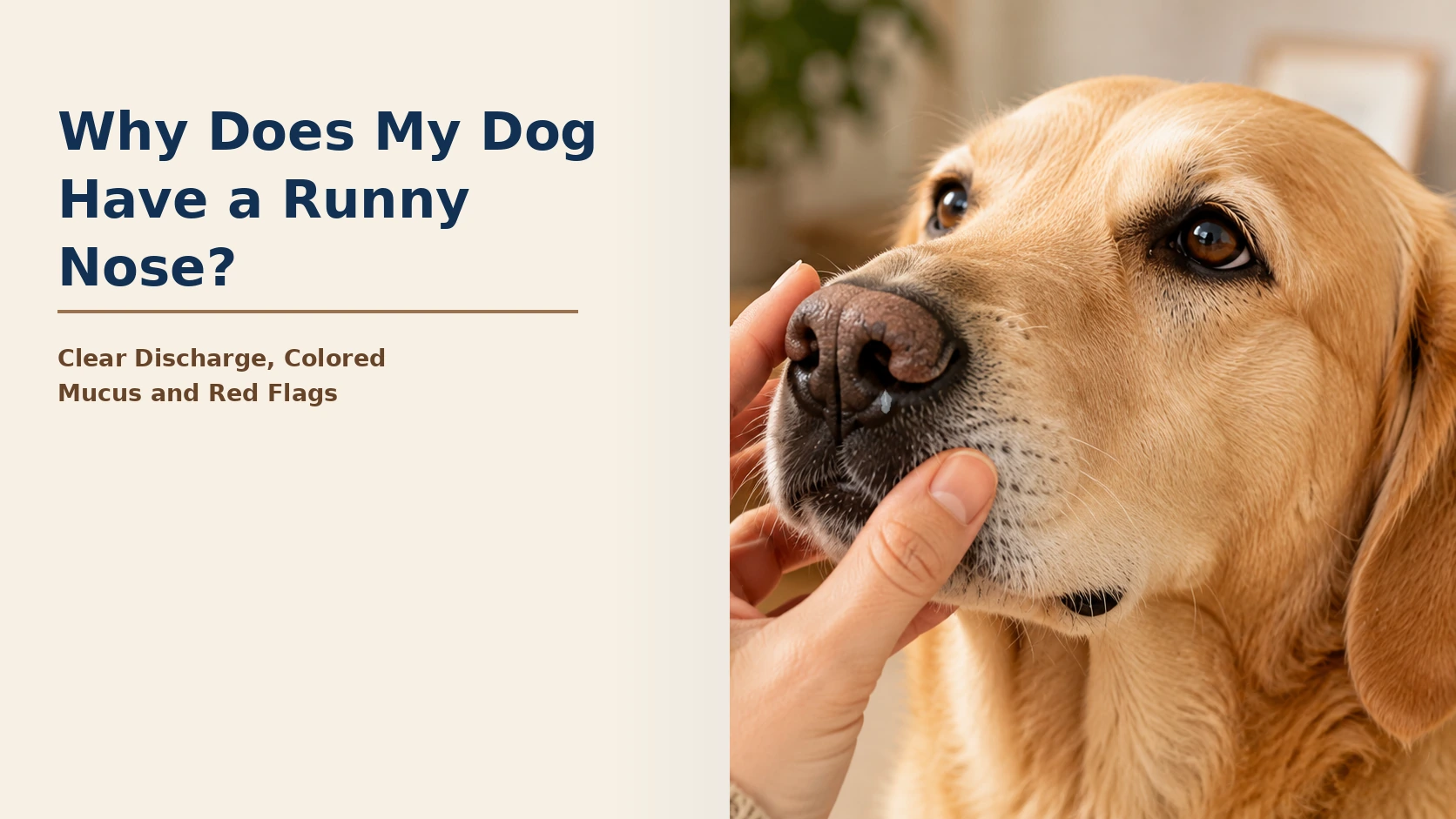
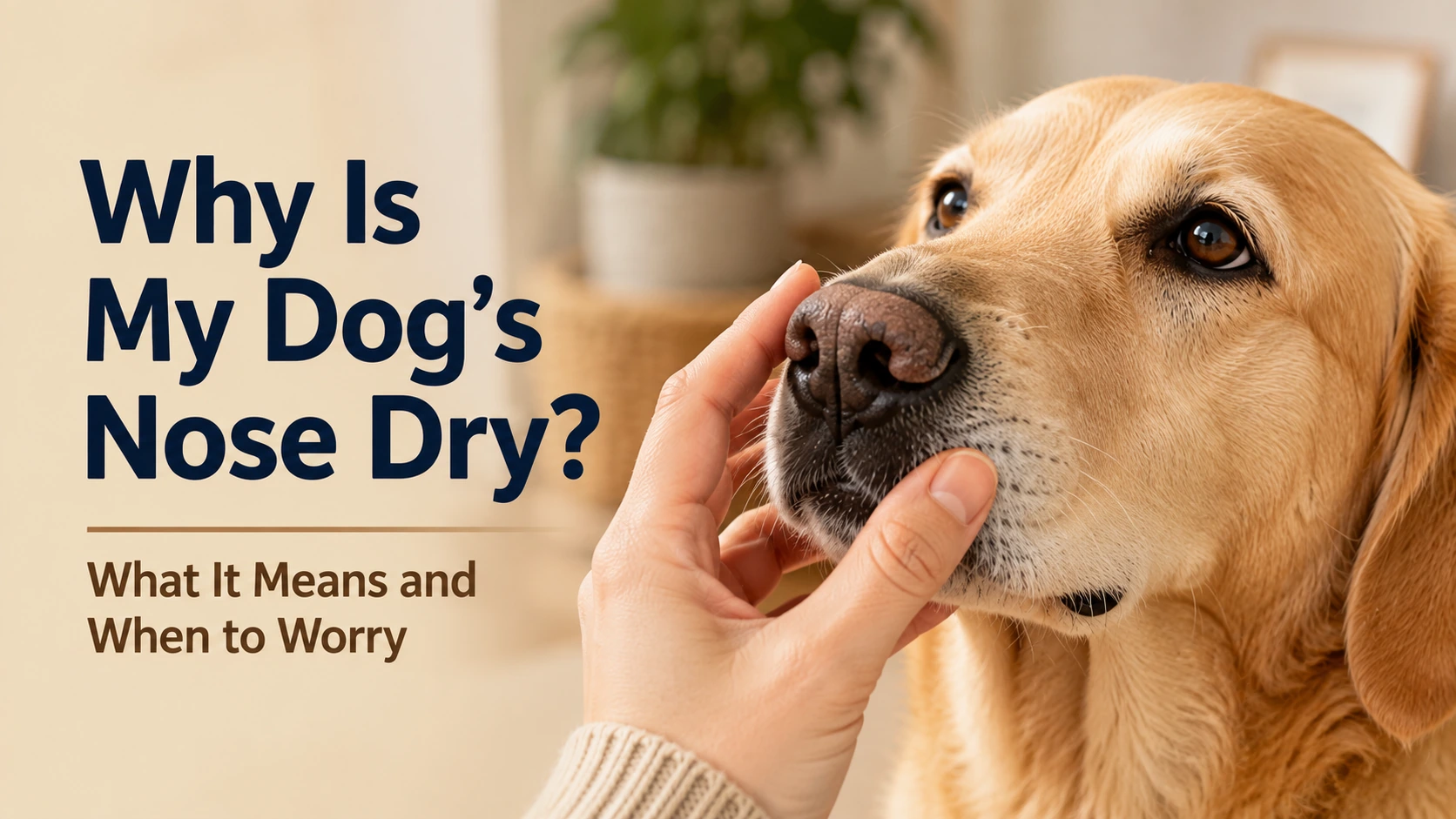
A dry nose by itself is a poor test of whether a dog is sick. Dogs can have a warm or dry nose after sleeping, spending time near indoor heating, being outside in dry weather, or simply because they have not licked the nose recently. What matters more is whether the nose is persistently cracked, crusted, painful, bleeding, losing pigment, or accompanied by changes in appetite, energy, breathing, hydration, or behavior.
Quick Answer
If your dog’s nose is temporarily dry but the surface looks intact and your dog is eating, drinking, breathing, and behaving normally, monitor it. Offer normal access to fresh water and move away from extreme heat or dry airflow. Do not apply random human lotions. Contact a veterinarian for persistent crusting, deep cracks, sores, bleeding, swelling, significant color or texture changes, or a dry nose accompanied by illness signs.
Why Dog Noses Are Often Wet
Nasal moisture varies through the day. Dogs lick their noses, nasal tissues produce moisture, and environmental humidity influences how wet the surface feels. A dog may therefore switch between a cool wet nose and a warm dry nose without anything being wrong.
Common Normal Reasons for a Dry Nose
Sleep
Dogs do not lick their noses while asleep. A dry nose immediately after a nap can become moist again after the dog wakes, drinks, moves around, and resumes normal licking.
Dry Indoor Air
Heating, air conditioning, fireplaces, fans, and low humidity can dry exposed skin. Dogs that sleep near vents may show more obvious dryness.
Weather and Sun Exposure
Wind, cold air, hot weather, and sunlight can affect the nose surface. Pale or lightly pigmented noses may be more vulnerable to sun damage. Ask your veterinarian about pet-safe protection rather than applying human sunscreen without guidance.
Face Shape and Age
Some short-faced dogs have difficulty reaching the nose with the tongue, and some older dogs develop a drier, thicker nose surface. Persistent thickening still deserves assessment because several medical conditions can look similar.
When Dryness Suggests More Than a Normal Variation
Crusting, Thickening, or Deep Cracks
A chronically rough, thickened, or crusty nose may involve excessive keratin, skin disease, infection, immune-mediated disease, or another condition. Photographs taken over several days can help show whether the surface is changing.
Bleeding, Ulcers, or Loss of Normal Texture
Bleeding spots, open sores, painful fissures, or loss of the normal cobblestone texture are reasons to schedule veterinary care. Avoid peeling crusts or scrubbing the surface.
Discharge or Sneezing
Dryness plus nasal discharge, repeated sneezing, facial swelling, or rubbing may indicate a different nasal problem. For repeated sneezing, see Why Is My Dog Sneezing So Much?.
Whole-Body Illness Signs
The nose should never be used as the only fever or hydration test. A dog that is lethargic, vomiting, not eating, weak, or behaving abnormally needs attention based on the whole clinical picture. Read Why Is My Dog Lethargic? if energy level has changed.
Is a Warm Dry Nose a Fever?
Not reliably. Nose temperature changes with sleep, room temperature, licking, and activity. A dog can have a fever with a wet nose and can be healthy with a warm dry nose. If you suspect fever or illness, a veterinarian can assess the dog properly rather than relying on nose feel.
Could It Be Dehydration?
Dehydration can occur with vomiting, diarrhea, heat exposure, reduced water intake, or illness, but a dry nose alone does not prove dehydration. Look for broader changes such as reduced energy, tacky gums, poor intake, or ongoing fluid loss. Dogs with heat-related illness, repeated vomiting, or significant diarrhea should not be managed based on the nose alone.
Safe Care at Home
- Keep fresh water available.
- Move bedding away from strong heat vents if the air is very dry.
- Avoid peeling crusts or rubbing cracked areas.
- Do not use petroleum products, essential oils, medicated human creams, or sunscreen unless your veterinarian confirms they are safe for licking.
- Take a daily photo if you are monitoring a persistent change.
When to See a Veterinarian
Book an appointment if dryness persists and the nose becomes thick, painful, cracked, crusted, ulcerated, swollen, discolored, or bloody. Seek prompt care if the change occurs with difficulty breathing, severe lethargy, repeated vomiting, collapse, or other serious illness signs.
Related Virixoo Guides
For heat-related concerns, see How to Keep Your Dog Cool in Hot Weather. For allergy patterns involving skin and ears, read Does My Dog Have Allergies?.
Look at the Surface, Not Just the Moisture
A useful nose check is visual. Is the normal surface pattern still present? Is dryness evenly distributed or concentrated on one edge? Are there scales, crusts, cracks, ulcers, swelling, pigment loss, or a new discharge? A smooth but temporarily dry nose in a comfortable dog is much less concerning than a nose that has changed shape or texture over several weeks.
Why “Wet Nose = Healthy” Is Too Simple
Nose moisture changes quickly. A dog can wake from a nap with a warm dry nose and become wet-nosed after drinking and sniffing outside. Conversely, a sick dog may still have a wet nose. Appetite, energy, breathing, hydration, stool, urine, vomiting, pain, and behavior are much more informative when deciding whether a dog needs veterinary care.
A Dry-Nose Monitoring Checklist
| Check | What to Note |
|---|---|
| Timing | Only after sleep, or dry all day? |
| Texture | Normal surface, mild flakes, crusts, or deep cracks? |
| Color | Stable pigment or new pale/pink/irregular areas? |
| Comfort | Does your dog rub, scratch, or avoid touch? |
| Whole-dog signs | Normal eating, drinking, energy, breathing, and behavior? |
When Photos Are Helpful
If the nose is changing slowly, take one well-lit photo each day from the same angle. This makes progression easier to see and can help your veterinarian distinguish a stable dry surface from a spreading lesion. Do not delay an appointment while collecting photos if the nose is painful, bleeding, swollen, or rapidly worsening.
FAQ
Should a healthy dog’s nose always be wet?
No. Normal nose moisture changes during the day and differs between individual dogs.
Can I put moisturizer on my dog’s dry nose?
Only use a product your veterinarian considers safe for dogs and safe if licked. Human skincare products may contain unsuitable ingredients.
Why is my dog’s nose dry after sleeping?
Dogs do not lick their noses while asleep, so temporary dryness after a nap is common.
Is a cracked nose normal?
Minor surface dryness can occur, but persistent cracking, pain, bleeding, or crusting should be examined.
Trusted References
American Kennel Club: Why Is My Dog’s Nose Dry? · PetMD: Is Dry Nose a Sign of Illness in Dogs?