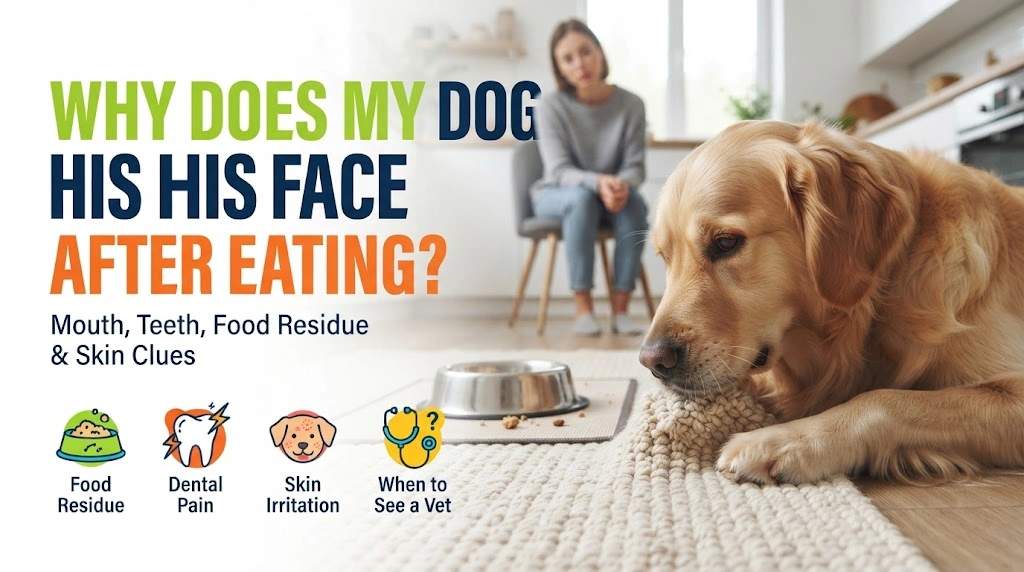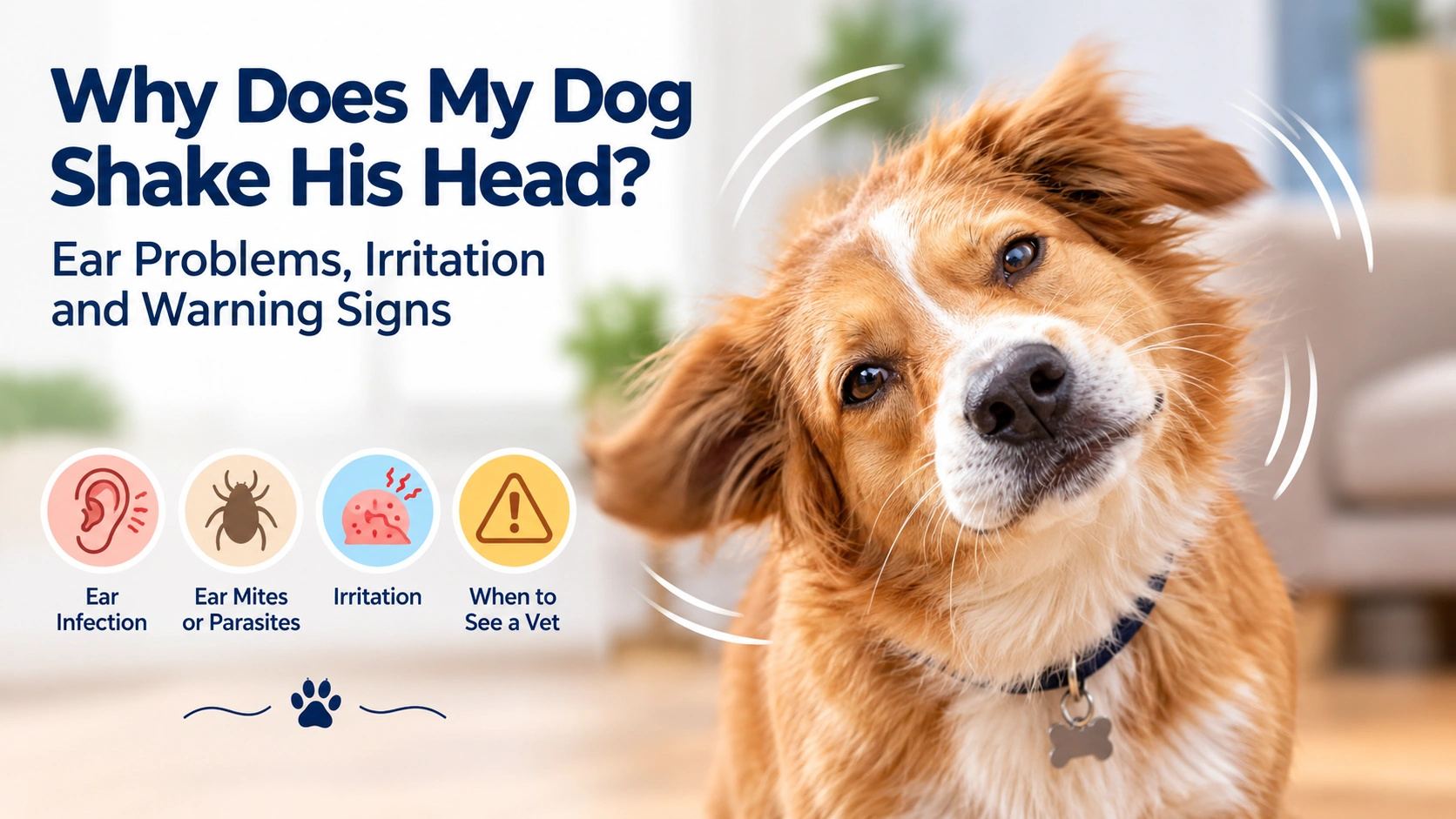
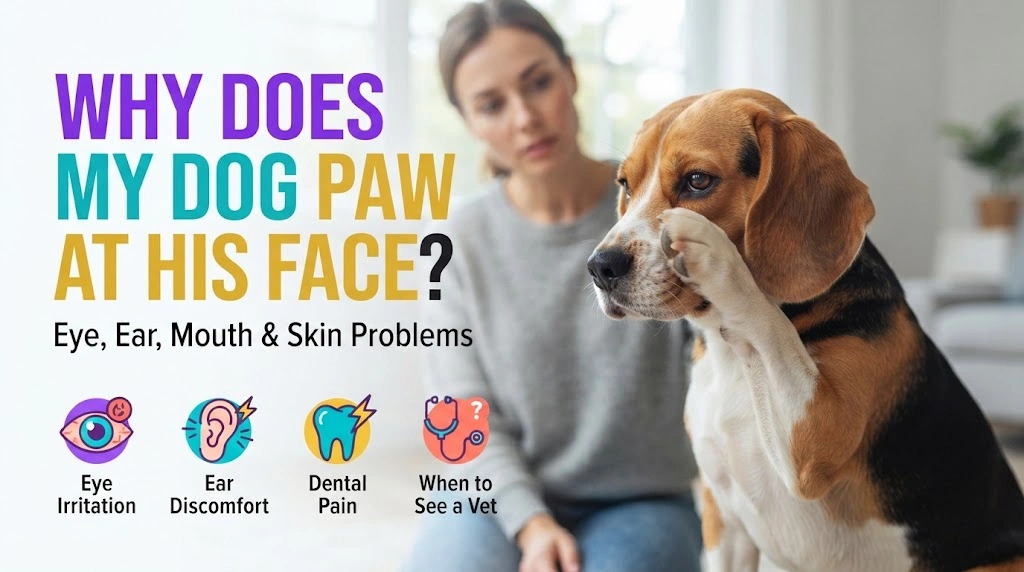
Pawing repeatedly at the face often means something is uncomfortable around the eye, ear, mouth, or skin. The side involved and accompanying signs help determine urgency.
Quick Answer
Eye irritation can cause sudden pawing, squinting, tearing, redness, or light sensitivity. Corneal injury and foreign material can become painful quickly, so persistent eye signs deserve prompt attention.
Ear Discomfort
Ear pain may produce scratching near the face along with head shaking, odor, redness, or discharge. Do not insert cotton swabs or unprescribed drops into a painful ear.
Dental or Mouth Pain
Dental pain, a broken tooth, oral injury, or material caught in the mouth may cause pawing, drooling, bad breath, difficulty chewing, or dropping food. Avoid forcing open the mouth of a painful dog.
Skin Allergy and Swelling
Skin allergy, insect stings, or local irritation can affect the lips and face. Rapid facial swelling is more urgent, particularly if breathing or swallowing changes.
Protect the Face and Know the Red Flags
Use an e-collar if advised and necessary to prevent self-injury while arranging care. Seek prompt veterinary assessment for persistent eye pain, significant swelling, mouth injury, or severe discomfort; breathing difficulty is an emergency.