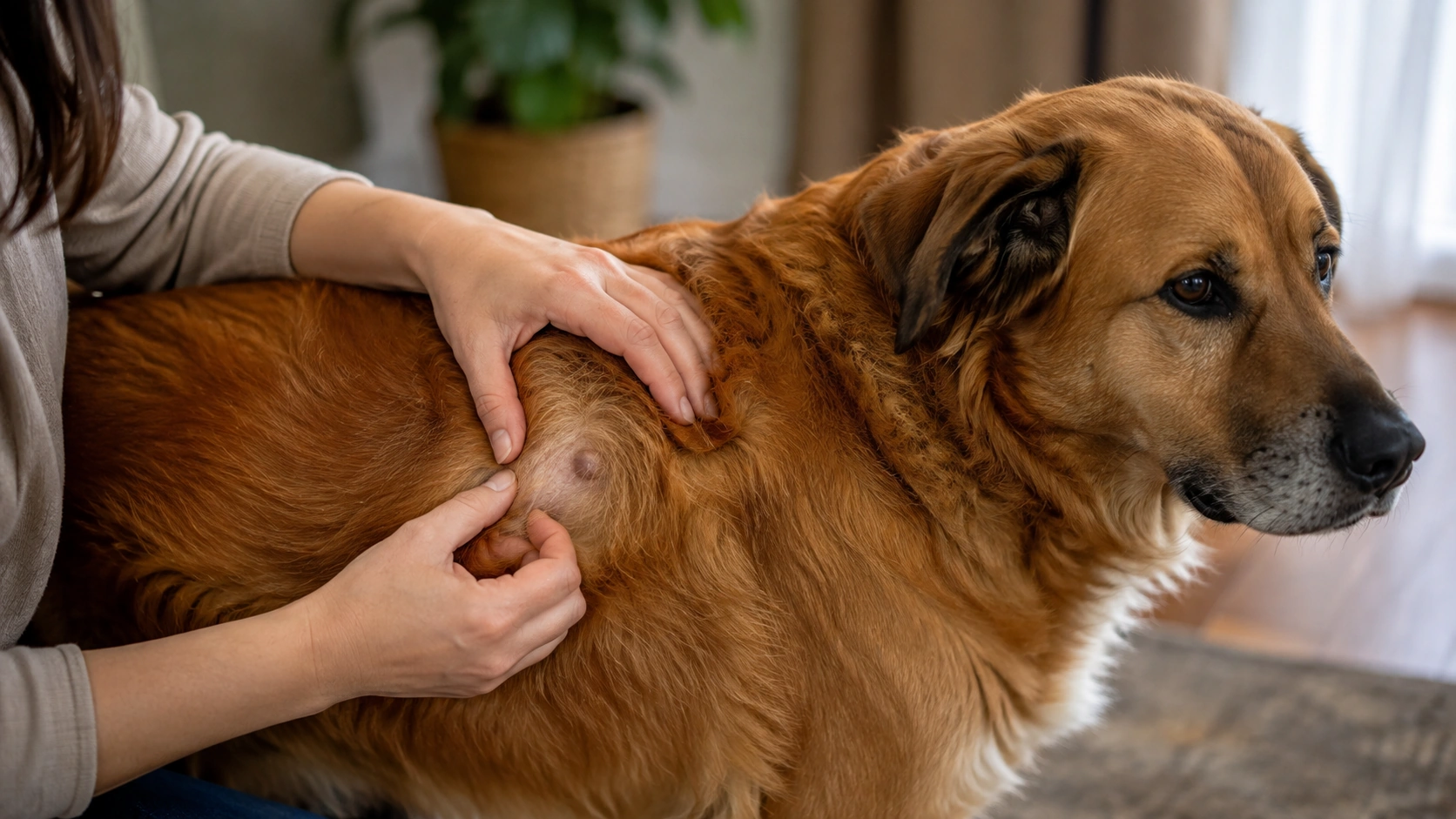
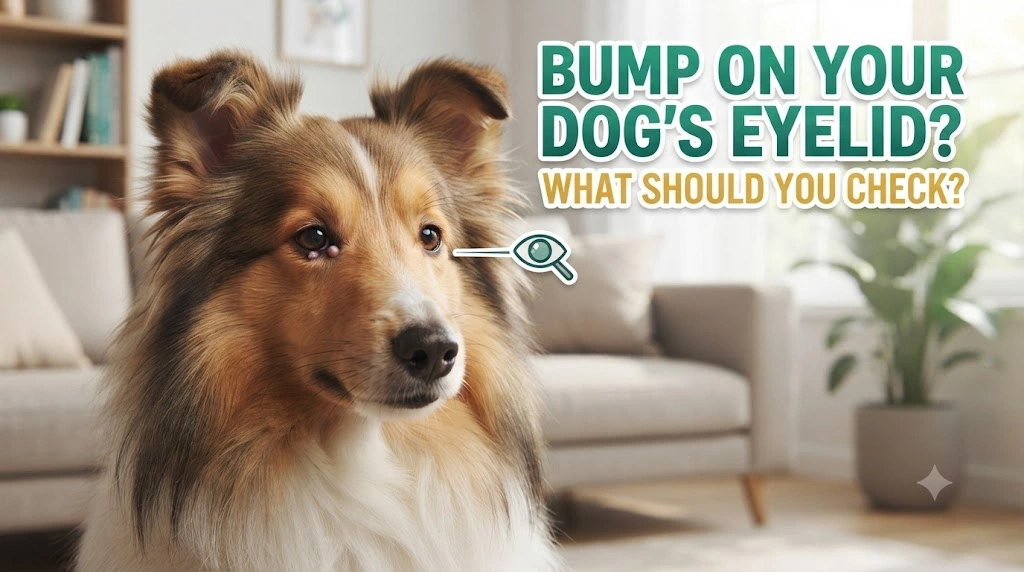
A small bump on a dog's eyelid may be benign, inflamed, infected, or occasionally more serious. Eyelid growths deserve attention because even a harmless lump can rub against the cornea and cause pain. Owners can safely monitor size, color, bleeding, and whether the eye is irritated, but should avoid squeezing or applying unprescribed creams near the eye.
Quick Answer
If the bump is small, stable, and not touching the eye, take a clear photo and arrange a routine veterinary examination. Seek earlier care if the bump grows rapidly, bleeds, becomes ulcerated, causes squinting, produces discharge, or rubs against the eye surface. Persistent squinting or cloudiness means the eye itself may be painful.
Why Eyelid Location Matters
The eyelid sits directly against the cornea. A small growth on another part of the skin may cause no problem, while the same-sized bump on the eyelid margin can scrape the eye every time the dog blinks.
Common Possibilities
Dogs can develop benign gland growths, cysts, inflammatory swellings, infections, and other masses around the eyelid. Appearance alone cannot reliably identify the type. The veterinarian may need close examination or sampling.
What to Observe Safely
Look at size, color, surface texture, hair loss, bleeding, discharge, and whether the bump touches the eye. Compare photos taken in similar lighting. Do not pull on the eyelid or press the lump repeatedly.
Signs the Eye Is Being Irritated
| Sign | Why It Matters |
|---|---|
| Squinting | Suggests discomfort or pain |
| Excess tearing | Can occur when the cornea is irritated |
| Redness | May indicate inflammation |
| Cloudiness | Needs prompt veterinary attention |
| Pawing at the eye | Can worsen corneal injury |
Do Not Squeeze the Bump
Some eyelid lesions may resemble pimples, but squeezing can cause bleeding, inflammation, infection, or accidental eye injury. Do not apply acne products, essential oils, or human skin creams near the eye.
Why Photos Help
Take one close photo and one showing the entire face. Repeat every one to two weeks if your veterinarian recommends monitoring. Stable size is more reassuring than rapid growth, but even stable lesions may need removal if they rub the cornea.
What If the Bump Suddenly Appears Red and Swollen?
An acute inflamed bump may reflect infection, irritation, trauma, or another problem. Warm compresses are sometimes recommended for specific eyelid conditions, but do not start treatment without veterinary guidance because not every lesion should be managed the same way.
What If It Bleeds?
Spontaneous bleeding, ulceration, or repeated scabbing deserves earlier assessment. Do not pick at crusts. Bleeding can result from rubbing, trauma, or the nature of the growth itself.
What the Veterinarian May Do
The veterinarian may examine the eyelid margin, cornea, tear production, and the mass itself. Some lesions can be monitored, while others may be sampled or removed, especially if they irritate the eye or change quickly.
What Not to Do
- Do not squeeze or puncture the bump.
- Do not apply human creams or eye drops.
- Do not ignore squinting or cloudiness.
- Do not let the dog repeatedly rub the eye.
When to Call the Veterinarian
Arrange veterinary care for any persistent eyelid mass. Seek earlier care for rapid growth, bleeding, ulceration, discharge, squinting, redness, cloudiness, or obvious contact with the cornea.
Bottom Line
An eyelid bump is often manageable, but its location makes eye irritation an important concern. Monitor without squeezing, prevent rubbing, and let a veterinarian decide whether the lesion should be watched, sampled, or removed.
Why Eyelid Masses Can Change With Time
Some eyelid growths remain nearly unchanged for months, while others slowly enlarge or become irritated from rubbing. A stable photograph series can help the veterinarian decide whether the lesion is changing. Sudden enlargement, bleeding, ulceration, or new squinting deserves earlier review.
What If the Dog Rubs the Eye Only Occasionally?
Even intermittent rubbing can mean the eyelid margin is touching the cornea. If the dog rubs after blinking, after waking, or during windy conditions, mention that pattern. Eye-surface irritation can be episodic before it becomes constant.
Why Early Evaluation May Make Treatment Easier
Small eyelid lesions are often simpler to assess and manage than very large ones. Waiting until a growth distorts the eyelid or causes a corneal ulcer can make treatment more complicated. A routine exam is appropriate even when the dog seems comfortable.
Why Location on the Lid Margin Matters
A bump on the outer skin of the eyelid may cause fewer problems than one sitting directly on the edge that contacts the cornea. The veterinarian will pay attention to whether lashes or the mass itself touch the eye during blinking. Chronic rubbing can create a corneal ulcer even when the lump is benign.
What If the Bump Changes Color?
A lesion that becomes darker, redder, ulcerated, or starts bleeding should be rechecked. Color change alone does not diagnose cancer or infection, but it is a reason not to continue indefinite monitoring without veterinary input.
Why Senior Dogs Commonly Develop Eyelid Growths
Older dogs often develop benign eyelid masses, but age does not guarantee that every lump is harmless. The practical question is whether the lesion is changing and whether it is irritating the eye. Early evaluation is useful because treatment decisions are often simpler while the mass is small.
How to Prevent Self-Trauma
If the dog begins pawing at the eye, a properly fitted Elizabethan collar can reduce rubbing until the appointment. Avoid taping the eyelid or applying topical products that were not prescribed for the current problem.
What the Vet May Look for on the Cornea
The veterinarian may use fluorescein stain to check for a scratch or ulcer and may examine tear production if irritation is present. This matters because the eyelid bump may be only part of the problem; the eye surface may already need treatment.
How to Keep the Eye Comfortable Until the Appointment
Keep the dog indoors or away from wind, dust, and brush if the eye appears irritated. Prevent rubbing with a properly fitted protective collar if one is available. Avoid cleaning the eyelid with alcohol, peroxide, essential oils, or human skin products. If discharge collects at the corner of the eye, gently wipe only the surrounding fur with a clean damp cloth without pressing on the bump or eye surface.
Why the Same Bump Can Become More Irritating Over Time
An eyelid mass that was harmless when tiny can begin touching the cornea as it enlarges or as the eyelid shape changes. A dog may initially show no signs and later develop tearing, squinting, redness, or rubbing. This is why monitoring should include both the size of the bump and the comfort of the eye.
When Monitoring Is Reasonable
Monitoring may be reasonable after a veterinarian has examined a small stable lesion that is not irritating the eye. Follow the recommended recheck schedule and take photos in similar lighting. If the lesion grows, bleeds, ulcerates, or the eye becomes painful, arrange an earlier recheck instead of waiting for the planned date.