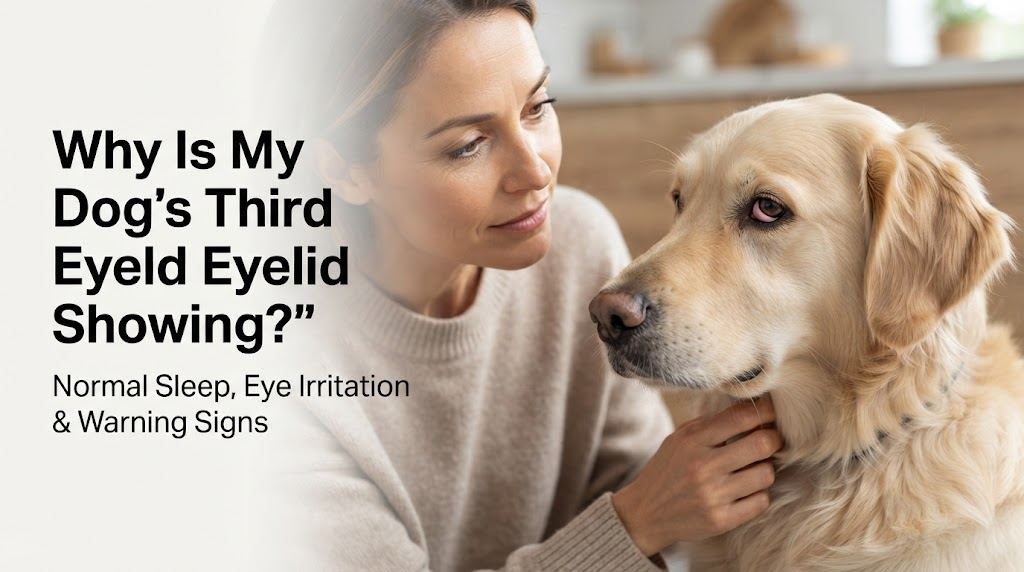
The third eyelid may briefly show during sleep, but persistent visibility can accompany eye pain, dehydration, nerve problems, or illness.
Quick Answer
The third eyelid may be briefly visible when a dog is sleeping or very relaxed. Persistent exposure in an awake dog—particularly with redness, discharge, squinting, dehydration, a protruding pink mass, or other illness—deserves veterinary assessment.
What This Pattern Can Tell You
Check whether the third eyelid disappears when the dog is fully awake. Compare both eyes for redness, discharge, squinting, pupil differences, a pink mass at the inner corner, and signs of dehydration or general illness.
Common Reasons
1. Normal sleep-related appearance
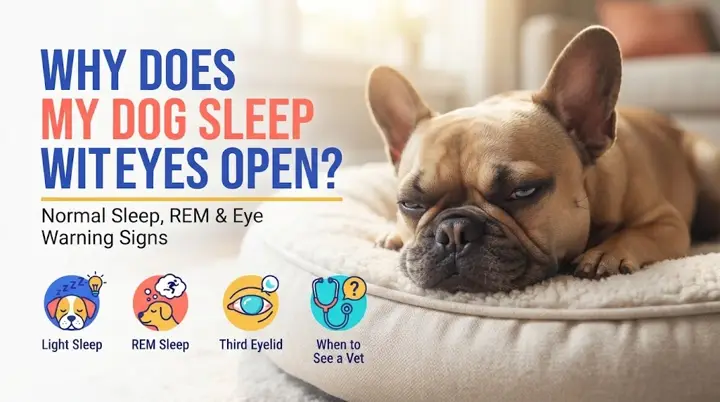
The third eyelid can slide partly across the eye during sleep or deep relaxation and then disappear when the dog is fully awake.
2. Eye irritation or pain
Painful eyes may retract slightly in the socket, making the third eyelid more visible. Squinting, tearing, redness, or rubbing supports an eye problem rather than a normal sleep effect.
3. Dehydration or systemic illness
Changes in hydration or general health can alter the position of the eye and third eyelid. Visibility in both eyes together with lethargy, vomiting, diarrhea, or poor intake deserves assessment.
4. Nerve dysfunction
Certain nerve problems can alter eyelid position and pupil size. A third eyelid that appears with a drooping eyelid, small pupil, or other facial asymmetry needs veterinary evaluation.
5. Third-eyelid gland prolapse or swelling
A pink or red mass near the inner corner of the eye may involve the third-eyelid gland rather than simple visibility of the membrane and should be examined.
What You Can Do Safely Now
Prevent rubbing and photograph the eye in normal light if useful for comparison. Do not push a protruding structure back into place or use unprescribed eye medication. Persistent third-eyelid exposure in an awake dog should be assessed.
When to Contact a Veterinarian
Seek prompt veterinary care when the third eyelid stays visible while awake or appears with eye pain, redness, discharge, a protruding pink mass, pupil changes, trauma, or vision problems. General weakness, severe dehydration, collapse, or neurologic signs increase urgency.
What to Tell Your Veterinarian
Share when the change began, whether it was sudden or gradual, how often it occurs, what seems to trigger it, and any photos or video that safely capture it. Also mention relevant changes in appetite, drinking, energy, breathing, movement, medications, recent injuries, grooming, travel, or environmental exposures.
Bottom Line
The third eyelid may briefly show during sleep, but persistent visibility can accompany eye pain, dehydration, nerve problems, or illness. Use the pattern and accompanying signs—not a single symptom in isolation—to decide how quickly professional assessment is needed.