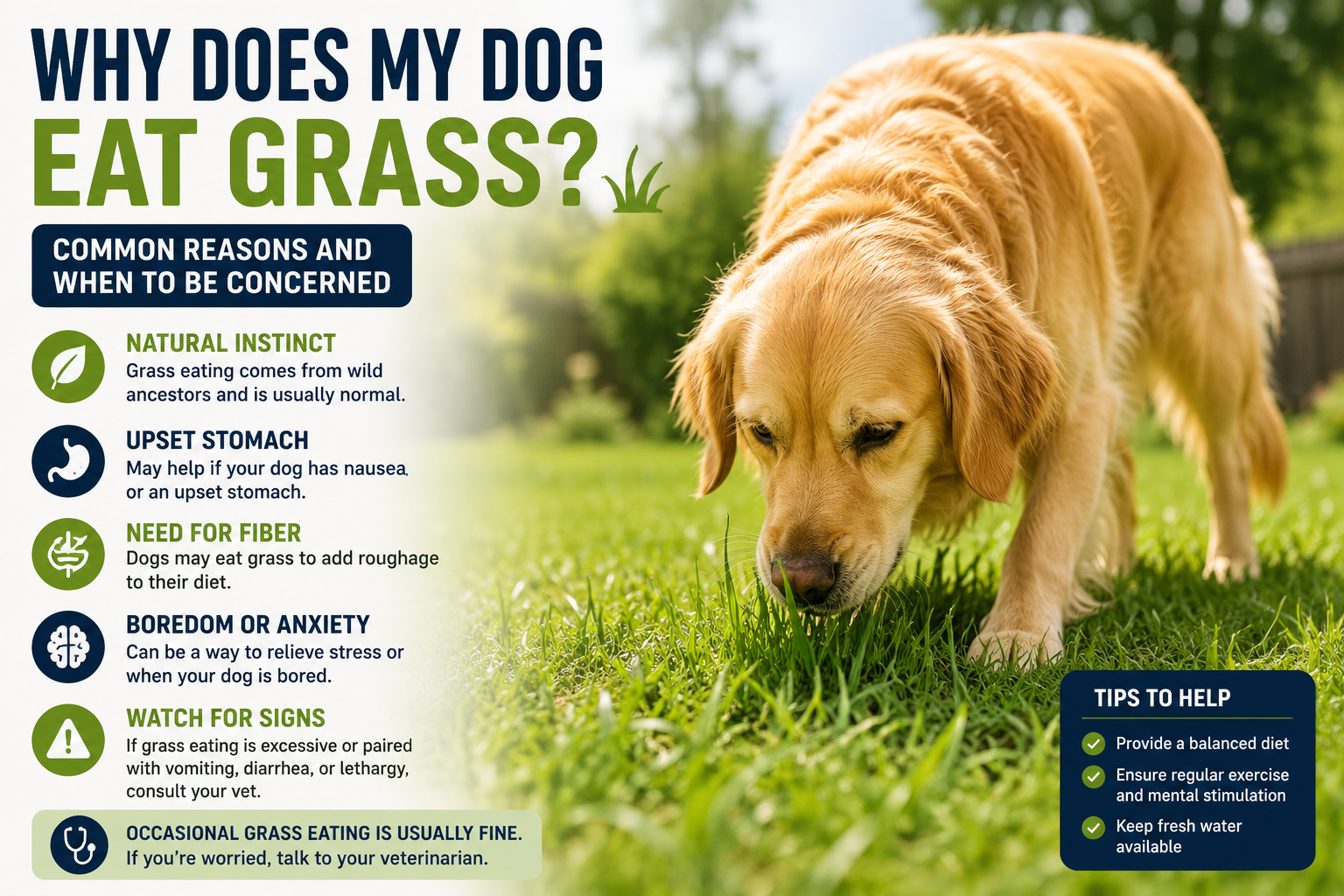
Many dogs occasionally nibble grass, and grass eating does not automatically mean a dog is sick. Some dogs appear to enjoy the texture or explore plants as part of normal foraging behavior. Others may eat grass around episodes of nausea or digestive upset. The behavior becomes more important when it is sudden, frantic, frequent, or paired with vomiting, diarrhea, appetite loss, pain, or lethargy.
Quick Answer
Occasional grass eating in an otherwise healthy dog may simply be a behavior pattern. Prevent access to lawns treated with herbicides, pesticides, fertilizers, or other chemicals, and do not allow dogs to chew unknown plants. If grass eating repeatedly accompanies vomiting or other illness signs, contact your veterinarian.
Why Dogs May Eat Grass
Normal Foraging
Dogs explore the environment with their mouths and noses. Some individuals regularly sample vegetation without developing illness.
Digestive Discomfort
Grass may be eaten before or after nausea in some dogs. However, seeing a dog eat grass and then vomit does not prove the grass caused the nausea or that the dog deliberately ate it to “treat” the stomach.
Habit or Enrichment
Some dogs graze when walking slowly, sniffing, or waiting in the yard. If the behavior is mild and the dog otherwise feels well, increasing safe sniffing, training, play, and food-based enrichment may reduce repetitive grazing.
The Bigger Risk May Be What Is on the Grass
Lawns and public areas may be treated with chemicals, and grass can be contaminated with feces or parasites. Unknown mushrooms and ornamental plants can also be toxic. Avoid letting your dog graze in recently treated areas or chew unidentified plants.
When Grass Eating Deserves a Vet Call
Contact a veterinarian if grass eating suddenly becomes intense or is accompanied by repeated vomiting, diarrhea, abdominal pain, bloating, weakness, loss of appetite, blood in vomit or stool, or suspected ingestion of a toxic plant or chemical. Repeated inability to keep water down is also a reason for prompt care.
Do Not Try to Make Your Dog Vomit
If you suspect poisoning, do not induce vomiting unless a veterinarian or animal poison professional specifically instructs you. Some substances can cause additional injury on the way back up, and the safest response depends on what was swallowed.
Related Virixoo Guides
For repeated vomiting, see Why Is My Dog Vomiting?. For loose stool, read Why Does My Dog Have Diarrhea?.
Sources & References
The Merck Veterinary Manual explains that vomiting and gastrointestinal disease can have many causes and may require examination and diagnostic testing when persistent.
FAQ
Does eating grass mean my dog needs more fiber?
Not necessarily. Grass eating alone cannot diagnose a nutritional deficiency. If you are concerned about diet quality, discuss the complete diet with your veterinarian.
Why does my dog eat grass and then throw up?
The dog may already be nauseated, the grass may irritate the stomach, or the two events may simply occur together. Repeated episodes deserve veterinary evaluation.
Should I stop my dog from eating all grass?
Prevent access to treated lawns, unknown plants, and excessive grazing. Occasional nibbling on clean untreated grass may not be a problem in an otherwise healthy dog.
Bottom line: Grass eating is common and often unremarkable, but sudden or compulsive grazing paired with digestive signs should be treated as a health clue rather than dismissed as a quirky habit.