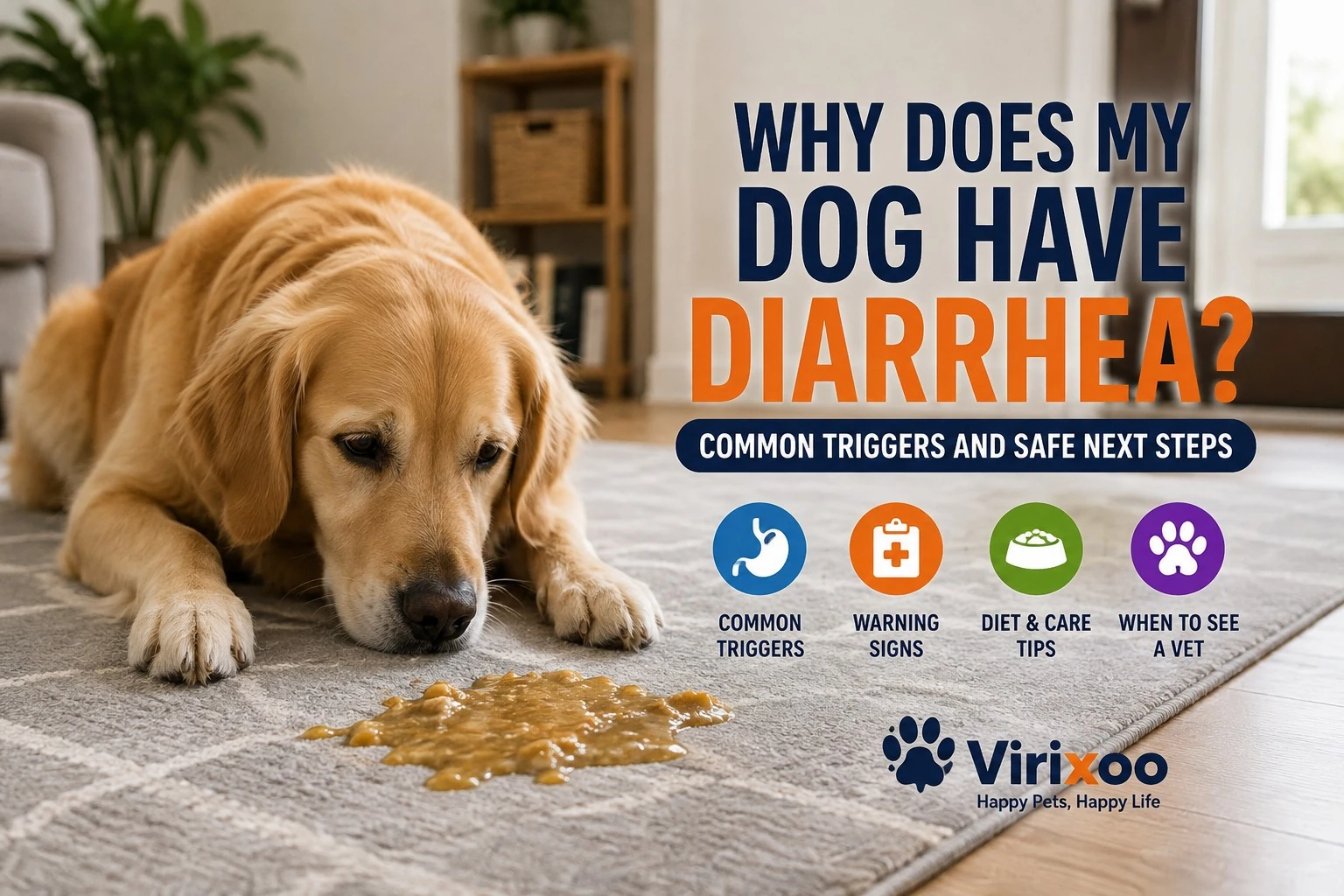
Loose stool can follow a simple dietary upset, but it can also be a sign of infection, parasites, inflammation, toxin exposure, or other illness. Instead of focusing only on stool consistency, assess how your dog feels overall.
Common triggers
Potential causes include sudden diet changes, eating garbage or unfamiliar foods, stress, intestinal parasites, infections, medication effects, food intolerance, inflammatory conditions, and systemic disease. Puppies, seniors, and dogs with chronic medical conditions may need veterinary advice sooner than a healthy adult.
What to monitor
- How often your dog needs to defecate.
- Whether stool is soft, watery, mucus-coated, black/tarry, or visibly bloody.
- Vomiting, appetite, thirst, energy, and abdominal discomfort.
- Possible access to garbage, spoiled food, toys, bones, chemicals, or medication.
- Recent diet, boarding, travel, stress, or parasite-prevention changes.
Hydration matters
Diarrhea causes fluid loss. Keep fresh water available unless a veterinarian advises otherwise, and watch for worsening lethargy, dry or tacky gums, weakness, or reduced urination. Do not rely on a home dehydration test to rule out a problem.
Do not reach for human anti-diarrheal drugs
Some human medicines are inappropriate for certain dogs or may mask an important problem. Treatment depends on the cause, so medication should be discussed with a veterinarian.
When to call the vet
Contact a veterinarian when diarrhea is frequent, persists, repeatedly returns, or occurs with vomiting, poor appetite, pain, feverish behavior, weakness, dehydration, or weight loss. Seek prompt care for black/tarry stool, substantial blood, collapse, severe abdominal pain, suspected toxin exposure, or suspected foreign-object ingestion.
Should you bring a stool sample?
If your clinic requests one, a fresh sample in a clean, sealed container can be useful for testing. Ask the clinic how they want it stored and transported.
Related Virixoo Guides
For vomiting at the same time, read Why Is My Dog Vomiting?. If your dog has stopped eating, see Why Is My Dog Not Eating?.
Sources & References
The American Veterinary Medical Association provides pet-owner education and veterinary-care resources.
FAQ
Can stress cause diarrhea in dogs?
Stress can contribute to gastrointestinal signs in some dogs, but persistent or severe diarrhea should not automatically be attributed to stress.
Is blood in diarrhea an emergency?
Small streaks and large amounts of blood do not have the same implications, but blood warrants veterinary advice. Black, tarry stool or substantial bleeding requires prompt assessment.
Should I switch foods immediately?
Repeated food changes can worsen digestive upset. Ask your veterinarian about the best feeding plan if diarrhea persists.
Bottom line: The urgency of diarrhea depends on the dog, duration, frequency, and accompanying signs. Monitor hydration and behavior closely and seek professional care when the problem is persistent, severe, or accompanied by red flags.