
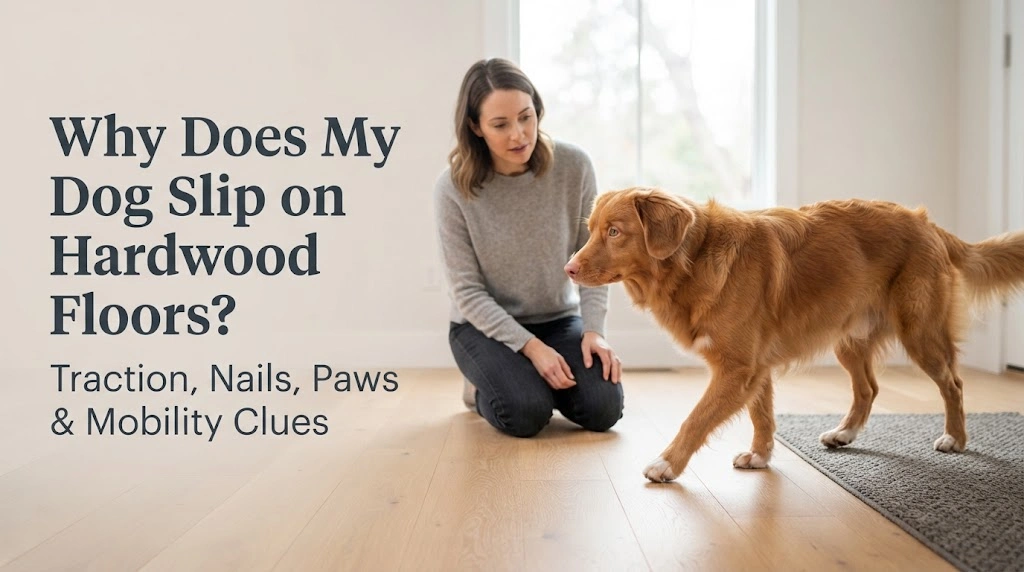
Occasional slipping on polished hardwood can be a simple traction problem, but repeated slipping—especially when it is new—can reveal changes in the paws, nails, joints, muscles, or nervous system. The key question is whether the dog struggles only on slick flooring or also shows difficulty elsewhere.
Quick Answer
Improve traction immediately with secure runners or mats and keep nails appropriately trimmed. Check for excess hair between paw pads, wounds, and tenderness. If slipping is new, worsening, asymmetric, or accompanied by weakness, pain, falling, or difficulty rising, schedule a veterinary examination.
Why hardwood exposes small mobility problems
A dog needs friction to push off and stabilize each limb. Smooth flooring reduces that margin, so mild weakness or discomfort may become visible there before it is obvious on grass or carpet.
Nails and paw-pad contact
Overgrown nails can alter how the foot contacts the ground. Excess fur between pads may also reduce grip in some dogs. Paw injuries, cracked pads, or painful nails can make weight-bearing less secure.
Orthopedic pain
Hip, knee, shoulder, elbow, or spinal discomfort may cause shortened steps or hesitation. Watch for stiffness after rest, reluctance to jump, difficulty with stairs, limping, or changes in sitting posture.
Weakness and neurologic signs
Dragging toes, knuckling, crossing limbs, stumbling on several surfaces, or progressive hind-end weakness is not simply a flooring problem. These signs require veterinary evaluation.
Make the home safer
Use stable non-slip runners along common routes, around food and water stations, and near stairs or doors. Avoid loose rugs that slide. Keep frequently used paths clear and consider blocking unsafe stairs until mobility is understood.
When slipping needs an exam
Seek veterinary advice when the problem appears suddenly, progresses, causes falls, or occurs with pain, weakness, abnormal gait, reduced activity, or difficulty standing. Collapse or inability to walk normally is urgent.