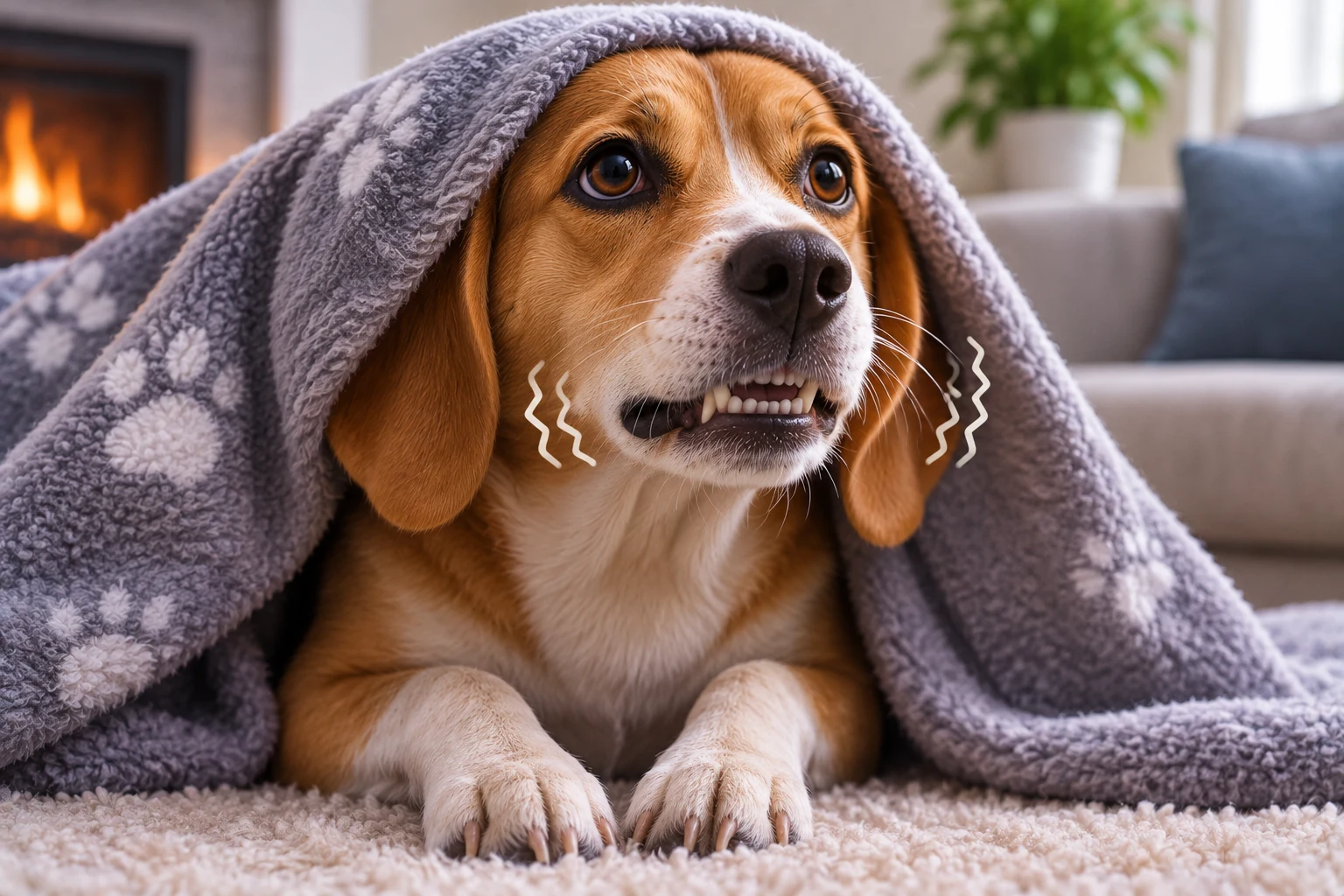

Dogs may wake panting because they are warm, excited from a dream, anxious, painful, or affected by a medical problem. Repeated unexplained nighttime panting deserves attention.
Quick Answer
A warm room, heavy bedding, or brief arousal from sleep can produce short-lived panting that settles once the dog is comfortable. Repeated episodes without an obvious heat or activity trigger deserve a closer look.
Pain at Night
Pain is an important possibility, particularly in older dogs. Restlessness, repeated position changes, stiffness, reluctance to jump, trembling, or difficulty rising can accompany discomfort.
Stress and Anxiety
Stress or anxiety may cause panting along with pacing, vigilance, trembling, or inability to settle. Identify environmental triggers such as storms, noises, visitors, or changes in routine before assuming the cause is behavioral.
Medication and Medical Clues
Some medications and medical conditions can increase panting. Record medication changes, thirst and urination, appetite, weight, coughing, abdominal appearance, and daytime energy for your veterinarian.
What to Monitor and When It Is Urgent
Count resting breaths when the dog is fully asleep and not panting if your veterinarian asks you to monitor respiration. Seek urgent care for labored breathing, blue or gray gums, collapse, severe weakness, a swollen abdomen, or rapidly worsening distress.