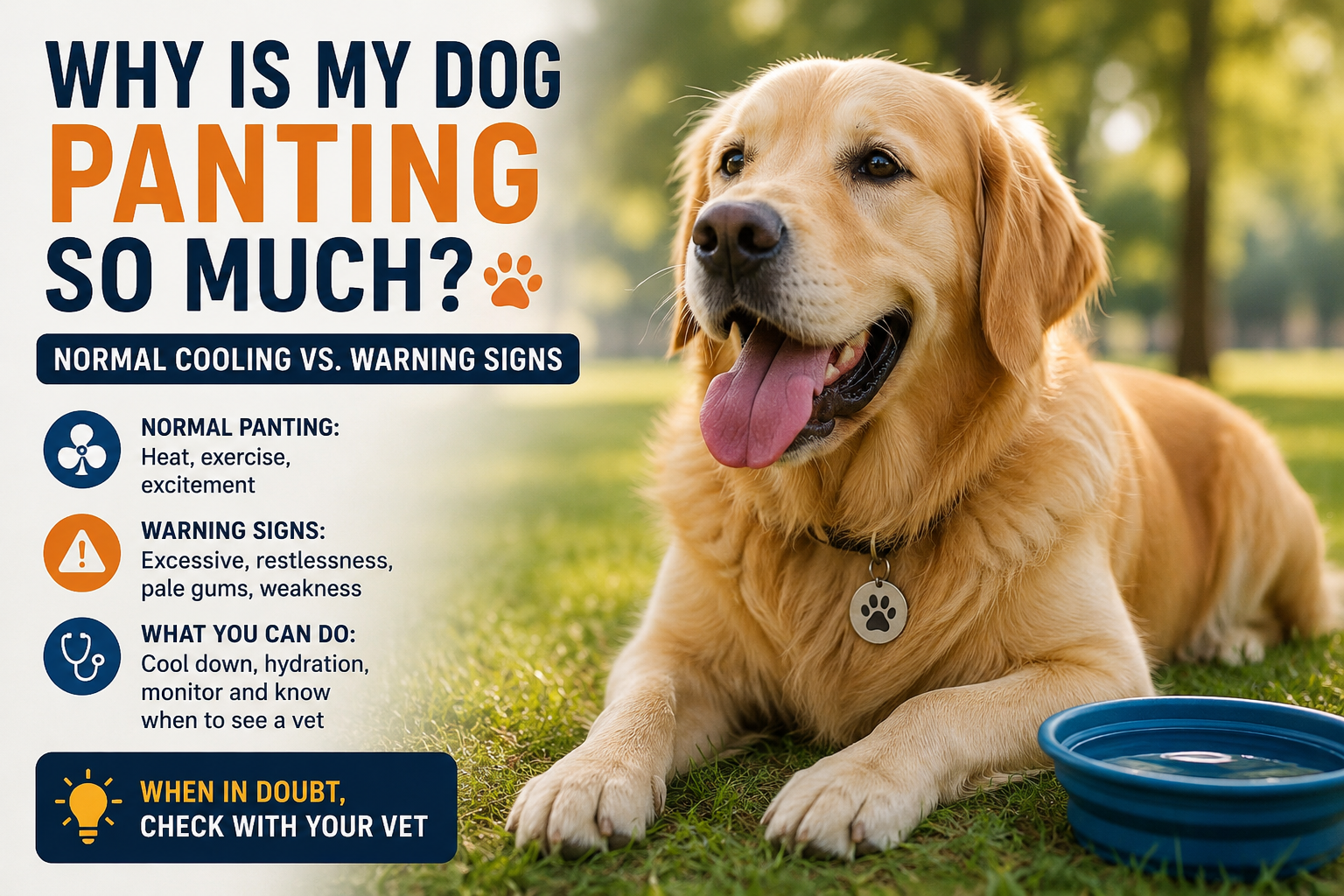
Panting is one of the main ways dogs release heat, but context matters. A dog that pants after running on a warm day is different from a dog that begins heavy panting while resting in a cool room. Excitement, stress, pain, fever, heat, breathing problems, certain medications, and medical conditions can all change a dog's breathing pattern.
Quick Answer
Move your dog to a cool, quiet place, stop strenuous activity, offer fresh water, and observe breathing. If panting settles as the dog rests and cools, it may have been a normal response. Seek urgent veterinary care if breathing looks difficult rather than simply fast, the gums appear blue or very pale, the dog collapses, cannot settle, seems confused, or uses the abdomen forcefully to breathe.
Normal Reasons Dogs Pant
Cooling Down
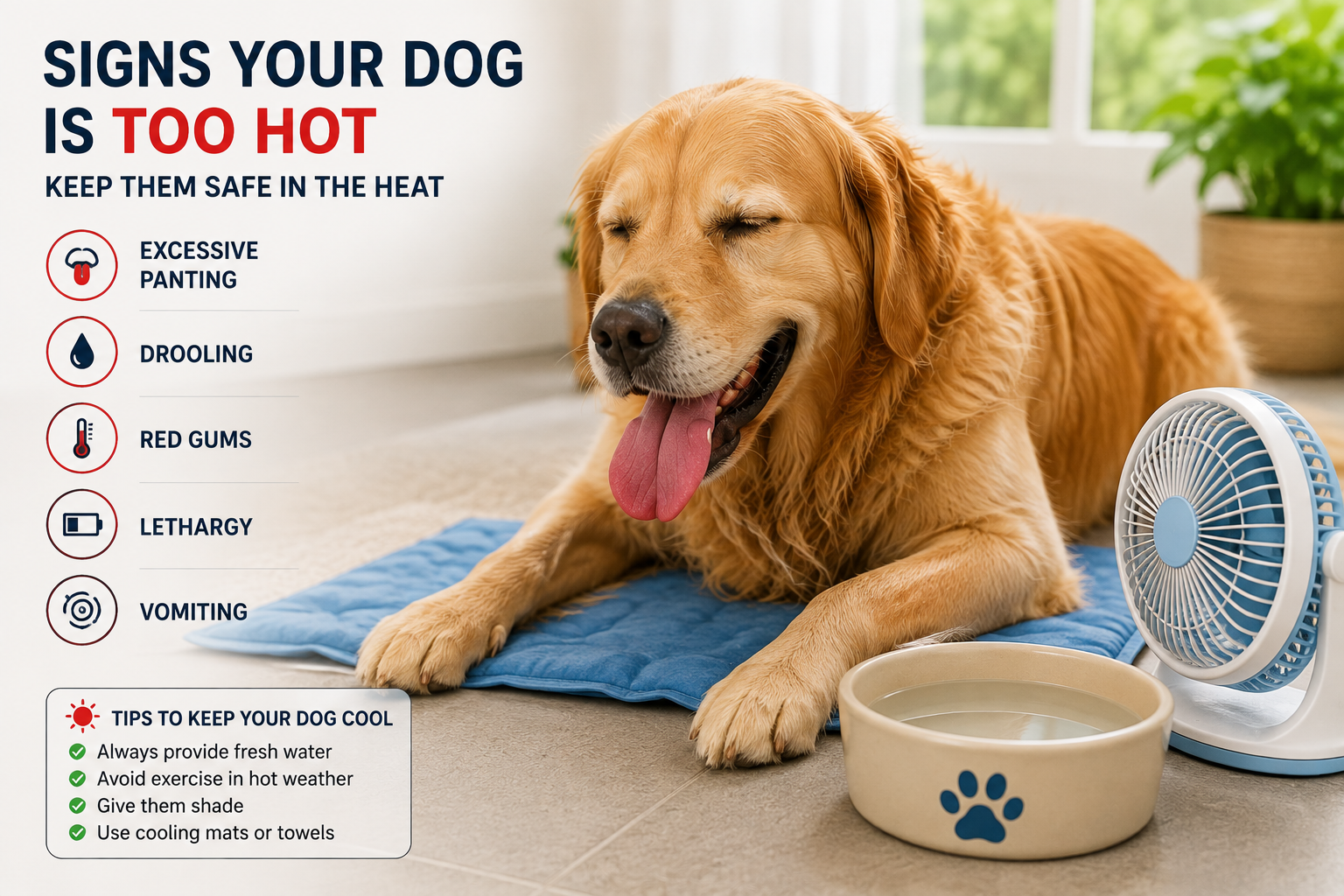
Dogs do not sweat over most of the body the way humans do. Panting helps move air across moist surfaces in the mouth and airways, aiding heat loss. Warm temperatures, exercise, and excitement can therefore increase panting.
Excitement and Stress
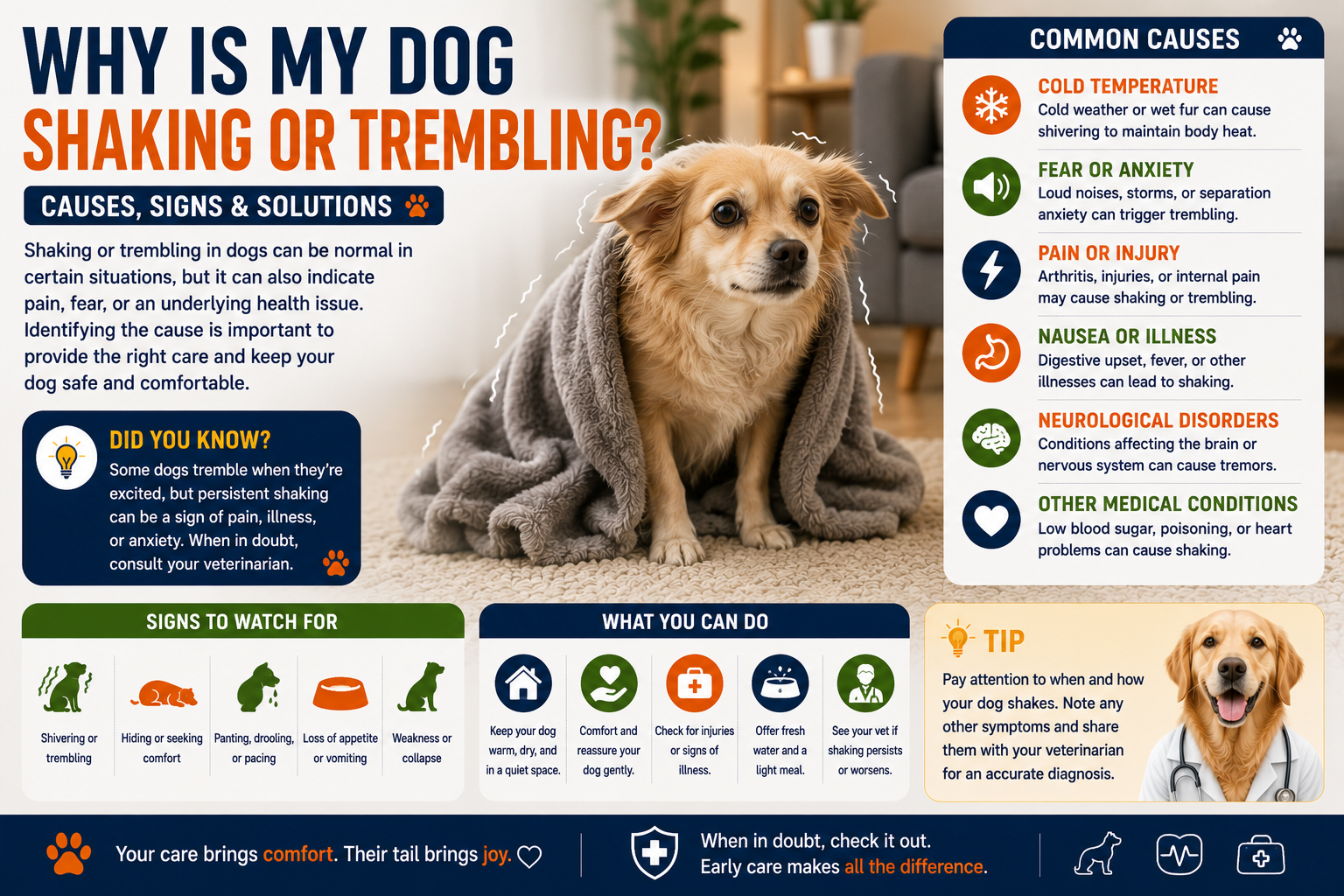
A car ride, visitors, veterinary appointment, thunder, or intense play can cause panting even when the room is not hot. Look at the rest of the body language: pacing, tucked posture, lip licking, inability to settle, or repeated scanning may suggest stress.
When Panting Becomes More Concerning
Pay attention when panting is new, unusually intense, prolonged after rest, frequent at night, or accompanied by coughing, weakness, abdominal enlargement, pain, excessive thirst, or exercise intolerance. Some endocrine and respiratory conditions can include panting among their signs, but owners cannot determine the cause from panting alone.
Heat Can Become an Emergency
Heavy panting during heat exposure can progress to heat-related illness. Stop activity and move the dog to a cooler environment. Dogs that appear disoriented, weak, unsteady, repeatedly vomit, collapse, or have abnormal gum color need emergency veterinary care. Brachycephalic dogs, seniors, dogs with obesity, and dogs with heart or airway disease can be particularly vulnerable to heat.
Breathing Difficulty Is Different From Simple Panting
| Observation | Why It Matters |
|---|---|
| Fast but relaxed panting after exercise | May improve with rest and cooling |
| Strong abdominal effort to breathe | Can indicate respiratory distress |
| Neck stretched forward to breathe | Concerning effort to move air |
| Blue-tinged gums or tongue | Emergency sign of inadequate oxygenation |
| Collapse or severe weakness | Requires urgent veterinary care |
What You Can Safely Do at Home
- Stop exercise and move to shade or air conditioning.
- Offer fresh water without forcing the dog to drink.
- Keep the environment calm.
- Count resting breaths once the dog is settled if your veterinarian has asked you to monitor them.
- Record a short video of unusual breathing for your veterinarian if doing so does not delay urgent care.
When to Call the Vet
Contact a veterinarian for panting that is unexplained, recurring at rest, markedly different from your dog's normal pattern, or associated with pain, coughing, fever, excessive thirst, weakness, weight change, or reduced exercise tolerance. Treat visible breathing difficulty as urgent.
Related Virixoo Guides
If panting occurs with coughing, read Why Is My Dog Coughing?. If increased thirst is also present, see Why Is My Dog Drinking So Much Water?.
Sources & References
Cornell University's Riney Canine Health Center describes signs of respiratory distress and recommends urgent veterinary care when a dog is struggling to breathe.
FAQ
Why does my dog pant at night?
Night panting can reflect a warm environment, stress, pain, medication effects, or medical problems. Repeated unexplained episodes deserve veterinary discussion.
Is panting always a sign of pain?
No. Panting has many normal and abnormal causes. Pain is one possibility, especially when panting occurs at rest with restlessness, guarding, or behavior change.
Should I exercise a dog that is already panting heavily?
No. Stop activity, allow cooling and rest, and assess whether the breathing returns toward normal.
Bottom line: Judge panting by the situation, intensity, recovery, and accompanying signs. Normal cooling should improve with rest; difficult breathing, abnormal gum color, collapse, or confusion requires urgent care.