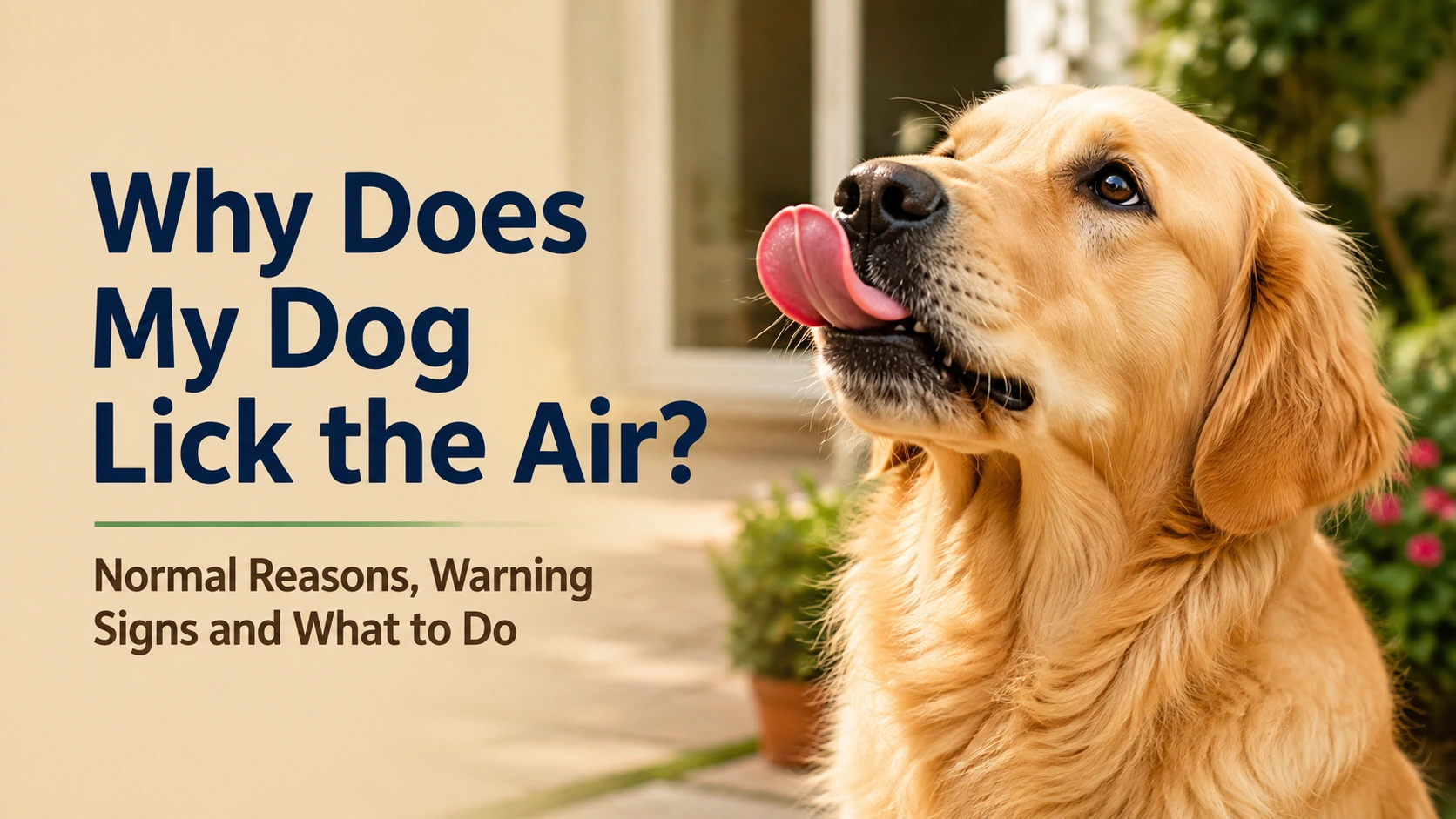
Air licking can be completely harmless, but the pattern matters. A dog may briefly lick the air while smelling something interesting, anticipating food, enjoying a scratch, or responding to excitement. Repeated episodes can also occur with nausea, mouth discomfort, anxiety, compulsive behavior, or less commonly a neurologic problem. The most useful response is to notice what happens immediately before, during, and after the licking instead of assuming one cause.
Quick Answer
If your dog licks the air only for a few seconds in predictable situations and otherwise acts normal, monitor the behavior. Record a short video if it repeats. Check for drooling, lip smacking, repeated swallowing, bad breath, pawing at the mouth, vomiting, appetite change, facial twitching, staring, or difficulty settling. Persistent, increasing, painful, or unusual air licking deserves veterinary evaluation, especially when it appears suddenly.
What Does Air Licking Look Like?
Air licking usually means the tongue repeatedly extends without making obvious contact with food, skin, or another surface. Some dogs make one or two quick tongue movements; others lick rhythmically for minutes. It can be confused with lip licking, which often happens closer to the lips and muzzle. Describing the exact movement helps because different patterns can point toward different triggers.
Common Reasons Dogs Lick the Air
1. Smelling and Processing an Interesting Scent
Dogs experience the world primarily through scent. Brief tongue movements may accompany intense sniffing as the dog investigates odor molecules in the environment. This is more likely to be normal when the dog is relaxed, curious, and easily redirected.
2. Anticipation of Food
Some dogs lick the air when they hear a food bag, watch a meal being prepared, or expect a treat. If the licking begins only around food and stops afterward, learned anticipation is a reasonable explanation. Keep the distinction between normal anticipation and repeated licking with nausea signs in mind.
3. Enjoyment During Petting or Scratching
A few dogs make tongue movements when a favorite spot is scratched. If the body is loose, the dog seeks more contact, and the behavior stops when petting stops, it may simply be an individual response to pleasant stimulation.
4. Nausea or Gastrointestinal Discomfort
Nausea can produce lip licking, air licking, repeated swallowing, drooling, restlessness, grass seeking, or reduced interest in food. A dog that licks the air while pacing, swallowing repeatedly, or looking uncomfortable should be observed more carefully. Vomiting, diarrhea, a swollen abdomen, severe weakness, or repeated unproductive retching requires prompt veterinary attention.
5. Dental or Mouth Pain
A painful tooth, gum disease, an oral injury, or material caught around a tooth can change tongue movements. Clues include bad breath, drooling, chewing on one side, dropping food, reluctance to eat hard food, rubbing the face, or pawing at the mouth. Do not force the mouth open if your dog is painful or defensive.
6. Stress, Arousal, or a Learned Habit
Licking can be a self-soothing behavior. Some dogs begin licking during conflict, uncertainty, overstimulation, or repeated stressful routines. If the behavior has been accidentally reinforced with attention, it may also become a learned response. Look at the whole body: tucked posture, repeated yawning, panting, pacing, avoidance, or inability to settle make stress more likely.
7. Compulsive or Neurologic Causes
Very repetitive air licking that is difficult to interrupt can occasionally be part of a compulsive pattern or neurologic event. Facial twitching, staring, sudden behavior arrest, snapping at invisible objects, confusion, or unusual movements should be recorded on video and discussed with a veterinarian. A video can be far more useful than trying to describe a brief episode from memory.
A Simple Pattern Check at Home
- Write down the time and what happened immediately before the licking.
- Note whether food, petting, a strong smell, travel, stress, or rest preceded the episode.
- Record how long it lasts and whether your dog responds normally to you.
- Look for drooling, swallowing, vomiting, mouth discomfort, or appetite changes.
- Take a clear video if the behavior repeats.
What Not to Do
Do not punish air licking. Punishment can add stress without addressing nausea, pain, or another underlying cause. Do not give human antacids, anti-nausea medication, pain medicine, or sedatives unless a veterinarian has specifically instructed you to use a product and dose for your dog.
When to Contact a Veterinarian
Arrange an examination if air licking is new and frequent, increasing, occurring with poor appetite, bad breath, mouth pain, vomiting, diarrhea, repeated swallowing, weight loss, or obvious distress. Seek urgent care if your dog has difficulty breathing, collapses, has repeated unproductive retching with abdominal enlargement, may have swallowed a toxin or foreign object, or shows a prolonged abnormal neurologic episode.
Related Virixoo Guides
If the movement is mainly around the lips, read Why Does My Dog Keep Licking His Lips?. For excessive saliva, see Why Is My Dog Drooling So Much?.
How to Separate a Brief Habit From a Persistent Problem
Frequency and recovery are especially useful. A dog that gives two tongue flicks after smelling a treat and immediately returns to normal is very different from a dog that spends several minutes licking, swallowing, pacing, or staring. Keep a simple log for three to five days. Record meals, treats, medications, car travel, stressful events, bowel movements, vomiting, and the approximate time of each episode. Patterns around meals may support a gastrointestinal discussion; patterns during handling or social pressure may suggest arousal; episodes with facial movements or altered awareness deserve quicker medical review.
What a Veterinarian May Check
The examination may include the teeth, gums, tongue, roof of the mouth, throat, abdomen, skin, and neurologic responses. Depending on the history, further testing may be recommended. The goal is not to label every lick as disease, but to rule out pain and illness before treating repetitive behavior as purely behavioral.
A Practical Decision Guide
| Pattern | More Likely Next Step |
|---|---|
| Brief licking around food, dog otherwise normal | Monitor and look for a predictable trigger |
| Licking plus drooling or repeated swallowing | Discuss nausea or oral discomfort with a veterinarian |
| Licking plus bad breath or difficulty chewing | Arrange an oral and dental examination |
| Long repetitive episodes that are hard to interrupt | Record video and seek veterinary assessment |
| Licking with facial twitching or altered awareness | Prompt veterinary evaluation |
FAQ
Why does my dog lick the air after eating?
A few licks can reflect taste, anticipation, or normal mouth movements. Repeated licking with swallowing, drooling, discomfort, or vomiting can be associated with nausea or oral discomfort and should be discussed with a veterinarian if it persists.
Why does my dog lick the air when I scratch him?
Some dogs appear to make tongue movements in response to pleasant stimulation. It is usually less concerning when the dog is relaxed and the licking stops when the scratching stops.
Can air licking be anxiety?
Yes, repetitive licking can occur during stress or overarousal, but medical causes should not be dismissed simply because the dog is anxious.
Should I film the behavior?
Yes. A clear video showing the face and body can help a veterinarian distinguish licking, swallowing, facial movements, and changes in awareness.
Trusted References
PetMD: Why Do Dogs Lick the Air? · PetMD: Canine Compulsive Disorder