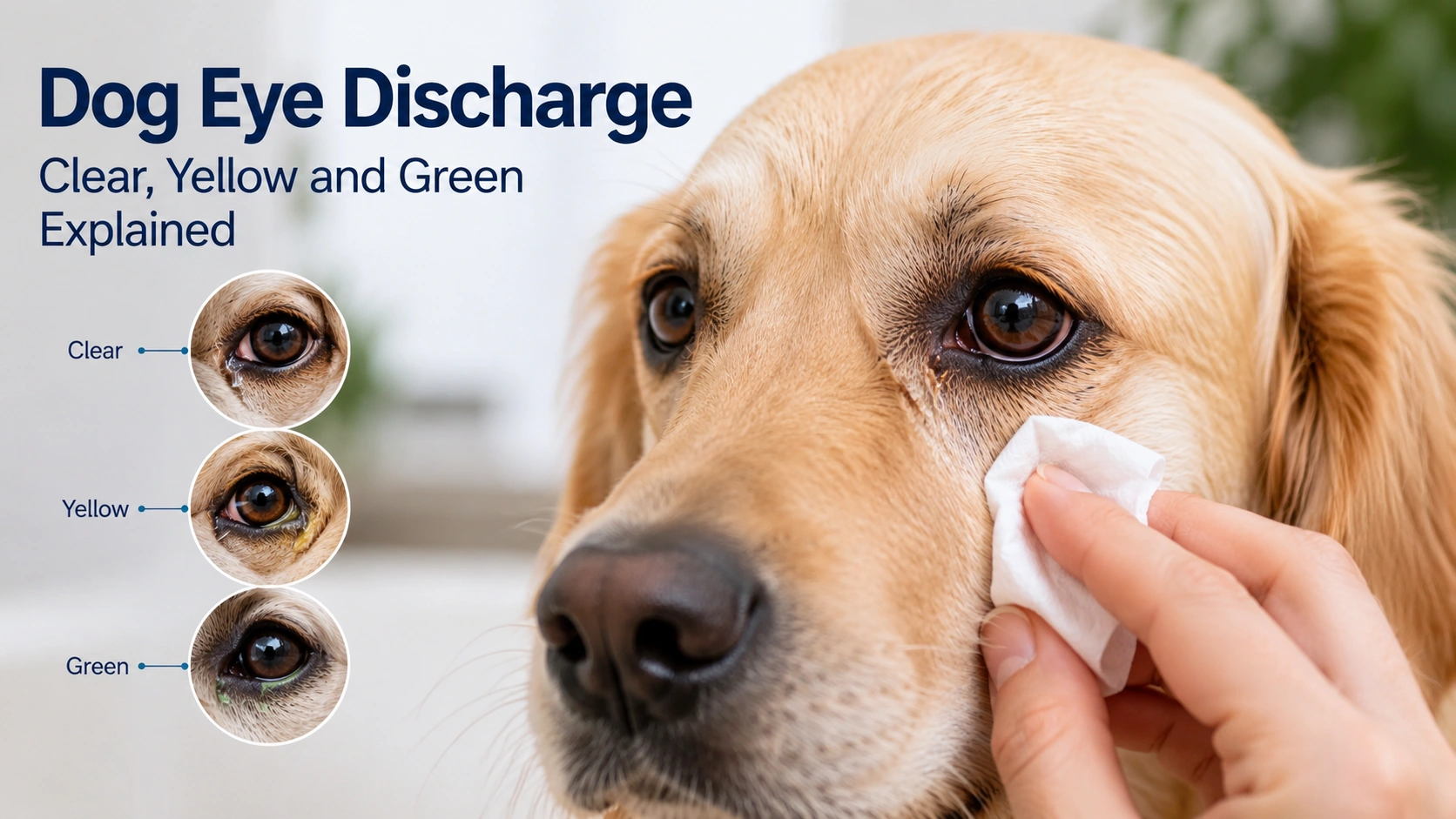
Dog eye discharge may be harmless tear debris or a sign of irritation, infection, dry eye, injury, eyelid problems, or other disease. The safest approach is to judge the complete pattern rather than one symptom in isolation. Changes in appetite, energy, comfort, sleep, stool, urination, breathing, skin, ears, or behavior can change how urgently your dog should be seen.
Quick Answer
A mild isolated change in an otherwise comfortable adult dog can sometimes be monitored briefly. Persistent, worsening, painful, or recurrent signs deserve veterinary assessment. Collapse, severe weakness, major bleeding, significant breathing difficulty, blue or gray gums, seizures, or severe pain requires urgent veterinary care.
Common Causes
Normal tear debris
This is one possible explanation, but the sign alone cannot confirm the cause. Duration, severity, recurrence, age, medical history, medications, and accompanying symptoms all matter. A veterinarian may need an examination and targeted tests before treatment is chosen.
Irritation or allergies
This is one possible explanation, but the sign alone cannot confirm the cause. Duration, severity, recurrence, age, medical history, medications, and accompanying symptoms all matter. A veterinarian may need an examination and targeted tests before treatment is chosen.
Conjunctivitis or infection
This is one possible explanation, but the sign alone cannot confirm the cause. Duration, severity, recurrence, age, medical history, medications, and accompanying symptoms all matter. A veterinarian may need an examination and targeted tests before treatment is chosen.
Dry eye or corneal injury
This is one possible explanation, but the sign alone cannot confirm the cause. Duration, severity, recurrence, age, medical history, medications, and accompanying symptoms all matter. A veterinarian may need an examination and targeted tests before treatment is chosen.
What to Check Safely at Home
- Note exactly when the problem started and whether it is improving or worsening.
- Check for redness, swelling, discharge, odor, hair loss, pain, licking, scratching, or behavior changes.
- Record recent grooming, swimming, diet changes, medications, parasite prevention, travel, boarding, outdoor exposure, and household products.
- Take a clear photo or short video when useful and safe so you can document changes over time.
Why the Pattern Matters
One brief episode can have a different meaning from a symptom that repeats every day. Puppies, senior dogs, and dogs with chronic medical conditions may need earlier assessment. A sudden change after trauma, a new medication, chemical exposure, insect sting, plant exposure, or possible foreign object should be reported promptly.
What Not to Do
Do not use human pain relievers, leftover antibiotics, steroid creams, essential oils, eye drops, ear drops, or other medications unless a veterinarian has recommended that exact product for your dog and the current problem. Treating the wrong cause can delay diagnosis and may worsen some eye, ear, skin, or systemic conditions.
When to Call the Vet
Contact your veterinarian when the problem persists, repeatedly returns, becomes painful, spreads, or appears with appetite loss, lethargy, vomiting, diarrhea, feverish behavior, abnormal breathing, or other signs of illness. If you are unsure whether it can wait, describe the exact signs to your veterinary clinic rather than guessing at a diagnosis.
Related Virixoo Guides
Why Are My Dog’s Eyes Red? Common Causes and When It’s Urgent. Does My Dog Have Allergies? Signs, Common Triggers and What to Do.
FAQ
Can I diagnose this from a photo?
A photo can document appearance and progression, but many conditions look similar. Diagnosis may require an examination and appropriate testing.
Should I try a home remedy first?
Not when a symptom is painful, persistent, worsening, or associated with other illness. Home products can irritate tissue or interfere with diagnosis.
What should I track?
Track onset, frequency, affected area, appetite, water intake, energy, stool and urine changes, medications, parasite prevention, diet changes, and possible environmental exposures.
Bottom Line
Dog eye discharge may be harmless tear debris or a sign of irritation, infection, dry eye, injury, eyelid problems, or other disease. Focus on progression and your dog's overall condition, and seek veterinary care when warning signs are present.