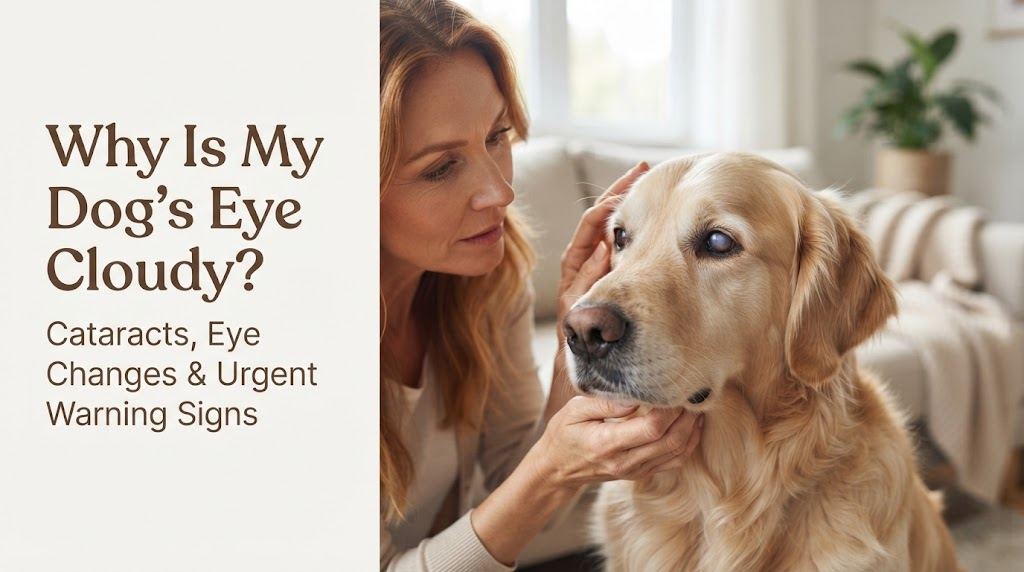
Cloudiness can arise from the cornea, lens, or deeper eye structures, and sudden cloudiness with pain or vision change needs prompt care.
Quick Answer
A cloudy-looking eye can reflect age-related lens change, cataract, corneal disease, inflammation, or abnormal eye pressure. Because some painful eye conditions can threaten vision quickly, sudden cloudiness, squinting, redness, discharge, a larger-looking eye, or an obvious vision change warrants prompt veterinary evaluation.
What This Pattern Can Tell You
Compare both eyes in the same light. Note whether cloudiness appeared suddenly, whether it seems on the surface or deeper inside, and whether there is redness, squinting, discharge, rubbing, pupil asymmetry, or difficulty navigating.
Common Reasons
1. Age-related lens change
Older dogs can develop nuclear sclerosis, a typically bluish-gray lens change that often affects both eyes and is different from a cataract. A veterinary eye examination is needed to distinguish look-alike causes.
2. Cataract
A cataract is an opacity within the lens and can interfere with vision depending on its size and density. Cataracts may be associated with aging, genetics, diabetes, or other eye disease.
3. Corneal injury or swelling
The clear cornea can look blue or cloudy when injured or swollen. Squinting, tearing, redness, or sudden onset makes a painful corneal problem more concerning.
4. Inflammation inside the eye
Uveitis can create cloudiness along with pain, redness, light sensitivity, or pupil changes. It requires veterinary diagnosis because treatment depends on the underlying cause.
5. Glaucoma or pressure change
High pressure inside the eye can cause cloudiness, redness, pain, pupil changes, and vision loss. Suspected acute glaucoma is time-sensitive and requires urgent veterinary assessment.
What You Can Do Safely Now
Prevent rubbing and keep the dog in a safe, familiar environment if vision seems affected. Do not use leftover or human eye drops: some products can worsen particular corneal conditions. Sudden painful cloudiness warrants prompt care rather than home treatment.
When to Contact a Veterinarian
Prompt or urgent veterinary assessment is appropriate for sudden cloudiness with squinting, marked redness, a dilated or unusual pupil, an enlarged-looking eye, obvious pain, trauma, or vision loss. These signs can accompany conditions in which delay risks permanent eye damage.
What to Tell Your Veterinarian
Share when the change began, whether it was sudden or gradual, how often it occurs, what seems to trigger it, and any photos or video that safely capture it. Also mention relevant changes in appetite, drinking, energy, breathing, movement, medications, recent injuries, grooming, travel, or environmental exposures.
Bottom Line
Cloudiness can arise from the cornea, lens, or deeper eye structures, and sudden cloudiness with pain or vision change needs prompt care. Use the pattern and accompanying signs—not a single symptom in isolation—to decide how quickly professional assessment is needed.