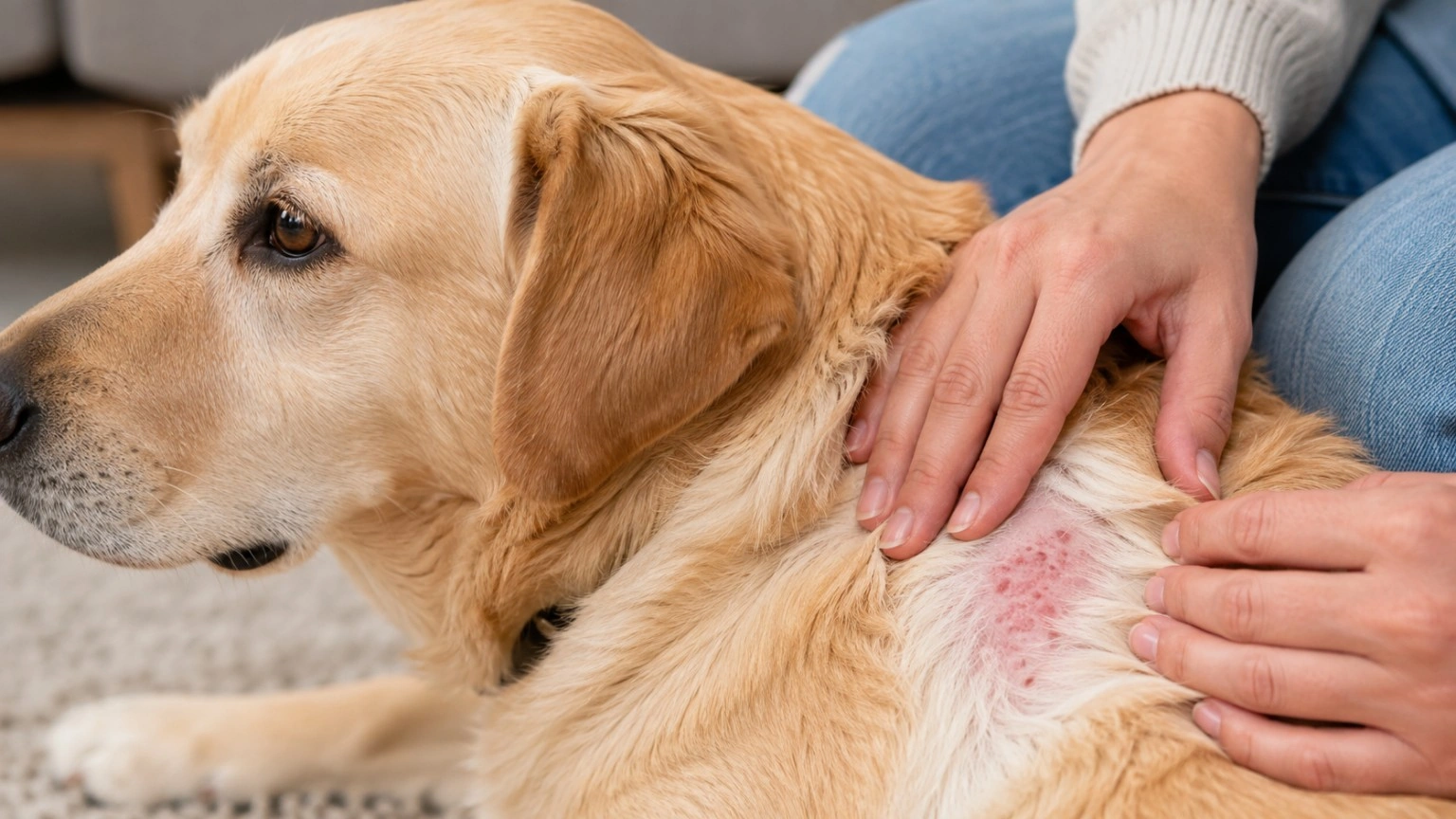
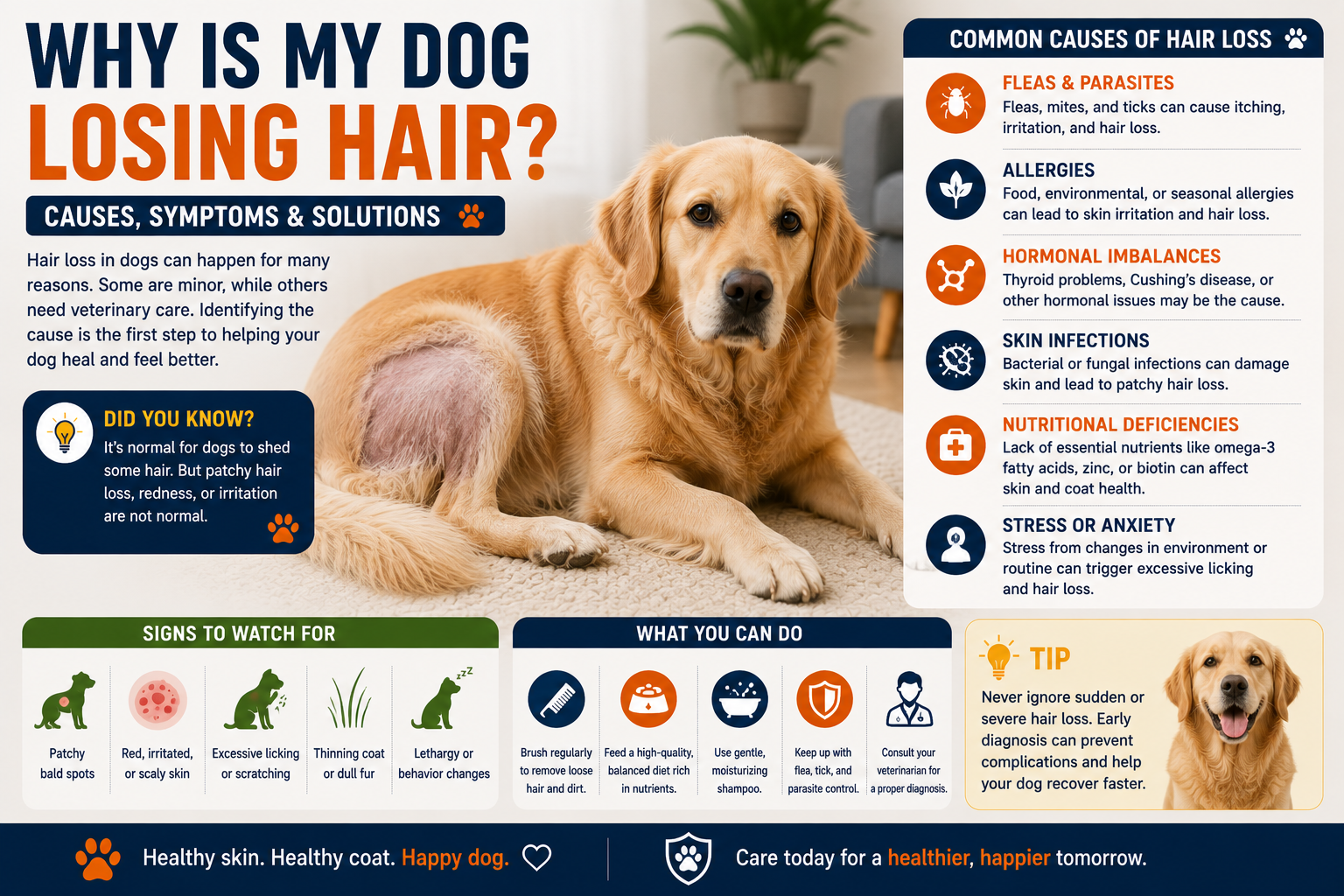
A hot spot is an acutely inflamed, often moist and painful area of skin that can enlarge quickly when a dog keeps licking, chewing, or scratching it. Allergies, fleas, ear problems, moisture trapped in the coat, anal-area irritation, and other itchy conditions can start the cycle. Treating the visible sore without finding the trigger makes recurrence more likely.
What a Hot Spot Can Look Like
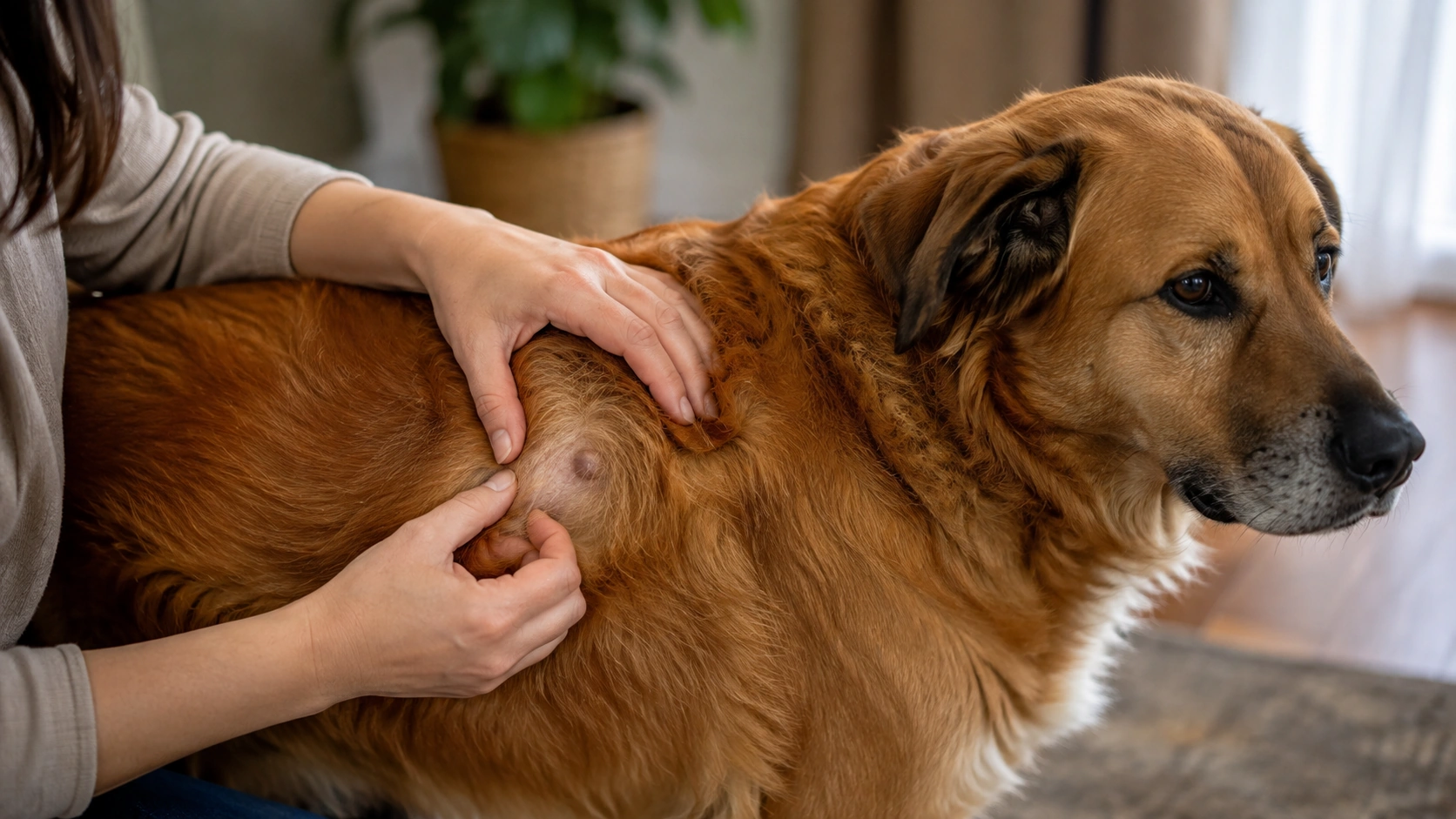
The area may be red, warm, moist, hairless, sticky, or crusted. Dogs often focus intensely on it, and a small lesion can become much larger through self-trauma. Thick coats can hide the true size of the problem.
Common Triggers
- Flea bites or other parasites.
- Environmental or other allergies.
- Wet coat after swimming or bathing.
- Ear irritation that causes scratching near the neck or cheek.
- Rear-end irritation that triggers chewing near the tail.
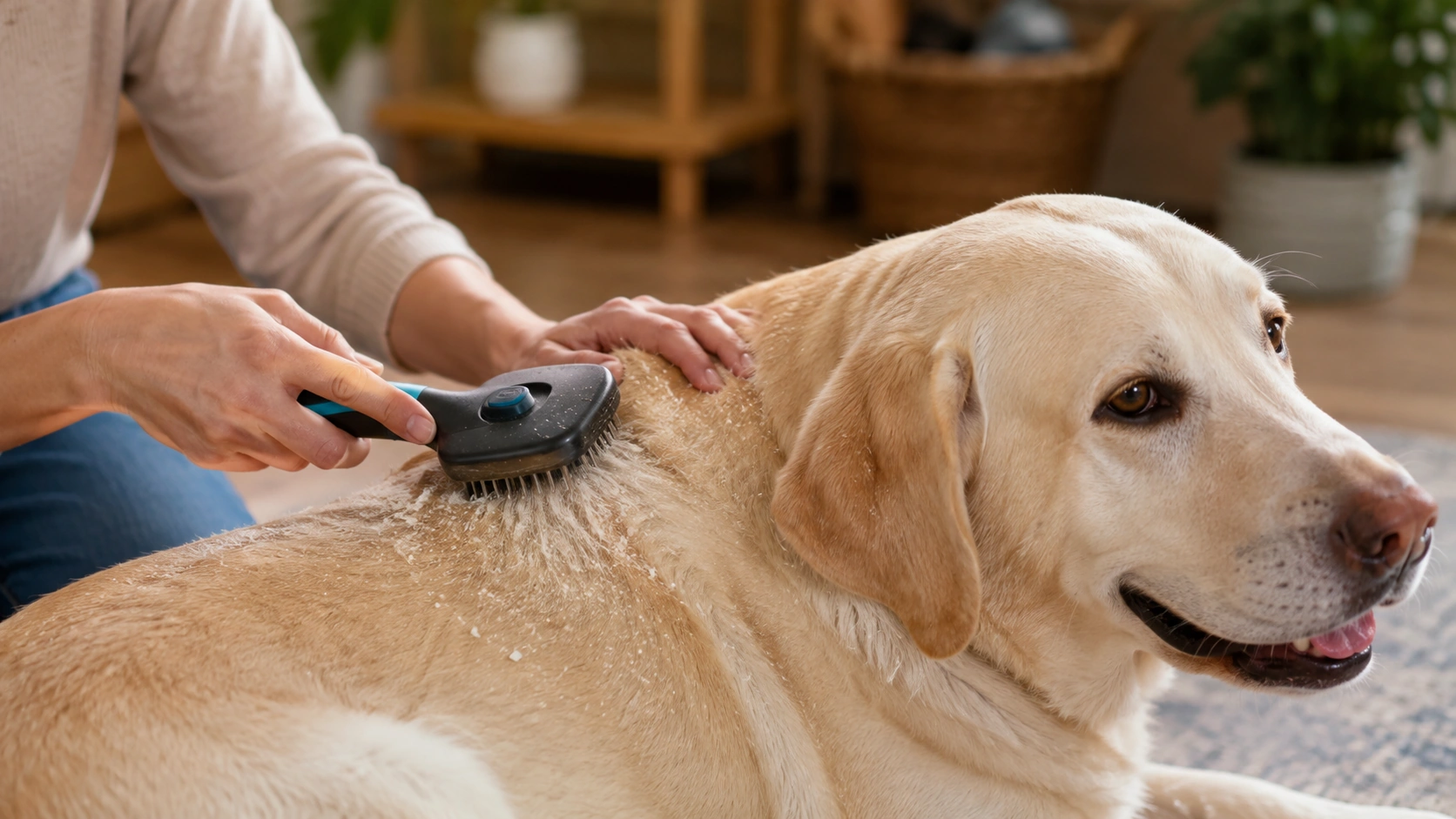
- Mats that trap moisture close to the skin.
First Priority: Stop Self-Trauma
Licking and chewing perpetuate inflammation. A correctly fitted Elizabethan collar or other veterinary-approved barrier can protect the area while you arrange care. Avoid tight wraps over moist lesions because trapped moisture can worsen the environment.
Keep the Area Clean and Dry
For a very small superficial lesion that your dog allows you to handle, gentle cleaning may help. However, hot spots can be extremely painful, and clipping hair close to inflamed skin can injure a moving dog. Large, painful, oozing, or rapidly spreading lesions are better handled professionally.
When Veterinary Treatment Is Needed
Seek veterinary care when the lesion is painful, enlarging, producing pus or significant discharge, failing to improve, or accompanied by lethargy or fever. Recurrent hot spots need investigation for allergy, parasites, ear disease, or another underlying trigger.
Prevention
Use veterinarian-recommended parasite prevention, dry thick coats thoroughly after swimming, prevent matting, monitor recurring ear and skin problems, and address allergies when present. Regular coat checks help catch moist or inflamed areas before they expand.
Related Virixoo Guides
If the lesion is near an irritated ear, see Why Does My Dog Shake His Head?.
Sources & References
Cornell University's hot spots guide explains the role of moisture, parasites, allergies, licking, and secondary infection in acute moist dermatitis.
FAQ
Are hot spots contagious?
A typical hot spot itself is not generally considered contagious, but some underlying skin problems can have infectious or parasitic causes, so diagnosis matters.
Can I cover a hot spot with a bandage?
Occlusive covering can trap moisture. Ask your veterinarian before bandaging an inflamed skin lesion.
Why does my dog keep getting hot spots?
Repeated episodes suggest that an underlying trigger such as allergy, parasites, ear disease, or chronic moisture has not been fully controlled.
Bottom line: Stop licking, keep the area appropriately clean and dry, and investigate the trigger. Rapidly spreading or painful hot spots deserve veterinary care rather than repeated home treatment.