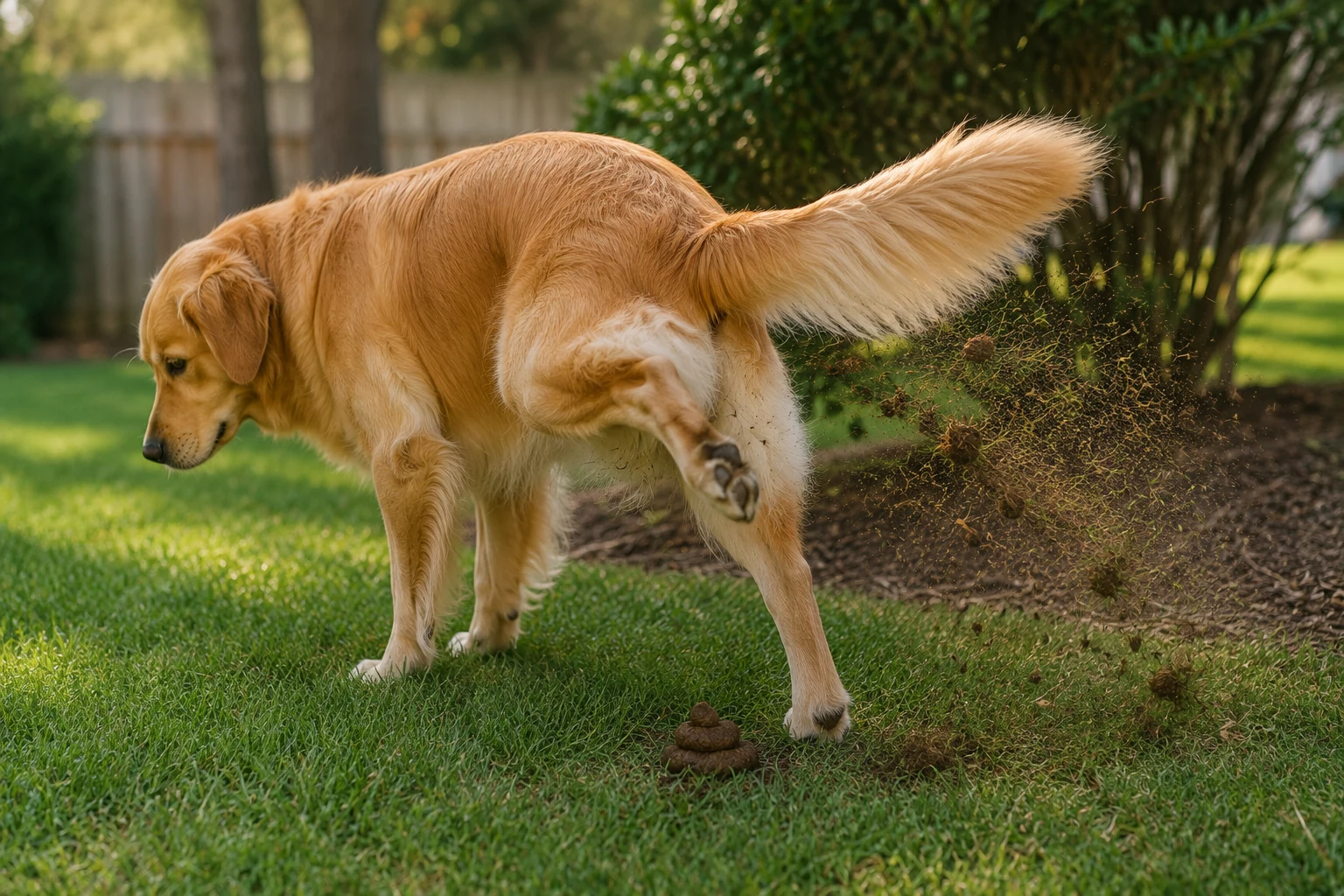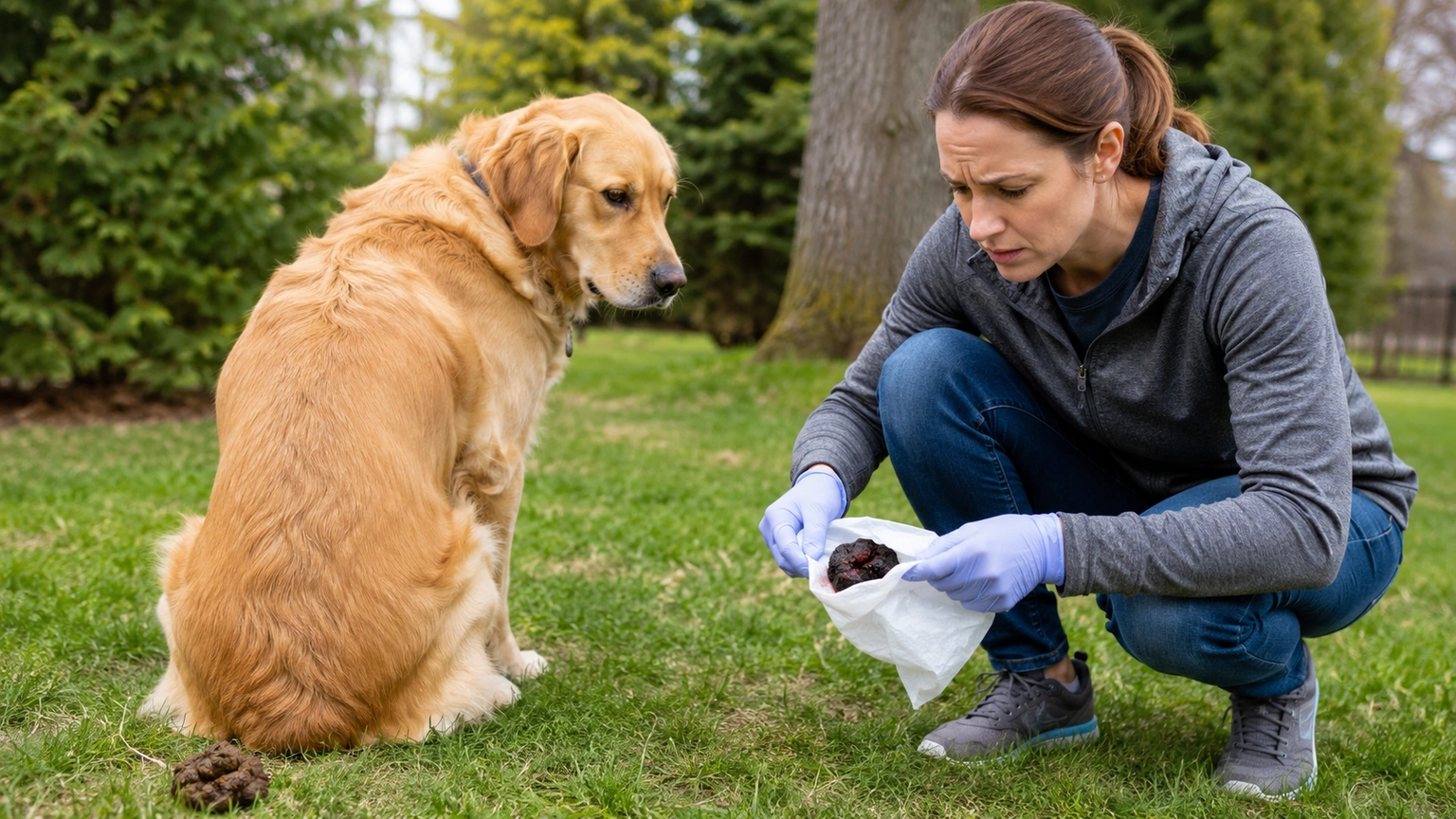
Constipation means stool is difficult, infrequent, or painful to pass, but repeated straining does not always mean constipation. Dogs may strain because of colon or rectal problems, pelvic pain, anal-area disease, urinary trouble, prostate disease, dehydration, foreign material, or other conditions. That is why observing what actually comes out matters.
Quick Answer
Provide normal access to fresh water, keep activity gentle, and note the last normal bowel movement. Do not give human laxatives, mineral oil, enemas, or other remedies unless a veterinarian specifically recommends them. Veterinary care is appropriate for persistent straining, pain, vomiting, abdominal swelling, weakness, blood, or inability to pass stool.
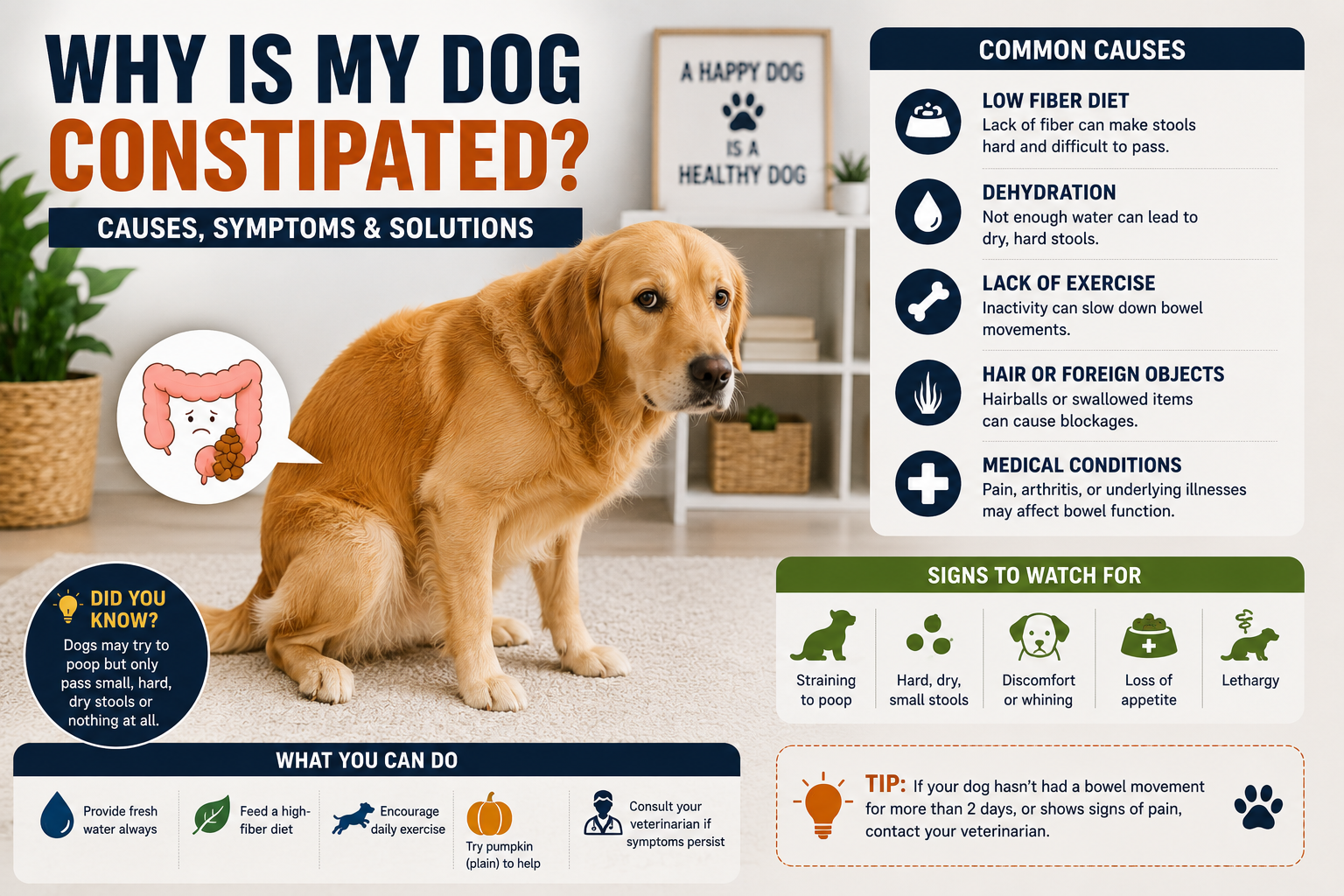
Signs That Suggest Constipation
- Repeated attempts to defecate with little or no stool.
- Small, hard, dry stools.
- Longer-than-usual time between bowel movements.
- Discomfort while posturing.
- Reduced appetite or restlessness in more significant cases.
Common Causes
Dehydration
When the body needs to conserve water, stool can become drier. Dehydration can itself result from illness, heat, vomiting, diarrhea, or inadequate intake, so it is important to understand why it developed.
Diet and Ingested Material
Bones, hair, plant material, and non-food objects can contribute to difficult stool or obstruction. A suspected foreign object should not be managed with laxatives at home.
Pain or Mobility Problems
Dogs with hip, back, knee, or pelvic pain may struggle to hold the normal defecating posture. Older dogs may need evaluation for orthopedic and neurologic causes as well as gastrointestinal ones.
Colon, Rectal or Pelvic Disease
Masses, narrowing, inflammation, anal-area pain, prostate enlargement, or other structural problems can interfere with stool passage. A physical examination may be necessary to identify these causes.
Make Sure the Dog Is Actually Trying to Defecate
Owners can mistake repeated attempts to urinate for constipation. A dog that repeatedly squats or strains but produces little or no urine may have a urinary emergency, particularly if uncomfortable. If you cannot tell whether your dog is trying to urinate or defecate, contact a veterinarian promptly.
What Not to Give Without Veterinary Guidance
Avoid human laxatives, enemas, oils, and “natural” remedies unless your veterinarian approves them. Some products can be toxic, worsen dehydration, or be dangerous if an obstruction is present.
When to See a Veterinarian
Seek veterinary care for repeated unproductive straining, more than a brief change from the dog's normal pattern, vomiting, a painful or swollen abdomen, lethargy, blood, inability to eat, or suspected bone/foreign-object ingestion. Severe distress or inability to pass urine is urgent.
Related Virixoo Guides
If your dog also has vomiting, read Why Is My Dog Vomiting?. For urinary accidents or unusual urination, see Why Is My Dog Peeing in the House Suddenly?.
Sources & References
The Merck Veterinary Manual describes constipation and straining among signs associated with disorders affecting the lower digestive tract and explains that diagnostic testing may be needed to determine the cause.
FAQ
Can I give pumpkin for constipation?
Dietary fiber is useful in some situations and inappropriate in others, especially if obstruction or severe dehydration is possible. Ask your veterinarian before treating persistent constipation with diet changes.
How long is too long for a dog not to poop?
Normal frequency varies. What matters most is a change from your dog's pattern plus straining, discomfort, vomiting, or inability to pass stool.
Can exercise help?
Gentle normal movement can support bowel activity in a comfortable dog, but do not exercise a dog that is painful, weak, vomiting, or suspected of having an obstruction.
Bottom line: Constipation is not just about the calendar. Watch stool quality, straining, pain, appetite, and urination, and avoid home laxatives until the cause is clear.